
Gallstones are hardened particles of bile that form in the gallbladder or bile ducts. They are common, particularly in women and persons assigned female at birth. Gallstones do not always cause difficulties, but they can if they become lodged in your biliary tract and obstruct your bile flow. If your gallstones produce symptoms, you’ll require therapy to get them removed, which usually involves surgery.
What are Gallstones?
The term “gall” refers to bile; hence, gallstones are bile stones. The gallbladder is your bile bladder. It collects and stores bile for future use. Your liver produces bile, and your bile ducts transport it to the other organs in your biliary tract. Healthcare providers may use the term “cholelithiasis” to describe the condition of having gallstones. The term “chole” also refers to bile, while “lithiasis” refers to the formation of stones. Gallstones occur when bile sediment accumulates and crystallizes. Frequently, the sediment is an overabundance of one of the primary constituents in bile.
What are Gallstone Symptoms?
Gallstones usually do not produce symptoms unless they become trapped and cause a blockage. This blockage generates symptoms, the most prevalent of which are upper stomach pain and nausea. These may come and leave or stay.
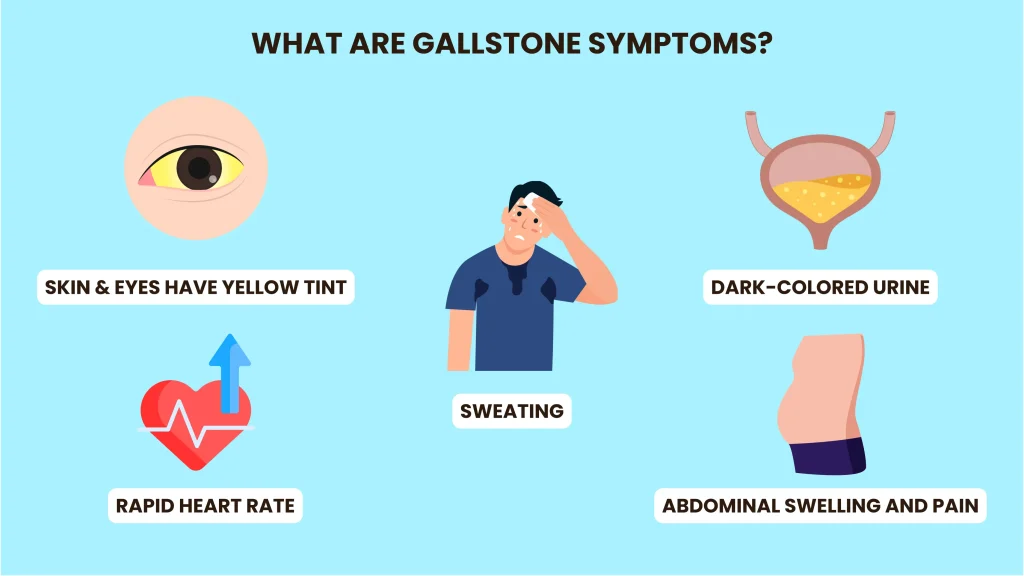
Severe or long-term blockages may cause additional symptoms, such as:
- Sweating
- Fever
- Rapid heart rate
- Abdominal swelling and pain
- Your skin and eyes have a yellow tint
- Dark-colored urine and light-colored feces
Gallstone pain is typically abrupt and strong, and it can cause nausea. This is referred to as a gallstone or gallbladder attack. You may feel it most acutely after eating, when your gallbladder contracts, increasing pressure in your biliary system. It may cause you to awaken from your slumber. Biliary colic is defined as gallstone discomfort that peaks and then gradually fades. It appears in episodes that might range from minutes to hours. The episode ends when or if the stone moves or the pressure decreases. People describe the pain as severe, acute, stabbing, cramping, or squeezing. You might be unable to sit still.
Causes of Gallstones
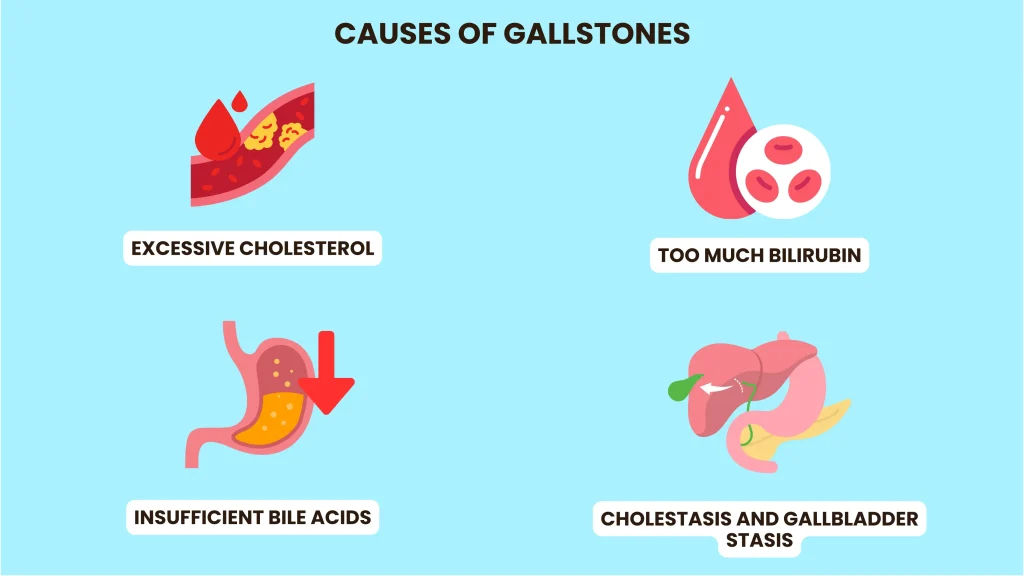
- Excessive cholesterol – To be able to produce bile, your liver removes cholesterol from your blood. If too much cholesterol is in your blood, the proportions of your bile will be incorrect. Bile requires a balance of lipids and acids to keep all constituents together. The excess will be discarded.
- Too much bilirubin – Bilirubin is produced when old red blood cells break down. You may have an excess of bilirubin if you have a blood condition that destroys too many red blood cells or if your liver is damaged and unable to process the typical load of bilirubin into bile.
- Insufficient bile acids (bile salts) – Certain disorders might induce bile acid malabsorption, which is when you lose bile acids in your stool. If you lose too many, your liver will be unable to produce adequate bile. A deficiency of bile acids causes an overabundance of lipids (cholesterol) in the bile.
- Cholestasis and gallbladder stasis – “Stasis” refers to inaction. If your bile ducts or gallbladder aren’t adequately transporting bile through your biliary tract, sediment formation increases. This could be a problem with the muscles or the chemical signaling that directs them to move.
Treatment
Most people who have gallstones without symptoms won’t need treatment. According to your symptoms and the findings of diagnostic tests, your doctor will determine whether or not gallstone treatment is necessary.
Treatment options for gallstones include:
Surgery (Cholecystectomy)
Since gallstones frequently return, your doctor might suggest gallbladder removal surgery. After your gallbladder is removed, bile flows directly from your liver into your small intestine instead of being held in your gallbladder. You do not need your gallbladder to survive, and gallbladder removal has no effect on your capacity to digest food, although it can cause diarrhea, which is typically transitory.
Medications
Oral medications may assist in dissolving gallstones. However, it may take months or years of medication to eliminate your gallstones in this manner, and gallstones are likely to form again if treatment is discontinued. Sometimes, drugs do not work. Gallstone medications are rarely utilized and are reserved for those who are unable to undergo surgery.
Natural Ways to Treat Gallstones
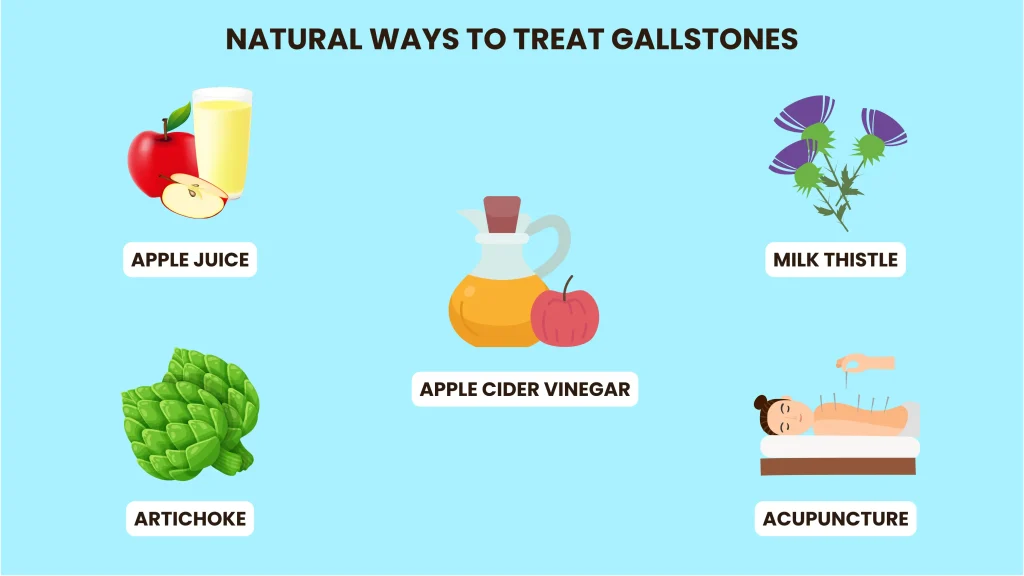
- Gallbladder cleanse
- Apple juice
- Apple cider vinegar
- Yoga
- Milk thistle
- Artichoke
- Gold coin grass
- Castor oil pack
- Acupuncture
Dieting
According to a 2006 study, women who ate more fruits and vegetables were less likely to undergo gallbladder removal surgery than women who ate the least. A well-balanced diet rich in fruits and vegetables may promote gallbladder health and lower your risk of gallstones. It may also assist with weight management.
Foods that can potentially aggravate the gallbladder are:
- Eggs
- Refined sugar
- Foods with lots of saturated fat
- Food allergens
Weight Management
Obesity raises your chances of acquiring gallstones. Losing weight can help avoid gallstones, but how you do it is key. Following a very low-calorie diet to lose weight may raise your risk of gallstones. Participants in a 2013 study completed a one-year commercial weight loss program. During the program, one set of participants maintained an extremely low-calorie diet (500 kcal per day) for 6-10 weeks. For three months, the other group consumed a low-calorie diet (1200-1500 kcal per day). The group that followed a very low-calorie diet was three times more likely than the other to develop gallstones that needed hospitalization or surgery.
Conclusion
Gallstones will not always cause complications for you. Many people have them unknowingly. However, gallstones can be harmful if they pass through your biliary tract and become lodged somewhere. They can obstruct the bile tract, causing pain and significant problems.
Take control of your health and consult a doctor if you notice any symptoms!