
Did you know that gum disease is related to other serious illnesses? Studies have shown that periodontal disease can affect more than your teeth. It’s one of the risk factors for developing serious illnesses like cancer, stroke, heart disease, and diabetes. Don’t feel discouraged! You can live a long life with periodontal disease if you manage the condition with treatment and guidance from your dentist.
As with any chronic condition, the earlier you seek therapy, the better your chances are of curing gum disease and improving your quality of life. Now, let’s take a look at what gum disease is, its different causes, the symptoms, treatment at home, how it differs from periodontitis and ways to reverse this condition!
Overview of Gum Disease
Gingivitis typically develops due to a bacterial infection caused by plaque overgrowth, but other viral or fungal infections may also cause it. If left untreated, this condition can become a more severe infection known as periodontitis. However, with regular dental check-ups and good oral hygiene, you can effectively manage and prevent its progression. So, what are the different types? Take a look down below!
Types of Gum Disease
- Gingivitis: This is the mildest form of periodontal disease. It causes the gums to become red, swollen, and tender. Symptoms typically include bleeding gums when flossing or brushing teeth.
- Mild to moderate periodontitis: Untreated gingivitis leads to mild to moderate periodontitis, during which the inflammation is deeper into the tissue. The gums start to pull away, which forms pockets that can become infected. You may experience bad breath, gum recession and changes in how your teeth fall when you bite down.
- Moderate to advanced periodontitis: This is the most advanced stage of gum disease, as it can cause damage to your bone and tissue. Patients report severe recession, deep pockets and even shifting or loose teeth.
Different Causes
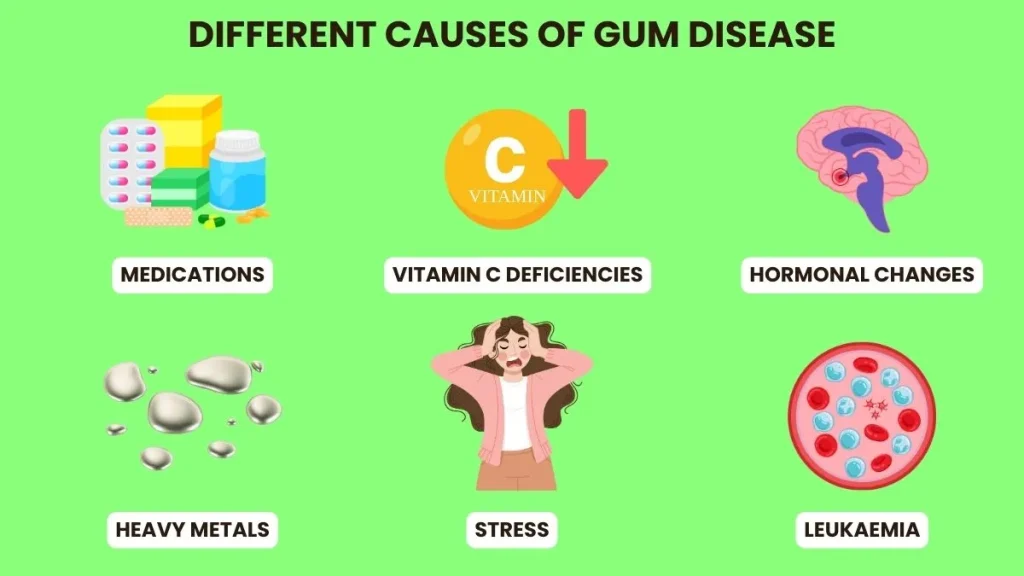
Gum disease starts when bacteria grow in your mouth. But what causes it?
Here are some of the causes:
- Certain medications
- Vitamin C deficiencies
- Hormonal changes
- Leukaemia
- Heavy metals
- Exposure to bismuth
- Stress
- Diet
What Causes Gum Recession
This condition occurs when the gum tissue pulls away from the teeth and exposes the roots.
Here are some of the factors that cause it:
- Aggressive brushing
- Smoking
- Genetics
What Causes Bone Loss in Teeth
Bone loss around the teeth and in the jaws is much more common than you might think. It can result from:
- Periodontal disease
- Tooth loss
Gum Disease Symptoms
Many aren’t aware that they have gum disease. It’s possible to have gingivitis without any symptoms.
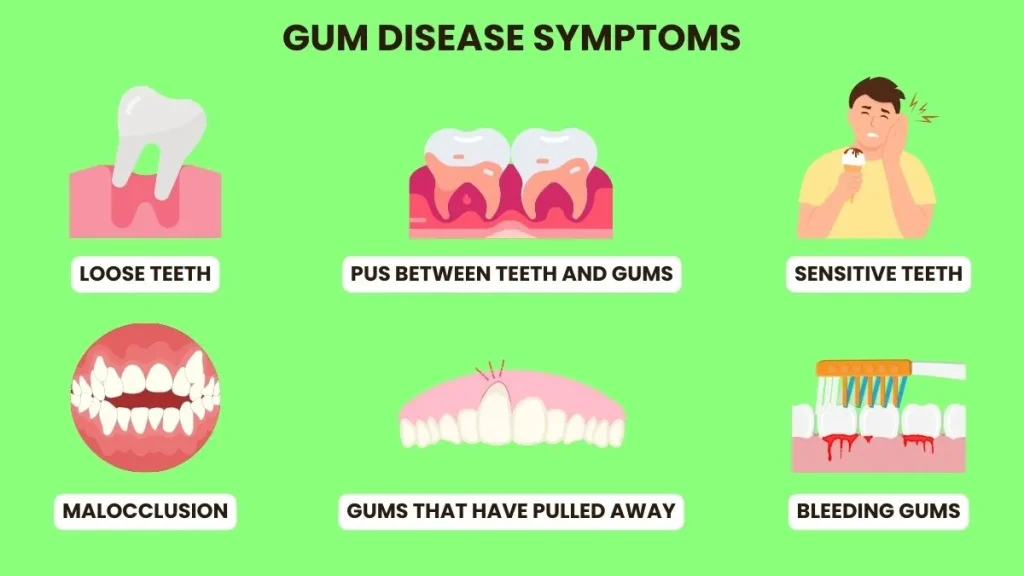
However, the following can be symptoms of gum disease:
- Gums that are red, tender, or swollen
- Bleeding when you brush or floss your teeth
- Gums that have pulled away from your teeth
- Loose teeth
- A change in how your teeth fit together when you bite (malocclusion)
- Pus between your teeth and gums
- Pain when chewing
- Sensitive teeth
- Partial dentures that no longer fit
- Foul-smelling breath that doesn’t go away after you brush your teeth
Gum Disease Treatment at Home
Gingivitis can be treated and prevented with self-care methods. Your best bet is to avoid it entirely, but it can be treated with home remedies. Let’s look at a few home remedies and what they are recommended for!
Salt Water Treatment for Gingivitis
To help fight gum disease, you can use salt water rinse at home every day. Mix a teaspoon of salt water into a small glass of warm water. Do not swallow the water, but gently rinse the water around the mouth for 15-30 seconds. When you are done, spit the water out and repeat the process at least three times a day.
Aloe Vera Mouthwash
Aloe vera has anti-inflammatory and antibacterial properties. The plant is also rich in antioxidants. For this reason, some people use aloe vera to treat and relieve inflammation related to gum disease and other oral issues.
Gingivitis vs Periodontitis
How can you tell the difference between gingivitis and periodontitis? Gingivitis causes swollen and bleeding gums. On the other hand, periodontitis is characterized by severely receding gums and deep pockets between teeth. Gingivitis is reversible, but periodontitis is so advanced that it may lead to tooth loss. Let’s take a look at how to reverse it!
How to Reverse Gum Disease
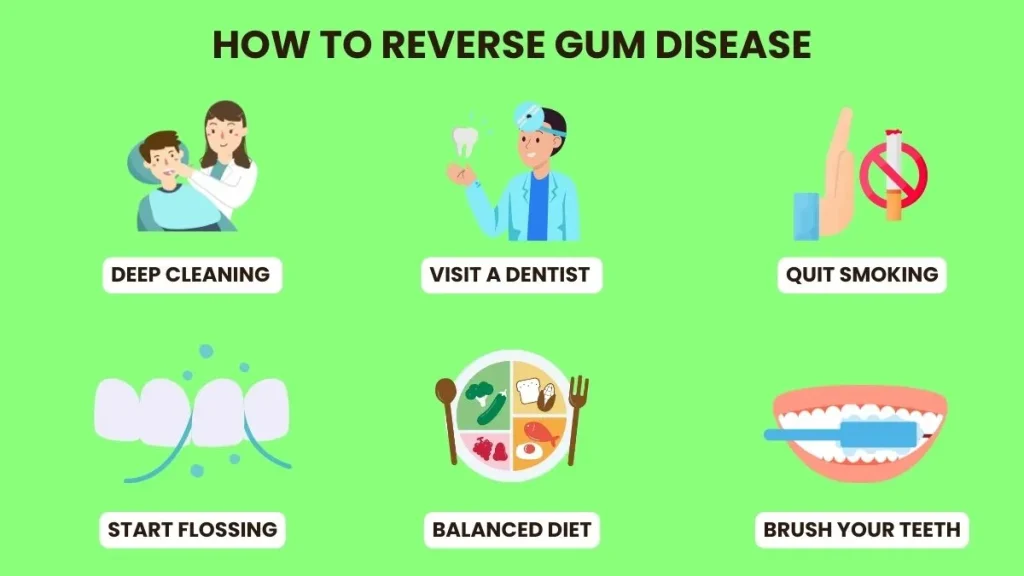
Gum disease is not a minor oral disease, as it can affect your overall well-being. Reversing it requires a combination of professional and home treatments. They are:
- Visit your dentist for a cleaning
- Do some scaling and rooting for deep cleaning at your dentist
- Brush your teeth twice a day
- Quit smoking
- Eat a balanced diet
- Start flossing
FAQs
Can gum disease kill you?
No, gum disease cannot kill you. Gum disease can develop into severe cases that can seriously damage your heart and shorten your life. It may sound exaggerated, but bacterial gum disease like gingivitis leads to periodontitis, which, on the other hand, can lead to life-threatening endocarditis.
How long can you keep your teeth with periodontal disease?
With the proper oral care regimen and maintenance for your entire lifetime! That’s right, not all people with periodontal disease lose teeth! In a 1978 study of 600 people with periodontal disease, half of the participants did not lose any teeth.
Is gum disease contagious?
No, gum disease is not contagious. You can not get the disease by sharing a drink or food with someone who unknowingly has gum disease. The bacteria that cause gum disease can pass from person to person. While you can’t catch gum disease through brief, casual contact, repeated and long-term contact through saliva, such as kissing, may increase your risk for periodontal disease.
Can you reverse gum disease?
Yes, you can reverse gum disease when treated early enough. But if you’ve already lost bone around your teeth due to infection, the disease is too advanced to reverse. However, it would be best to manage it with proper treatment and consistent, diligent oral hygiene.
Is gum disease curable?
No, gum disease isn’t curable but manageable with proper treatment. You can’t cure it because once you lose structural support around your teeth, you don’t usually get all of it back. However, treatment can reduce infection and rebuild your bone and tissue to some degree.
Conclusion
Periodontal disease is a pathological condition associated with inflammation of the tooth-supporting structures. It occurs in response to bacterial plaque on the tooth surface. Gum disease is preventable and treatable. With regular care, timely intervention, and guidance from oral hygienists, individuals can maintain healthy gums and a radiant smile. Ready to treat your gum disease?