
Do you have a pounding heart, feel light-headed or struggle to breathe? That’s a panic attack. Now, that doesn’t mean you have panic disorder. We’ll take a look at what it is, its symptoms, its causes, the difference between panic and anxiety attacks, along with how to manage and treat this disorder. Ready to get some of the weight off your chest? Let’s dive in!
Understanding Panic Disorder
Panic disorder is pretty common. About 2 to 3% of the United States suffer from panic disorder. But what is it? Individuals who have unexpected yet frequent panic attacks suffer from this condition. It can feel like you’re about to have a heart attack or feel tingling all over your face. You can even feel like you have just run a marathon with how out of breath you are.
What is panic disorder ICD 10? Panic disorder is coded and is the 10th revision (ICD-10). Codes help healthcare providers document and categorize this diagnosis which makes treatment, billing and insurance claims easier.
Symptoms of Panic Disorder
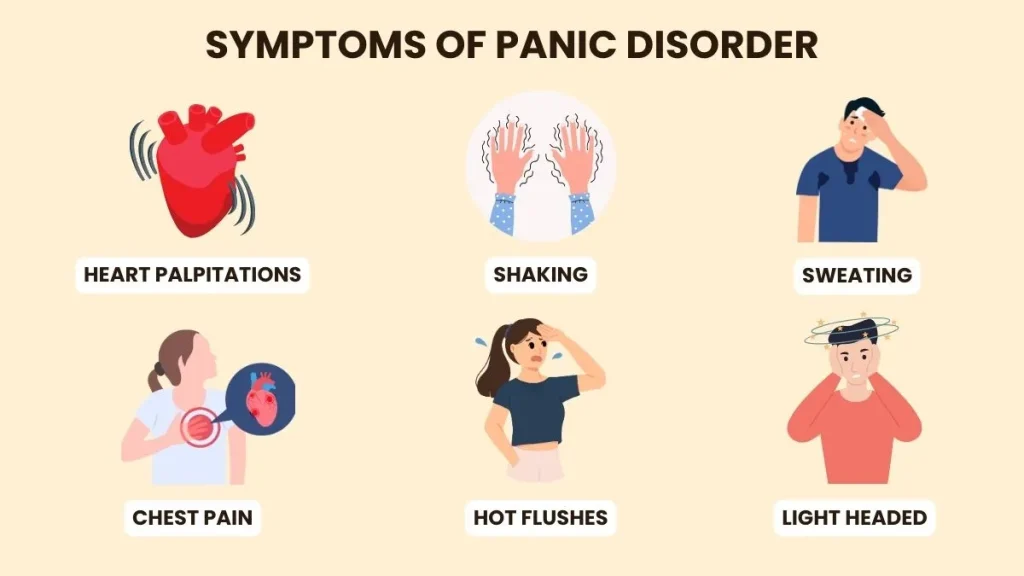
Knowing the signs of panic disorder is important for detection and effective treatments. It can be physical and psychological.
Here are the symptoms:
Physical
- Heart palpitations
- Sweating
- Shaking
- Shortness of breath
- Chest pain
- Light headed
- Hot flushes
- Numbness or tingling
Psychological
- Intense fear
- Detachment
- Fear of losing control
- Fear of dying
Signs of Panic Attack while Sleeping
You can have panic attacks while you are sleeping. Let’s take a look at the signs!
- Waking up with an intense fear
- Feeling out of breath when waking up
- Sweating while sleeping
Causes of Panic Disorder
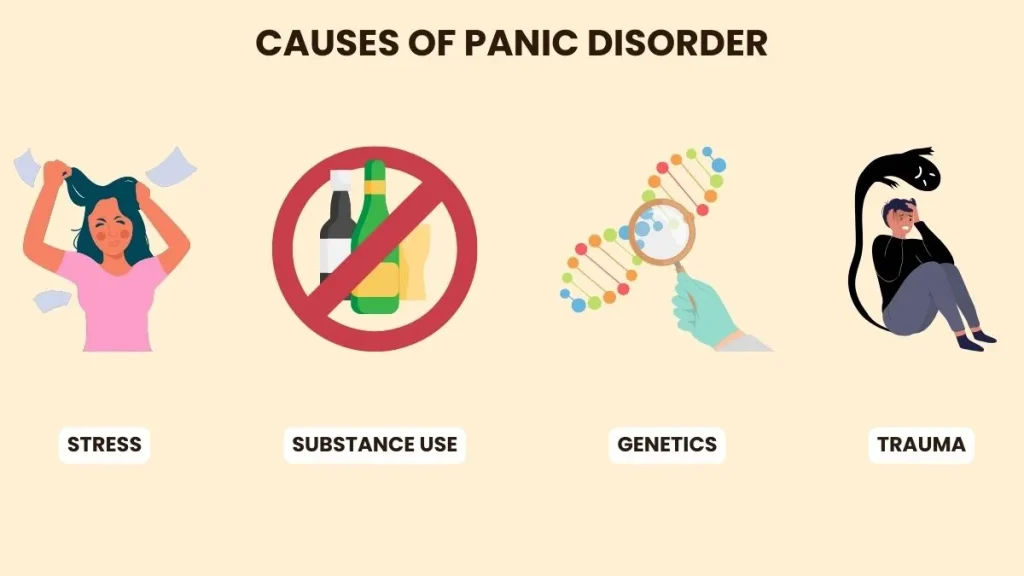
While the exact cause of panic disorder is unknown, there are many factors that cause it.
They are:
- Genetics
- Trauma
- Stress
- Substance use
Panic Attack vs Anxiety Attack
Panic and anxiety attacks have a lot of similarities, but there is a difference. Panic attacks are more intense and sudden. There is often an unclear trigger. Whereas stressors often cause anxiety attacks and last longer. It can last for days. Crazy, right? Here are some examples down below of both panic and anxiety attacks.
Examples
Panic Attacks
Imagine standing in a shopping center or mall, and out of nowhere, your heart starts racing, you feel like you can’t breathe, and the room starts spinning. It makes you feel like you’re having a heart attack. This lasts for a few minutes and leaves you extremely exhausted.
Anxiety Attacks
Your boss asked you to do a presentation next week. You start to tense up and feel anxious until your presentation and have trouble managing both your stress and sleep.
How to Help Someone Having a Panic Attack
Panic attacks can be awful. The best thing to do is to stay calm and ask what they need from you, as there are different coping methods. Breathing, practicing mindfulness and finding a focused objective are some methods used to cope with panic attacks.
How to Calm Down from a Panic Attack
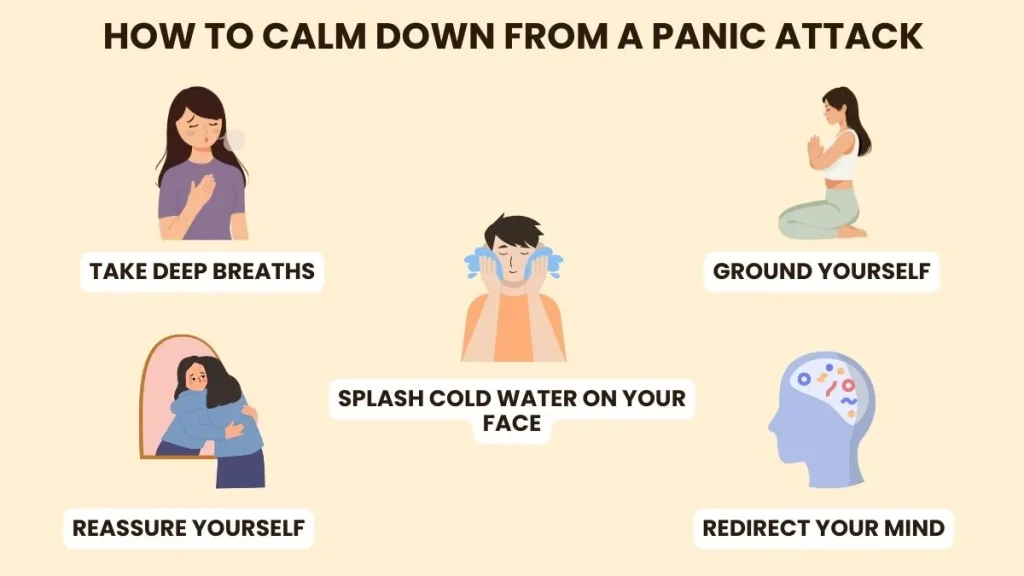
Panic attacks aren’t heart attacks. I repeat panic attacks aren’t heart attacks. That’s a good thing! Reassuring yourself is one of the best techniques for calming yourself.
Here is what you can do to calm down from a panic attack:
- Take deep breaths
- Ground yourself
- Reassure yourself
- Splash cold water on your face
- Redirect your mind
Treatments
According to the Cleveland Clinic, treatment is vital. Treatment lowers the risk of suicidal thoughts and improves quality of life. Isn’t that great? Let’s take a look!
- Psychotherapy: Cognitive-behavioral therapy (CBT) can help understand and manage panic attacks.
- Medication: Drugs can help with both frequency and severity.
- Lifestyle: Exercise, diet changes, and stress management can reduce symptoms significantly.
If this condition starts affecting your everyday life, seek professional help!
Conclusion
Panic disorder can decrease your quality of life, but the good news is that it’s treatable. We’ve walked you through the symptoms and signs like heart palpitations and intense fears. Managing this condition involves understanding the differences between panic and anxiety attacks, identifying the causes, and seeking the right treatment. Treatment options include psychotherapy, medication, and lifestyle changes. Even something as small as changing your diet can help manage panic disorder.
If you or anyone you know suffers from panic attacks, seeking professional help can be a game changer for your mental health!