
Stomach ulcers are uncomfortable sores that appear in the lining of your stomach. They can often be very painful and lead to serious consequences if not treated and left to worsen. However, it’s possible to manage and heal these unpleasant sores with the right food choices and dietary changes. Let’s start with what they are!
What are Stomach Ulcers?
Sometimes, the lining in our stomachs can form sores, which are often caused by a few factors. But they’re primarily a result of a bacteria called Helicobacter pylori or from persistently using painkillers. Even though stomach ulcers are common, it’s important that you seek medical care, as it’s a crucial part of recovery. Alongside this is a good diet. Eating healthy food can help soothe and ease symptoms and stop the wound from worsening.
Stomach ulcers can cause symptoms like:
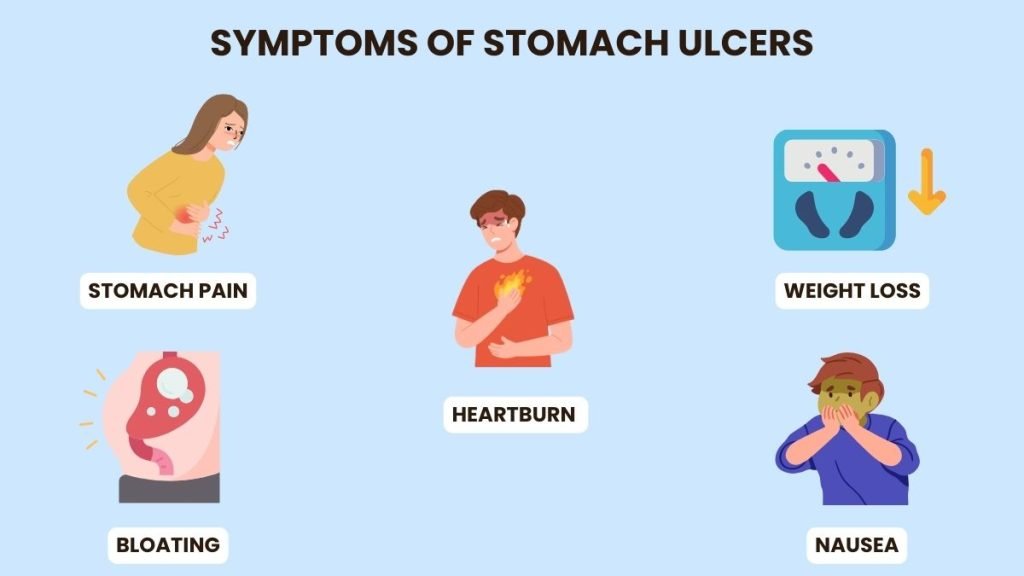
- Stomach Pain
- Heartburn
- Weight loss
- Vomiting, sometimes with a bit of blood in.
- Nausea
- Bloating
- Quickly getting full after eating.
- Indigestion
If stomach ulcers aren’t treated in time, they can cause more severe symptoms, such as stomach cancer and internal bleeding.
Best Foods for Healing Stomach Ulcers
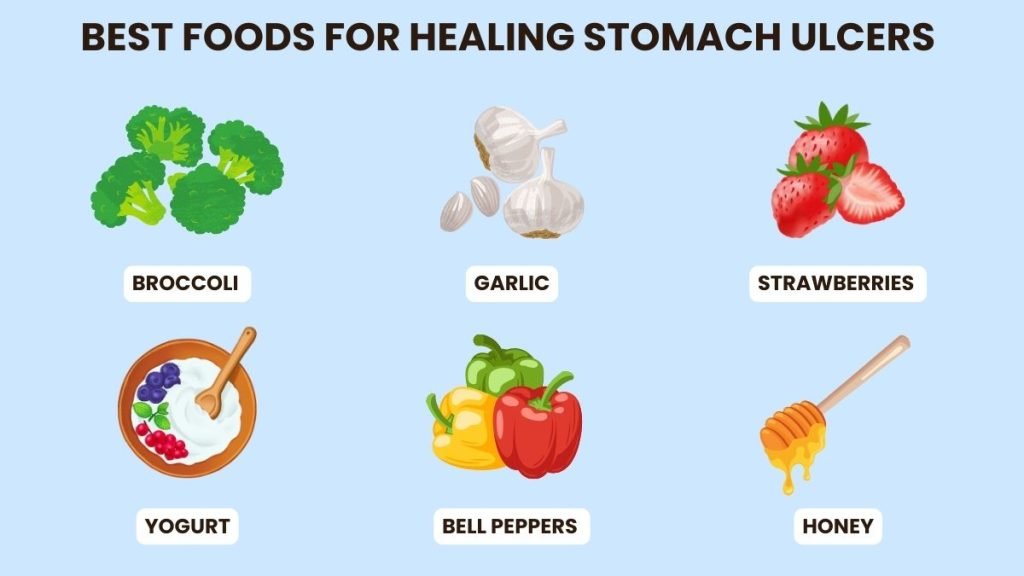
Although food cannot cure stomach ulcers, the right dietary choices can significantly assist in many ways, according to Healthline. Eating healthy food can be beneficial in treating and fighting against the bacteria that cause these Ulcers. Alongside prescribed treatments from Healthcare professionals, a balanced diet can certainly improve the effectiveness of your doctor’s prescription.
Here are the best Helicobacter pylori combating foods:
Vegetables
- Leafy Greens (spinach, kale, chard, etc.)
- Broccoli
- Carrots
- Bell peppers
- Reddish
- Cabbage
- Cauliflower
Fruits
- Blackberries
- Apples
- Cherries
- Strawberries
- Raspberries
- Blueberries
Probiotics
- Kombucha
- Kefir
- Yogurt
- Miso
- Sauerkraut
- Kimchi
Additional
- Licorice
- Olive oil
- Garlic
- Honey
- Green Tea (decaffeinated)
- Turmeric
Supplements and Other Support
Probiotics like Bifidobacterium, Saccharomyces, and Lactobacillus can be specifically useful in gut health. These supplements can also minimize the side effects that may be related to antibiotics. Other kinds of supplements that fight Helicobacter pylori bacteria are Licorice and a component found in turmeric called curcumin. This extract aids with inflammation and easing stomach ulcer-related symptoms. Remember to run any new medication past your Healthcare provider before starting them. They can not only prevent you from possible risks but can also recommend the best options.
What Foods to Avoid
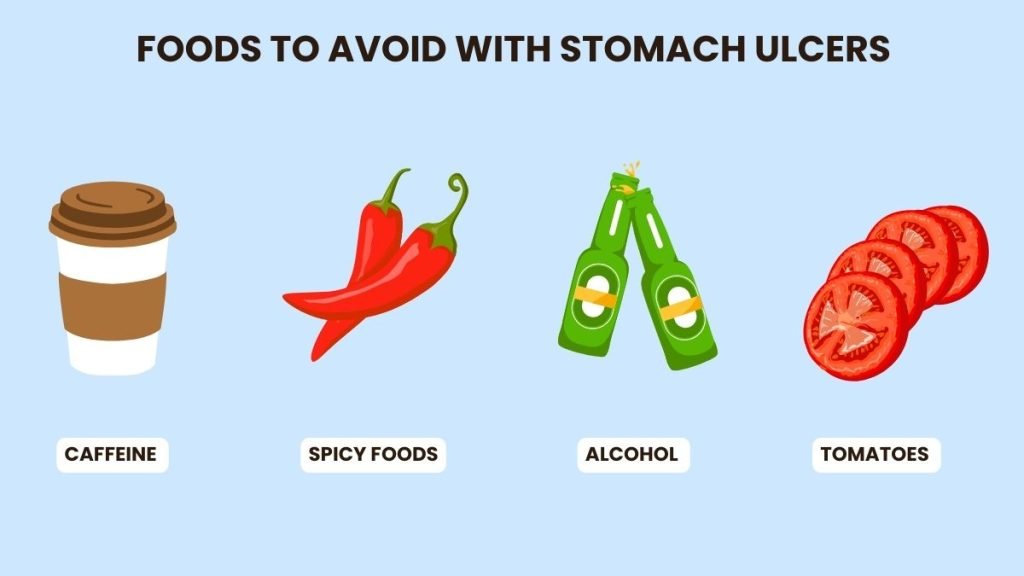
Experiencing acid reflux while having stomach ulcers can be triggered by certain foods. These foods can make your lower oesophagal sphincter become weak. This lets stomach acid climb up the oesophagus.
Here are foods to avoid:
- Caffeine
- Tomatoes
- Citrus and acidic foods
- Chocolate
- Spicy foods
- Alcohol
Try replacing your morning coffee with green tea because small changes can add up. This also applies to not overeating and avoiding eating right before going to bed.
How to Treat Stomach Ulcers
There are a few different ways to treat and manage stomach ulcers. These include medications such as H2 blockers, proton pump inhibitors and antibiotics. These medications help to ease stomach acid and prevent it from causing harm to your stomach lining.
Here are some lifestyle changes to consider when managing stomach ulcers:
- Avoid irritations: Make sure to stay away from triggers like spicy and acidic foods, caffeine and alcohol.
- Quit nicotine: There has been a link between smoking slowing down the healing process and causing irritation to stomach ulcers.
- Stress management: Stress affects the body, and it can worsen and cause symptoms to flare up when you feel very stressed. It’s important to learn proper stress management techniques.
- Balanced diet: Nutrient-rich foods like vegetables, whole grains, and fruits can help soothe stomach ulcers and symptoms. Eating a healthy, balanced diet also benefits overall health.
Conclusion
You can heal stomach ulcers by making healthy lifestyle changes and taking prescribed medications such as antibiotics. These uncomfortable and painful stomach sores don’t have to hinder your quality of life. Want to speed up your recovery? Eating vegetables, whole grains, fruits, and more can give that essential nutrients that your body needs.