
Suicidal thoughts, suicide is one of the biggest causes of death in America, with more than 12 million contemplating it every year. Heartbreaking, right? But we can do something about it!
Recognizing the warning signs for suicide can possibly save family and loved ones. Feeling unsure of how you should approach the topic? Don’t worry – we guide you through it all. Let’s start!
Lifelines Suicide Prevention – Warning Signs for Suicide Thoughts
Did you know that every 11 minutes, someone dies by self-harm? This equals to about 130 people every day. Recognising the signs of suicidal thoughts could save a life!
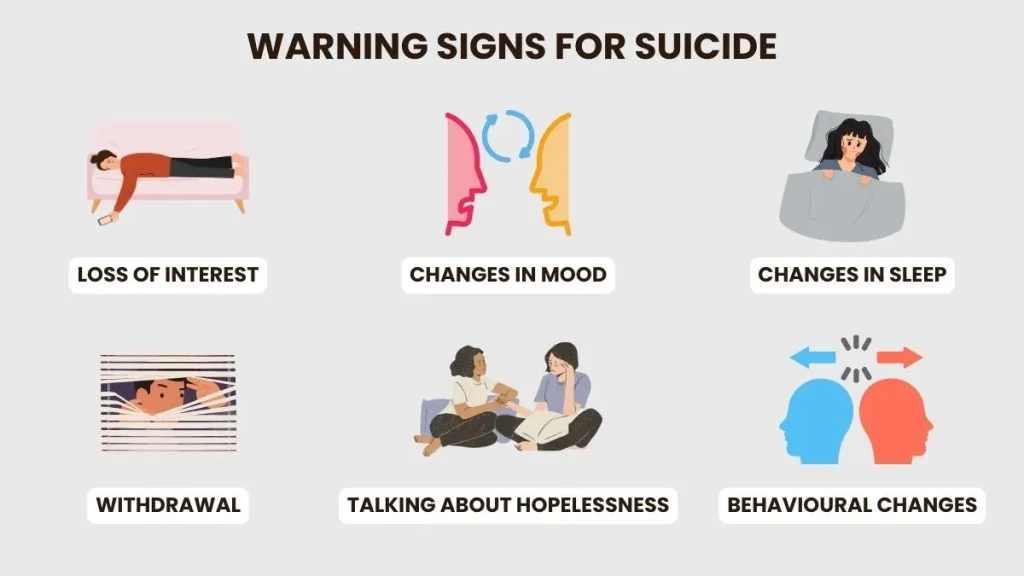
Here are the signs warning signs for suicide:
- Loss of interest: If they are no longer enjoying things that once made them happy, they are most likely suicidal.
- Changes in mood: Things like mood swings, sadness and anger change when people are suicidal.
- Talking about hopelessness: Some feel like they have no way out and express that to a loved one or someone they know.
- Sleeping: Most only associate suicide with trouble sleeping, but some people sleep most of the day or an unhealthy amount.
- Behavioural changes: Things like giving things away and the use of alcohol and other substances.
- Withdrawal: Isolating from friends and family is a common sign. People do this for a number of reasons, including shame and guilt.
Approaching the Subject
A common misconception is that talking about the topic will make someone harm themselves. This is not true! Have an open mind and listen to what they have to say. You can start by saying something like: “I’ve noticed lately that you seem down, and I’m worried.”
Validate them and say things like: “You must feel so alone right now” or “That sounds really hard.” They should feel both loved and heard so that they can get the help they need and start healing.
Offering Support
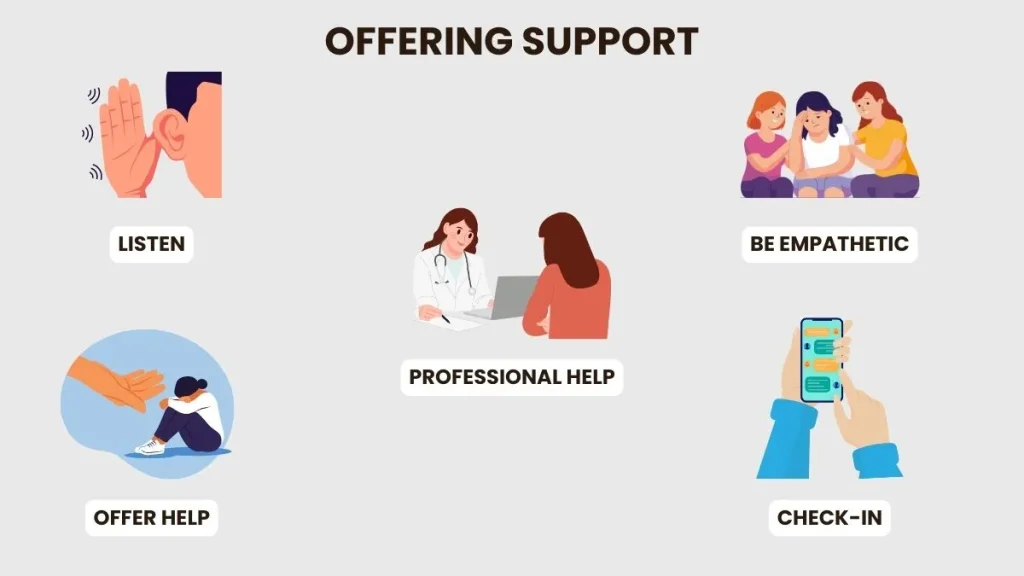
Listen
Be there for them mentally and physically. Sometimes, an ear can be really comforting. So, listen without interrupting them or judging them. Only give advice when they ask for it. Remember, this is about them!
Be Empathetic
They need to feel heard, so listen! Say things like: ”I can’t imagine how that must feel” or “Wow, I am sorry that you are going through it”.
Professional Help
Suggest that they talk to a professional, such as a therapist or counselor. But don’t force them or make them feel like they don’t have a choice. At the end of the day, you want to support them and how they feel.
Check-in
To show that you care, check in on them. Send a message saying something like: “How are you feeling today?”
Respect their Space
Just like how you allow them to make their own choices, let them set the space and follow them. If they want to talk about it all day long, join them! The same goes for if they only feel comfortable talking when they feel they need to get something off their chest.
Offer Help
Daily tasks might be too much for them, so offer some help. This shows them that you care and take some weight off their shoulder. It’s one less thing to worry about.
Self-Care for Supporters to Overcome Suicidal Thoughts
While self-care might seem selfish, it isn’t. Support someone who is suicidal can drain you mentally and physically. So, take care of yourself so that you can help others.
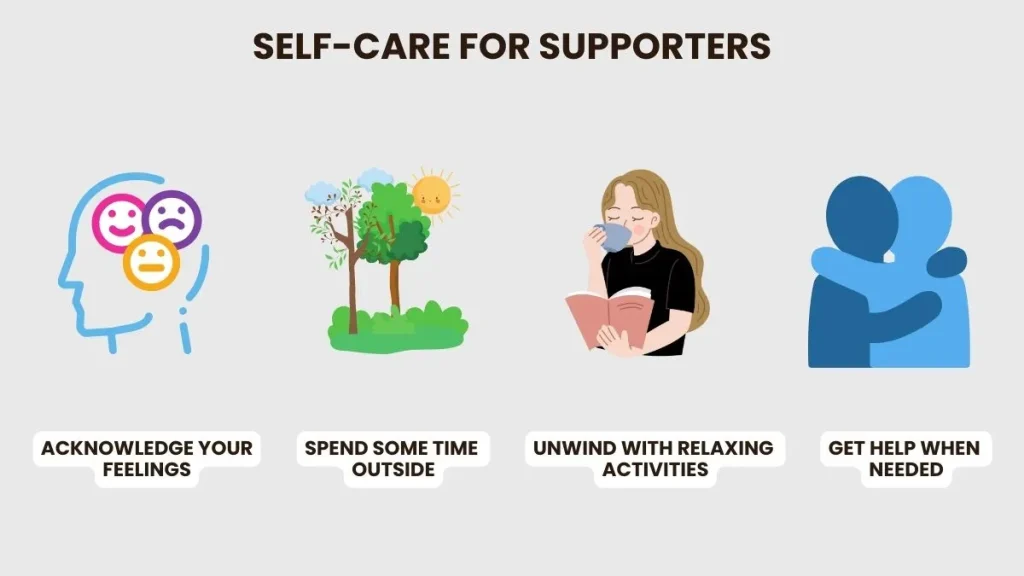
Here are some self-care activities you can try:
- Acknowledge your feelings
- Seek support
- Get help when needed
- Unwind with relaxing activities
- Meditate
- Set boundaries
- Get enough sleep
- Spend some time outside
- Maintain social connections
FAQs
Is it normal to have suicidal thoughts?
Self-harm thoughts are very common, as millions of Americans have thought of harming themselves, but it’s not normal. Reach out for help if you are feeling suicidal. Dial 988 if you want emergency services to help you!
What should I avoid when talking to someone who wants to harm themselves?
Don’t say things like “just think positive” or “it’s not that bad”. Don’t belittle their feelings or offer simple solutions. Instead, validate their emotions.
How can I get professional help for my loved one?
Make sure that they know getting help is not a sign of weakness. You can start off by looking for licenced professionals who specialise in suicide, use crisis services if they are in danger and help them in other ways. Scheduling and transportation are among the many things that you can help them with.
What should I do if someone have suicidal thoughts and doesn’t want any help?
Stay with them, listen without judging, express your concern, remove objects that they can hurt themselves with, contact crisis services and reach out to other family members or loved ones.
Conclusion
Suicide is preventable! Talking about it helps despite the misconception that it might worsen the situation. Recognising signs of suicidal thoughts can save your loved one. They include loss of interest, changes in mood, talking of hopelessness, sleeping patterns, behaviour changes, and withdrawal.
Self-care is also just as important! How can you take care of others if you aren’t taken care of? Try some activities like meditating, getting enough rest, socially interacting, or getting help from yourself if you need it. Remember that getting help is not weak!