

Multiple sclerosis (MS) affects the spinal cord, brain, and central nervous system. There are different types of MS, and it can range from mild to severe, with the worst cases resulting in disabilities. However, catching it early and getting the right treatment can help slow the progression and ease your symptoms. Let’s start with what causes this condition and work our way down to how you can manage it!
What Causes Multiple Sclerosis?
The protective cover over our spinal cords, brains, and optic nerve is called myelin. It is often called a sheath and keeps these vital fibers safe and functioning. Multiple sclerosis is a condition that causes your immune system to start damaging and attacking myelin. MS, is a serious illness that causes inflammation and tears, which can lead to scar tissue.
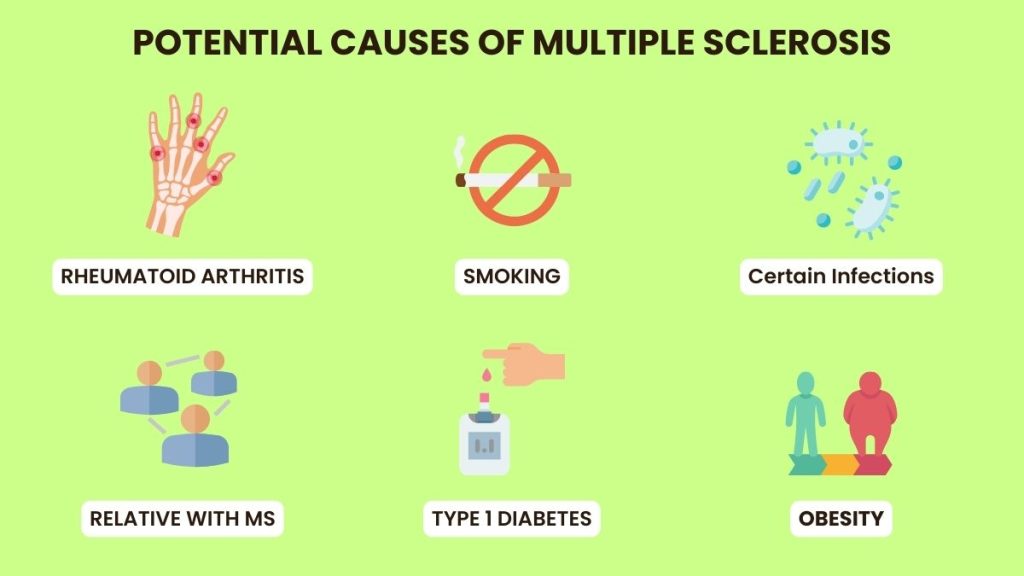
This scar tissue can get in the way of signals to and from the affected places, such as the spinal cord and brain. The cause of multiple sclerosis is unknown, but doctors have determined which factors increase the chances of developing MS.
These risk factors are:
- Obesity
- Smoking
- Types of infections
- A close relative with multiple sclerosis
- Type 1 diabetes
- Rheumatoid arthritis
It’s not to say that multiple sclerosis is hereditary, but someone who has a close relative with MS does have a higher chance of developing the condition. Although more studies are needed, it can be said that environmental factors like toxins or viruses are also very common triggers for MS.
The Different Types of MS
Did you know that multiple sclerosis typically starts as one type and then changes or worsens over time? That’s strange!
Here are the 4 types of multiple sclerosis:
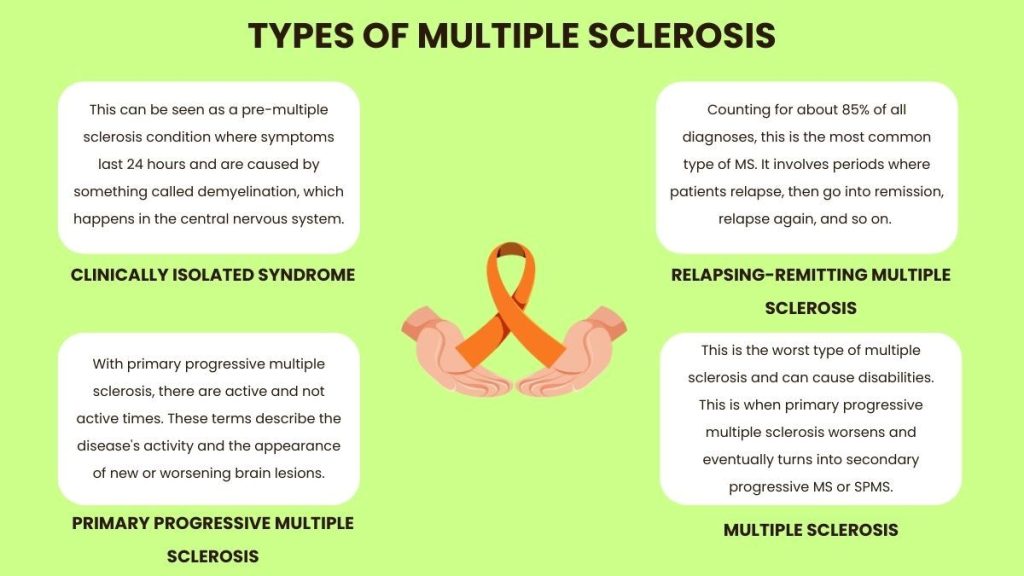
Clinically Isolated Syndrome
This can be seen as a pre-multiple sclerosis condition where symptoms last 24 hours and are caused by something called demyelination, which happens in the central nervous system. Also referred to as CIS, it cannot be diagnosed as MS as the symptoms come in episodes, or a person can only have a single episode. Clinically isolated syndrome can resolve on its own and does not mean someone has or will have MS, but it is important that when these symptoms show up, you seek medical help.
Relapsing-remitting MS
This is the most common type of MS, accounting for about 85% of all diagnoses. It involves periods where patients relapse, then go into remission, relapse again, and so on. The progression of the disease is also slower than that of more progressive types. In remission, symptoms may not be completely gone but are milder and not as bad as during relapses.
Primary Progressive MS
With primary progressive multiple sclerosis, there are active and not active times. These terms describe the disease’s activity and the appearance of new or worsening brain lesions. This type of MS can make your neurological functions immensely worse with the onset of its symptoms.
Secondary Progressive MS
This is the worst type of multiple sclerosis and can cause disabilities. This is when primary progressive multiple sclerosis worsens and eventually turns into secondary progressive MS or SPMS. Despite suffering from disability and the condition gradually getting worse, there are still high chances of experiencing noticeable relapses.
Symptoms of Multiple Sclerosis
While you can’t test for MS yourself, symptoms can help detect this condition early. Let’s take a look!
You should contact a healthcare professional if you experience the following symptoms:
- Fatigue
- Leg and feet numbness
- Weak muscles
- Struggling to balance
- Muscle spasms
- Blindness
- Optic neuritis
- Nystagmus
- Loss of vision in one or both eyes
- Diplopia
- Slurred speech
- Volume changes when talking
- Long pauses between syllables and words
- Chronic or acute pain
- Issues with memory, finding words, and concentration
- Difficulties with sleep
- Poor bladder control
- Tremors
- Finding it hard to chew and swallow
How is Multiple Sclerosis Diagnosed?
A neurological examination takes place to see whether or not someone has MS. A neurologist often performs this and will ask you about your medical history, symptoms, and other related questions. Other tests are usually done, too.
Other tests include the following:
- Blood tests
- Spinal tap
- Visual evoked potentials
- MRI scan
- Optical coherence tomography
Treating and Managing Multiple Sclerosis
There is no cure for multiple sclerosis. Treatment of MS is to help slow down the disease progression and ease symptoms and relapses.
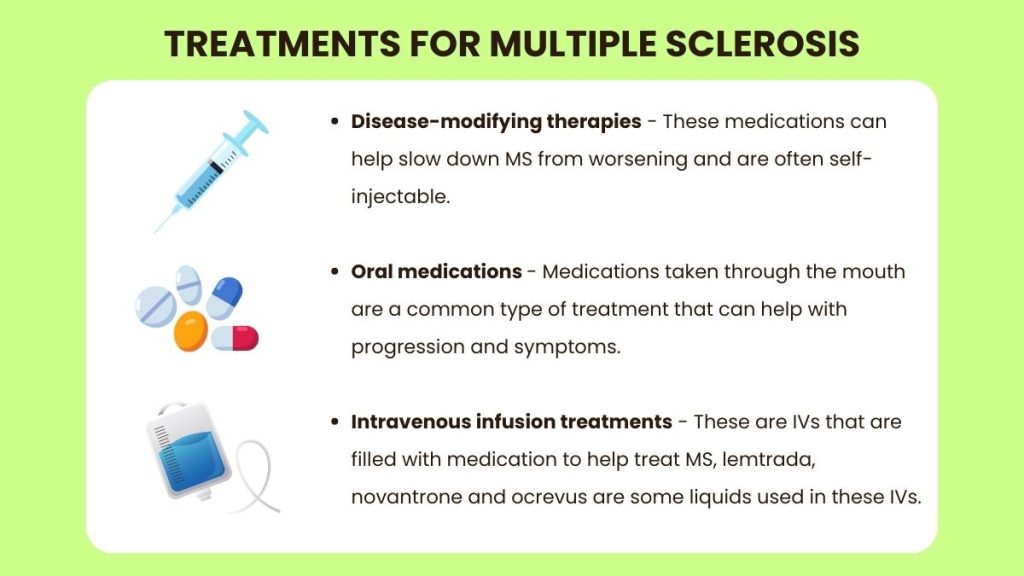
Here are ways that doctors treat multiple sclerosis:
- Disease-modifying therapies – These medications can help slow down MS from worsening and are often self-injectable.
- Oral medications – Medications taken through the mouth are a common type of treatment that can help with progression and symptoms.
- Intravenous infusion treatments – This treatment involves IVs filled with liquids like Lemtrada and Novantrone. It reduces the frequency and severity of relapses.
Conclusion
Multiple sclerosis may be an intimidating disease to face, but thankfully, there are ways to detect its early onset and find effective treatments. Progressive MS may not be reversible, but living a healthy and happy life is not out of reach. Taking care of yourself and your condition can make a world of difference to your well-being!