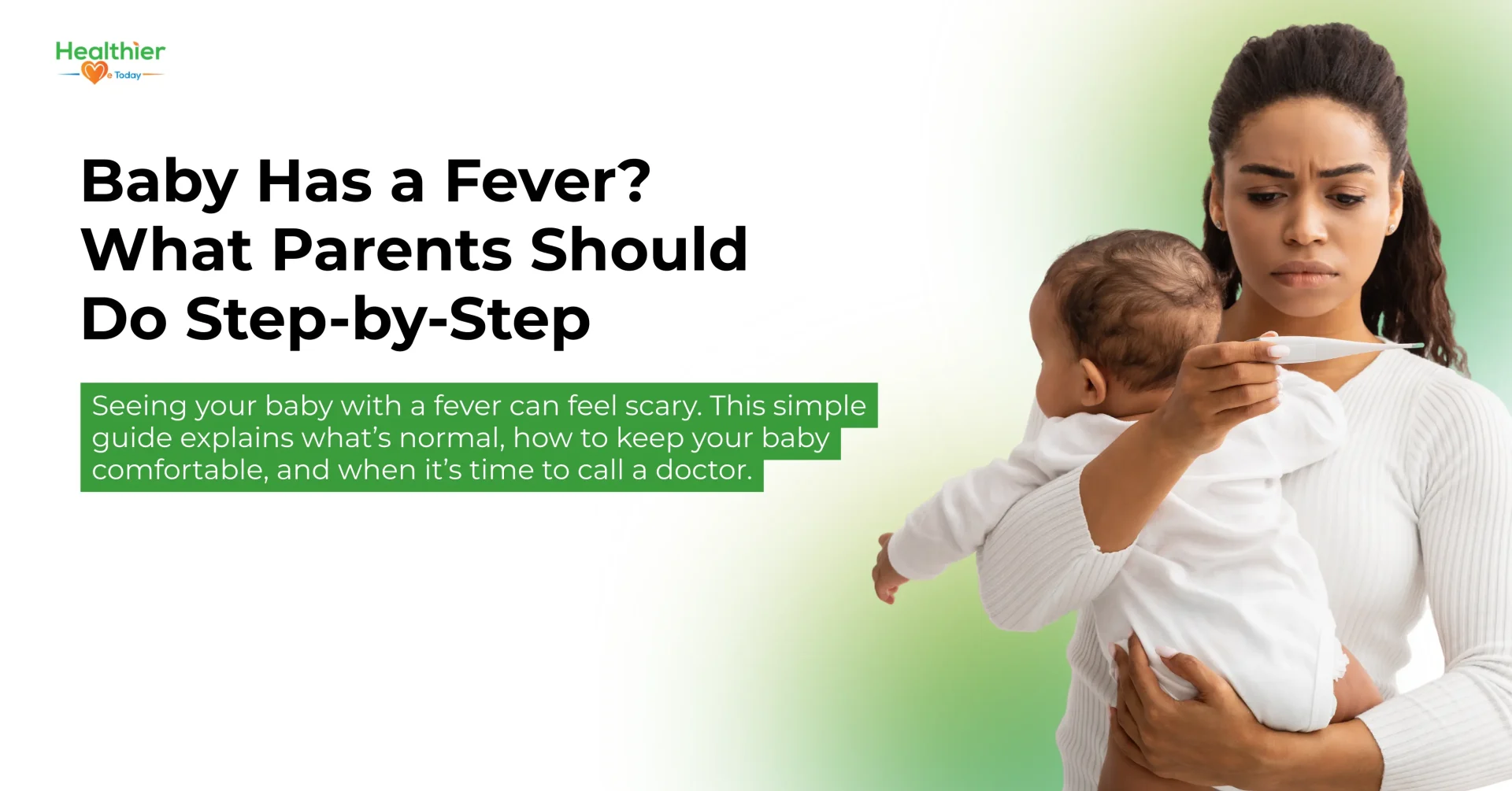
Seeing a baby with fever can be scary, especially when you’re not sure what’s normal and what needs urgent attention. Your mind races, you worry about every degree on the thermometer, and you want to know how to help your baby feel better as quickly and safely as possible. When your baby feels warm, unsettled, or uncomfortable, knowing what to do next can make all the difference and help you stay calm in the moment.
This guide walks you through clear, step-by-step actions to take when your baby has a fever, how to keep them comfortable, and when it’s time to contact a healthcare professional.
Take a Breath First

Seeing that your baby has a fever can be scary, and it’s completely normal to feel anxious in that moment. Before you rush into action, take a deep breath and pause for a second. Staying calm helps you think more clearly and respond in the best way for your baby. Fevers are very common in babies and often indicate the body is fighting off a mild infection.
When you understand what to do if baby has fever, it becomes easier to focus on the right steps and stay calm rather than panic. Most fevers are your baby’s way of fighting off an infection, and starting with a calm mindset sets the tone for caring for your baby safely and confidently.
New parents often have many questions during those early weeks, and having a checklist of newborn must-haves can make daily care much easier.
Step 1: Check Your Baby’s Temperature Correctly
Before taking any next steps, it’s important to accurately measure your baby’s temperature. A clear baby temperature guide helps you understand what a normal temperature is and when it may signal a fever. Checking your baby’s temperature correctly from the beginning helps you avoid confusion and unnecessary worry.
What Temperature Is Considered a Fever in Babies?
You might be wondering what temperature is fever for baby. Generally, a fever is present when a baby’s rectal temperature reaches 38°C (100.4°F) or higher. Measurements taken under the arm or on the forehead can be a bit lower and less accurate, so these methods are best for a quick check rather than a definitive reading.
Best Thermometer to Use by Age
The right thermometer for your baby depends on their age and comfort. For newborns and babies under 3 months old, a digital rectal thermometer provides the most accurate reading. For babies over 3 months, you can use a digital thermometer under the arm or on the forehead.
However, these may not be as accurate. Ear thermometers work well for babies over 6 months, since younger infants’ ear canals are too small for reliable readings.
How to Take a Baby’s Temperature Safely
To take your baby’s temperature safely, keep them calm and comfortable. Remove any clothing that might get in the way. Always clean the thermometer before and after use, and follow the instructions carefully. Never leave your baby alone while you take their temperature.
If the reading seems off, wait a few minutes and check again. Write down your baby’s temperature and the time to help you watch for patterns and provide useful information if you need to contact your healthcare provider.
Step 2: Look at Your Baby & Not Just the Number
When your baby has a fever, the thermometer reading is only part of the story. How your baby looks, acts, and behaves can give you important clues about what’s going on.
Baby Fever Symptoms to Watch For
When your baby has a fever, paying attention to how they act can tell you a lot about their condition.
Baby fever symptoms to watch for include:
- Unusual fussiness or crying – your baby may be more irritable than normal.
- Shivering or feeling cold – sometimes a fever can make them feel chilly.
- Sleepiness or difficulty waking – they might be more tired than usual or hard to rouse.
- Poor feeding or refusal to eat – a baby with a fever may not want milk or solid foods.
- Rapid breathing or a fast heartbeat – these can indicate your baby is working harder to fight the fever.
- Pulling at ears or other body parts – may signal discomfort or pain.
Watching for these symptoms gives you a clear picture of how your baby is handling the fever and helps you decide whether home care is enough or if you need to call your healthcare provider.
Baby Fever Without Other Symptoms
Sometimes your baby may have a fever but still act like their usual self. They might smile, play, and feed normally, with no clear signs of anything wrong [babycenter.com]. This can happen when your baby’s body is fighting a mild condition, such as a small infection or teething. Even when there are no other symptoms, it’s still important to watch your baby closely. Keep them comfortable, offer feeds often, and check their temperature from time to time so you can respond quickly if anything changes.
Signs Baby Fever Is Serious
Sometimes a fever can be a sign that your baby needs medical attention. A baby’s fever may be serious if the temperature stays very high, your baby struggles to breathe, seems extremely tired or difficult to wake, keeps vomiting, or develops a rash. You may also notice weak crying or that your baby doesn’t want to feed at all. If any of these signs appear, contact your healthcare provider as soon as possible. Acting early helps ensure your baby gets the care they need without delay.
Step 3: Comfort and Care at Home
After checking your baby’s temperature and observing their behavior, it’s important to focus on comfort and gentle care. Gentle care at home can help soothe your baby, ease discomfort, and give their body time to recover. While doing this, it’s still important to keep an eye on any changes so you know when extra help might be needed.
How to Reduce Baby Fever Safely
To safely reduce a baby’s fever, focus on comfort rather than trying to bring the temperature down too quickly. Dress your baby in lightweight clothing, keep the room comfortably cool, and offer feeds often to prevent dehydration [blueberrypediatrics.com]. Let your baby rest as much as they need, and avoid over-bundling, which can trap heat and raise their temperature further.
Parents often ask whether a bath can help comfort a sick baby, which is why understanding how often to bathe a newborn can be helpful during illness and everyday care.
Baby Fever Home Care Tips
Good baby fever home care starts with close observation and gentle support. Make sure your baby stays hydrated with breastmilk, formula, or fluids appropriate for their age. Keep routines calm and quiet, offer extra cuddles, and check their temperature regularly. These small steps help your baby feel secure while you monitor whether the fever is improving or needs medical attention.
If your baby isn’t feeding as well during illness, learning how to produce more breast milk may help support hydration and nutrition during recovery.
Safe Fever Medicine for Babies (When Appropriate)
In some situations, your healthcare provider may suggest medication if your baby is very uncomfortable or in pain. It’s important to always follow the correct dose based on your baby’s age and weight, and never give any medicine without proper advice. Medication is meant to help your baby feel better, not to replace close monitoring of their symptoms or behavior.
What NOT to Do If Baby Has a Fever
Avoid common mistakes that can make a fever worse or delay proper care. Do not give cold baths, alcohol rubs, or adult medications. Never ignore baby fever warning signs, such as difficulty breathing, extreme sleepiness, or a fever that doesn’t improve. Trust your instincts; if something doesn’t feel right, it’s always better to seek medical advice.
Step 4: Monitor and Reassess
Once your baby is resting and more comfortable, the next step is to keep watching how things change over time. Fevers can shift quickly in babies [childrenshospital.org], so checking in regularly helps you know whether your baby is improving or if extra care may be needed.
How Long Fever Lasts in Babies
In many cases, a fever in babies lasts a few days and slowly improves as their body fights off the illness. You may notice the temperature rising and falling during this time, which is normal. What matters most is how your baby is acting overall. If the fever lasts longer than expected or doesn’t seem to ease, it’s a good idea to speak with your healthcare provider.
When Fever Is Improving
Signs that a fever is improving often show in your baby’s behavior before the temperature fully returns to normal. Your baby may start feeding better, sleeping more comfortably, or becoming more alert and playful. Even if the fever hasn’t completely gone away, these changes usually mean their body is recovering and responding well to care.
When Symptoms Are Getting Worse
If your baby’s fever keeps climbing or they start acting very different from normal, it could mean they’re not getting better. You might notice more crying than usual, trouble breathing, poor feeding, or that your baby seems very tired and hard to wake. When things don’t improve or start to feel more worrying, it’s best to trust your instincts and contact a healthcare provider so your baby can be checked.
When Baby Fever Is Dangerous
While many fevers are mild, there are times when a baby’s fever needs urgent attention. Knowing when a fever may be serious helps you act quickly and feel more confident about when to seek medical help.
Fever in Newborn Baby (Under 3 Months)
If your newborn is under 3 months old and has a fever, it’s important to take it seriously. At this age, a fever can be a sign of an infection that needs medical care, even if your baby seems calm or is feeding normally [mayoclinic.org]. You should contact a healthcare provider right away so your baby can be checked and treated if needed.
When to Call the Doctor for Baby Fever
You should call the doctor if your baby’s fever lasts more than a day, keeps coming back, or if your baby seems unwell. This includes poor feeding, ongoing crying, trouble sleeping, or if your baby doesn’t seem like themselves. Getting advice early can help prevent problems and give you peace of mind.
Emergency Warning Signs
Some symptoms mean you should seek medical help immediately. These include trouble breathing, a stiff neck, seizures, a rash that spreads quickly, or if your baby is very difficult to wake. Trust your instincts; if something feels wrong, it’s always safer to get emergency care right away.
What Causes Baby Fever?

A fever is usually a sign that your baby’s body is working hard to protect itself. When your baby’s immune system detects something unusual, such as a virus or infection, it raises the body temperature to help fight it off.
Here are a few common causes of baby fever:
- Infections – Viral or bacterial infections are the most common cause, such as colds, flu, or ear infections.
- Teething – Some babies may develop a mild fever, though it is usually low-grade.
- Immunizations – Fevers can occur after routine vaccinations as the immune system builds protection [chop.edu].
- Overheating – Being dressed too warmly or staying in a hot environment can raise a baby’s temperature.
- Minor illnesses – Small infections or stomach bugs can sometimes cause a temporary fever.
Most fevers are mild and short-lived, but keeping track of the cause can help you decide when home care is enough and when medical advice is needed.
Tips to Care for a Sick Baby at Home

Caring for a sick baby at home is mostly about comfort, patience, and close attention. Small, gentle actions can help your baby feel more at ease while their body recovers.
Here are some useful tools and tips that many parents find helpful during this time:
- Infant forehead thermometer (no-touch) – It’s easy to check your baby’s temperature without waking them, especially during sleep. It’s quick, gentle, and stress-free to monitor.
- Warm-mist humidifier – Adding moisture to the air can soothe your baby’s congestion, coughing, and dry nasal passages, making breathing easier, especially at night.
- Infant electrolyte solution – If your baby isn’t feeding well or has a fever, this can help keep them hydrated and replace fluids, especially if advised by your healthcare provider.
- Electric baby nasal aspirator – It gently clears mucus from your baby’s nose, helping them breathe, feed, and sleep better.
Along with these tools, offering plenty of cuddles, keeping routines calm, and watching for any changes can go a long way in helping your baby feel safe and supported at home.
While caring for a sick baby, it’s also important to watch for skin irritation, especially diaper rash, which can make babies more uncomfortable.
Conclusion: A Calm and Confident Approach for Parents
Seeing your baby with a fever can be overwhelming, but having the right information helps you respond confidently. Trust your instincts. Stay calm and focus on your baby’s needs. Trust your instincts. Stay calm and focus on your baby’s needs. With a calm approach and lots of gentle care, you can feel more at ease while caring for sick baby at home, helping them feel safe, comforted, and supported as they recover.
Frequently Asked Questions (FAQ)
How do I bring my baby’s fever down?
To help lower your baby’s fever, keep them comfortable with light clothing, offer fluids or breastmilk, and ensure the room isn’t too warm. Let your baby rest and only give medication if advised by a healthcare provider.
When to worry about a baby with a fever?
If your baby is under 3 months old or has a very high temperature, you should be concerned. Also watch for signs like trouble breathing, persistent vomiting, unusual sleepiness, or if they seem very uncomfortable. If any of these happen, or the fever lasts longer than a couple of days, contact your healthcare provider right away.
What is the fastest way to cure a fever?
There isn’t a quick cure for a fever, as it’s part of the body’s natural response to illness. Focus on keeping your baby comfortable with rest, fluids, and comfort rather than just lowering the fever.
What causes baby fever?
Infections, such as colds and viruses, are the most common cause of fever in babies. It can also happen after vaccinations, during mild illnesses, or if a baby becomes overheated. In most cases, a fever is the body’s way of fighting off something.
What not to do if baby has a fever?
Don’t dress your baby too warmly, and avoid giving them a cold bath to lower their temperature. Don’t take any medication without proper advice, and pay attention to warning signs that worry you. If you have any doubts, it’s better to ask a healthcare professional for help.