
Did you know that one in four adults in America has an untreated cavity? That’s shocking! Tooth decay begins when bacteria in your mouth form acids that attack the tooth’s surface, also called enamel. Many are surprised that they have a cavity since they don’t have obvious symptoms like tooth pain. So, do you have a cavity? Let’s take a look at what it looks like, the signs and symptoms, along with stages and what to do!
What Does a Cavity Look Like?
Cavities look different for everyone. Dentists must inspect the teeth and may even take X-rays to find them. Cavities often look like dark spots on the tooth, typically yellow, brown, or black. Early on, it may resemble tooth staining or slight discolouration. As cavities progress, the holes get more extensive and usually darker. A little dot can ultimately consume almost the entire tooth. But what does it feel like? Let’s take a look at the symptoms next!
Tooth Decay Symptoms
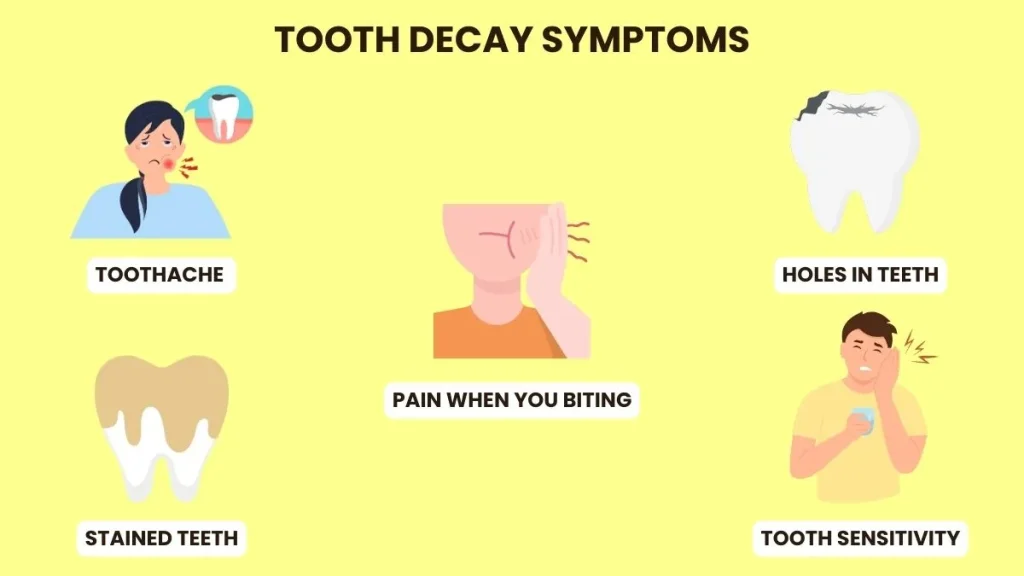
The symptoms of cavities vary, depending on how many you have and where they’re located. At the start, you may not have any symptoms. As the decay gets larger, it may cause symptoms such as:
- Toothache and other pain.
- Tooth sensitivity.
- Mild to sharp pain when eating or drinking something sweet, hot or cold.
- Holes or pits in your teeth that you can see.
- Brown, black or white staining on any surface of a tooth.
- Pain when you bite down.
Tooth Decay Stages
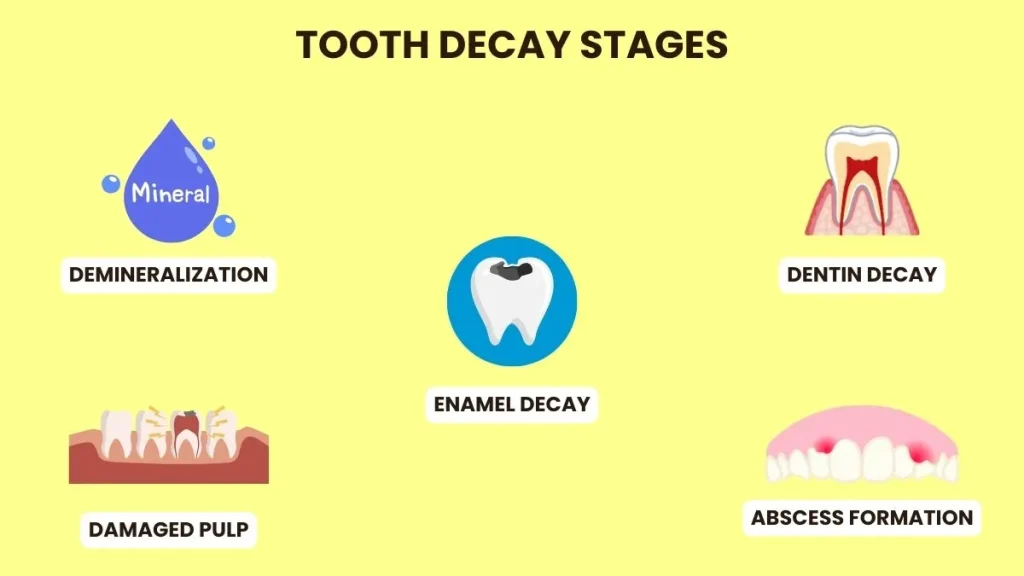
As time passes, tooth decay progresses through the five stages. Here’s a look at each one:
- Demineralization: During the first stage of tooth decay, plaque starts to weaken the outer layer of teeth, the enamel.
- Enamel Decay: If you allow your enamel to continue breaking down, the white spots will start turning brown. You’ve progressed to the second stage of tooth decay, when the enamel starts to deteriorate, and cavities begin to form.
- Dentin Decay: If your cavities aren’t filled in time, your dentin could also get damaged. Dentin is the part of the tooth that’s under the enamel. Softer than enamel, it’s much more sensitive to acid damage.
- Damaged Pulp: The pulp is the layer beneath the dentin. It’s the bottom-most part of your tooth and houses blood vessels and nerves that sustain and provide sensation to the tooth.
- Abscess Formation: In this final stage of tooth decay, bacteria enter the decaying pulp, typically leading to infection. Eventually, an abscess may form at the bottom of your tooth, causing severe pain that can spread to the rest of your mouth, gums, face, and jaw.
How can we Prevent Tooth Decay?
Preventing tooth decay begins with stopping plaque buildup. You can do this by:
- Brushing your teeth at least twice a day with fluoride toothpaste
- Rinsing and flossing every time you eat something sticky, acidic, or high in carbohydrates, mainly chocolate and citrus fruits
- Using interdental cleaners and floss to get rid of as much food debris as possible
- Using fluoride mouthwash at least once a day to kill plaque
- Asking your dentist about getting dental sealants on your molars to protect them from decay
- Drinking fluoride water
Regular dental check-ups are crucial to maintaining good oral health. Make sure to visit your dentist at least once a year for check-ups and oral cleaning.
How to Remove Tooth Decay Yourself
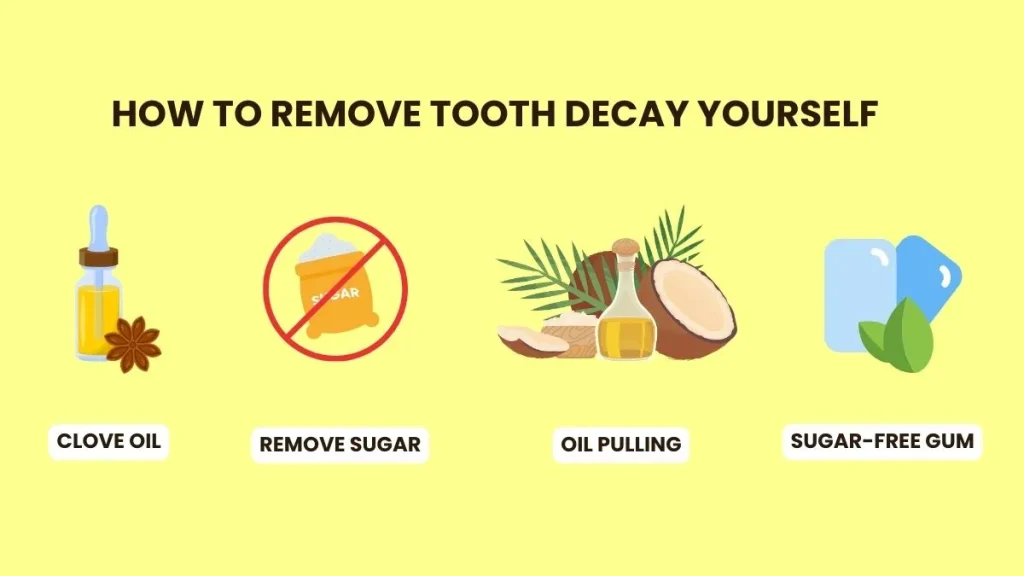
Cavities, or tooth decay, are small holes in the teeth; there is no natural way to remove them at home. Only a dentist can fix a cavity by filling it in. That said, home care can prevent cavities.
Here is how you can do that:
- Remove sugar: The best prevention is to watch out for sugar in all its forms. Consuming sugar interacts with the bacteria in your plaque, which produces acid and slowly dissolves the enamel in your teeth, creating holes or cavities.
- Oil pulling: Oil pulling is an alternative to using mouthwash. In oil pulling, you briefly swish around an edible oil in the mouth before spitting it out.
- Sugar-free gum: Chewing sugar-free gum reduces the impact of acid by increasing saliva production in the mouth.
- Clove oil: Before modern advancements, clove oil was long used to treat cavity tooth pain and restore tooth enamel.
Conclusion
Tooth decay is a process that involves a balance of mineral loss and replacement over time in response to the daily acid attacks resulting from foods. Cavities and decay can be prevented by working closely with your oral health team and following their plan. Eating the proper foods at the right time during meals and avoiding foods or snacks between meals can help reduce your risk. Brushing your teeth with toothpaste with fluoride at least twice a day is a critical step toward balancing the “tug-of-war” on your tooth surfaces and preventing the tooth decay process from continuing to become cavities.