
Ever noticed how your voice changes after a long meeting or after some singing? It might be laryngitis. This condition is an uncomfortable and painful infection of your voice box (larynx). It can be caused by viral, fungal, or bacterial infections, overuse of your voice, or damage from cigarette smoke. However, it’s only contagious if an infection causes it. Thankfully, there are treatments for this sickness, and you can get your voice back! Let’s take a closer look at the symptoms, how contagious they are, how long they last, and how to treat them.
What is Laryngitis?
The larynx, also known as the voice box, has two folds that are made of cartilage and muscle. These are called your vocal cords, and they’re covered in a soft membrane. Your vocal cords expand, which helps you create sounds like singing, speaking, humming, yelling, and so on. When you get laryngitis, your larynx can feel dry, scratchy, and hoarse due to infection and inflammation. Laryngitis can be contagious if it has been caused by either a fungal, viral, or bacterial infection, but otherwise, it will not spread due to another reason.
How Contagious is Laryngitis?
Fungal Laryngitis – This happens when too much Candida grows on the larynx. This fungus causes yeast infections, which can lead to laryngitis. This type is more contagious than getting it from a viral infection.
Viral Laryngitis – This is when laryngitis is caused by a virus such as the common cold. Although it is the most common cause, it’s the least contagious. However, if it happens to spread, it will most likely happen when your fever is at its worst.
Bacterial Laryngitis – Tough to treat bacteria such as MRSA, which can also cause laryngitis. Antibiotics will commonly be needed to effectively get rid of it. Like fungal laryngitis, it is more contagious than viral laryngitis.
Symptoms of Laryngitis
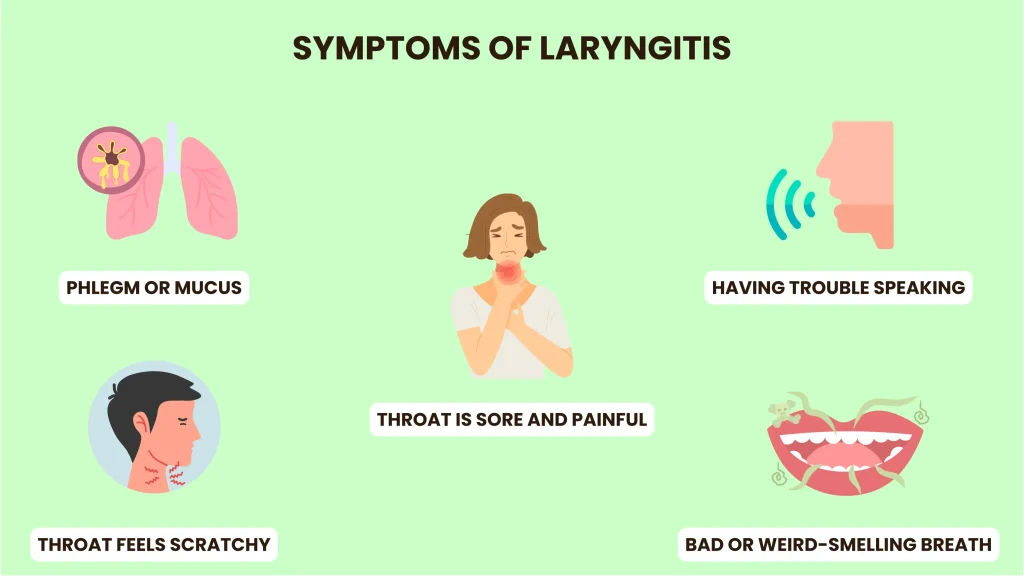
- A hoarse throat and voice.
- Having trouble speaking or not being able to talk at all.
- Your throat feels scratchy when you try to speak or cough.
- Throat is sore and painful.
- Throat is dry, especially when in a dry environment or when a fan is on.
- A persistent and dry cough.
- Bad or weird-smelling breath.
- Feeling a sharp pain when you try to talk or swallow.
- Fever.
- Phlegm or mucus when you cough or blow your nose.
How Long Does Laryngitis Last?
Mild infections or minor injuries cause acute laryngitis and often don’t last long. This type of laryngitis lasts no longer than 3 weeks. Resting your voice or starting treatment early can help clear up mild laryngitis even faster. On the other hand, chronic or long-term laryngitis lasts longer and is more difficult to treat.
Chronic laryngitis occurs when the larynx has been constantly irritated or permanently damaged due to the following:
- Cigarette smoke
- Breathing in harsh chemicals or fumes.
- Long-term sinus inflammation and post-nasal drips.
- Drinking too much alcohol.
- Gastroesophageal reflux disease (GERD)
- Loud or consistent speaking, singing, or yelling.
How to Naturally Treat Laryngitis

Use honey and lozenges – Adding honey to your tea and using lozenges helps soothe your irritated throat. Look for honey-infused lozenges or cough drops.
Cut down or avoid cigarette smoke – Cigarette smoke, whether first or secondhand, can strip your throat of moisture and cause damage to your respiratory system, which increases the likelihood of laryngitis.
Drink 64 ounces of water daily – Drinking enough water can help lubricate your dry throat. It also keeps mucus watery, making it easier to drain and get rid of.
Cut back or avoid alcohol and coffee – Drinking a lot of caffeine and alcohol can dehydrate your body, making lubricating your throat harder and drying out your larynx even more.
Prevent upper respiratory tract infections – There are a few ways to avoid getting sick, such as not sharing items with someone you know who has a color or flu, washing your hands frequently, and boosting your immune system.
When to Seek Medical Assistance
- High-pitched sounds when you breathe in and out.
- Having trouble breathing or swallowing.
- A fever above 103°F (39.4 C).
- Coughing up blood.
- Having severe and increasing throat pain.
Conclusion
Laryngitis is an unpleasant sickness that affects your larynx. It dries out your throat and vocal cords and causes pain, coughing, and more. However, there are ways to help treat laryngitis despite what caused it, such as using remedies like honey tea, medication, staying healthy, and more. So, keep your voice heard and protect your larynx!