
Imagine waking up one day and not remembering anything at all. This is a glimpse into life with dementia, which affects memory, thinking, and daily task performance.
Want to understand the road ahead? Let’s examine what it is, its causes, symptoms, stages, how vision can predict it, and some activities.
Overview of Dementia
Dementia is a term that describes a combination of neurological conditions that affect the brain and lead to a decline in cognitive functions. This results in memory loss, difficulty making decisions, and reasoning with others, which affect your daily life. Most people can’t control their emotions and can experience personality changes.
Childhood Dementia
While this condition has affected 55 million adults, some children have the same fate. It affects 1 in every 2,900 babies. Sad, isn’t it?
They lose their ability to communicate, read, write, walk, and play. Eventually, their body loses the ability to function, and studies suggest that half of the children living with dementia only reach the age of 10.
What Causes Dementia
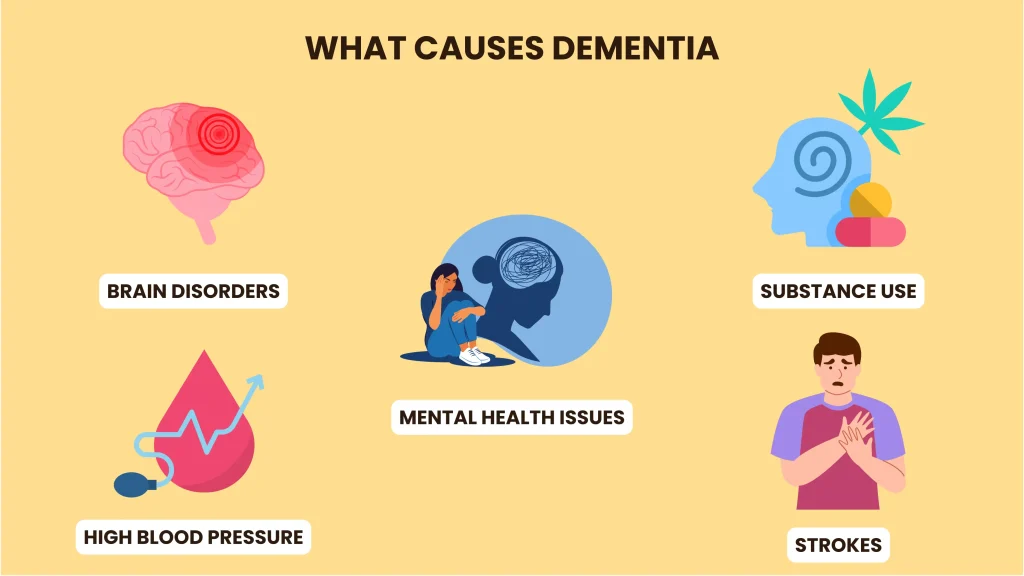
Many things cause dementia. Let’s take a look at what causes this condition to gain a better understanding!
- Mental health issues
- Substance use
- Strokes
- Brain disorders
- High blood pressure
Symptoms of Dementia
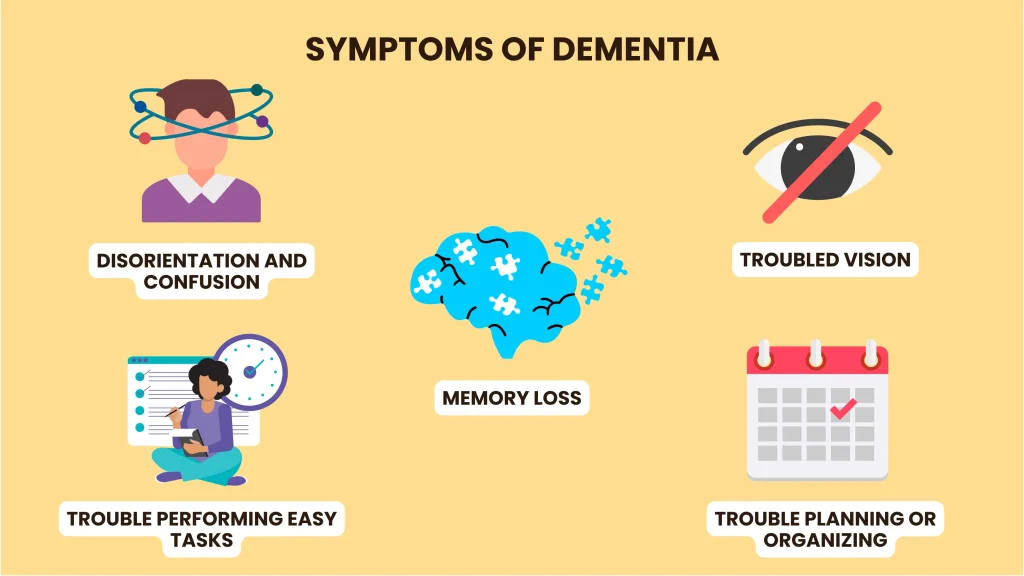
Want to catch it early? You need to look at for issues like:
- Memory loss
- Communication problems or finding words
- Troubled vision
- Reasoning problems or solving a problem
- Trouble performing easy tasks
- Trouble planning or organizing
- Poor control movements and coordination
- Disorientation and confusion
What is Lewy Body Dementia?
Lewy body dementia is a brain disorder that can lead to problems with your movement, thoughts, mood, and behavior. Here are seven stages of Lewy body dementia:
- Early Symptoms of Lewy Body Dementia: The first stage is identified by early symptoms and can be challenging to recognize
- Mild Cognitive Impairment: This stage is identified by reduced potential in problem-solving skills, memory, and language.
- Mild Dementia: At this stage, there are also changes in behavior, increased anxiety, depression, and lack of interest.
- Moderate Dementia: At this stage, a person might experience more personal change, including language difficulties, memory, and problem-solving.
- Moderately Severe Dementia: During this stage, individuals might experience a decrease in their daily activities and ability to perform.
- Severe Dementia: At this point, the individual can barely communicate or respond to their environment.
- End-Stage Dementia: This is the most severe stage and is specified by a serious decrease in mental and physical abilities.
Your Vision Can Predict Dementia
According to Loughborough University, your vision can predict dementia as much as 12 years before diagnosis. Dementia affects some parts of your brain, leading to issues like vision and memory.
People may develop conditions like cataracts or muscular degeneration, which can lead to vision loss. Here are some vision-related symptoms that indicate you have dementia:
- Difficulty recognizing faces
- Having a hard time judging distance
- Trouble with writing and reading
- Tunnel vision
- Difficulty in differentiating between colors
- Mistaking shadows for objects
- Having issues adjusting to light
If you notice any of these symptoms, consult a healthcare professional so that they can evaluate and detect dementia early.
Activities for People with Dementia
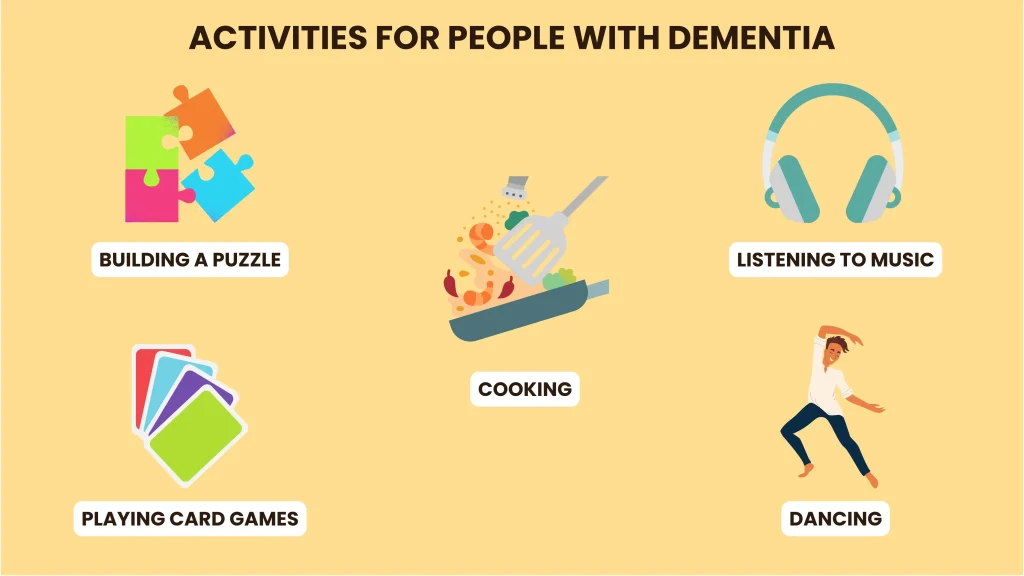
Some activities can increase patients’ quality of life, making it incredibly beneficial.
8 Great Activities
- Building a puzzle
- Listening to music
- Dancing
- Cooking
- Playing card games
- Arranging flower bouquets
- Looking at family photo albums
FAQs
Can alcohol cause dementia?
Yes, excessive drinking can lead to dementia. This is because heavy drinking damages your brain, which then leads to poor cardiovascular health, resulting in dementia.
Does Benadryl cause dementia?
Some studies suggest that long-term use of Benadryl can cause dementia. This over-the-counter antihistamine is used to treat allergies, colds, and insomnia, but it blocks a neurotransmitter in your brain, leading to memory and learning issues.
How does dementia kill you?
In the last stages of dementia, you are likely to have a weaker immune system. This means higher infection risks that lead to pneumonia, which results in death.
Can someone with dementia sign legal documents?
Yes, someone with dementia can still sign legal documents. As long as they can communicate their last wishes, understand the document’s consequences, and are not influenced.
Conclusion
Dementia is a challenging condition affecting memory, physical abilities, communication, and daily life. Both adults and children can develop this memory-wiping condition.
While you cannot do anything about it, some activities can help manage it. They include puzzle building, dancing, listening to music, cooking, playing cards, arranging flowers, reading books, and looking at family pictures. Try it today and improve your quality of life!