
Emotional dysregulation can be a devastating condition for both the patient and their loved ones. Thankfully, there are ways in which those suffering from mood dysregulation disorder can help control their feelings. The condition hinders someone’s ability to regulate their emotions no matter the situation.
This can be outbursts, acting on impulses, intense mood changes and more. However, having a better understanding of how this condition works and what can be done in terms of treatment can significantly help those personally dealing with emotional dysregulation or those who have a loved one who is. Let’s start off with what it is and work our way down to treatments!
What is Emotional Dysregulation?
Emotional dysregulation is more commonly found in children and adults and is a condition that makes it difficult to control your emotions. People with this condition can also feel emotions much more strongly, which is also a problem when it comes to regulating. People often experience negative emotions such as anxiety, depression, and anger and engage in self-harming activities.
Another common aspect of mood dysregulation disorder is not being able to match their emotions with the situation they are in. Their response to certain settings can be inappropriate, and over time, this can lead to serious consequences.
Eventually, a person who suffers from emotional imbalance may have their quality of life affected. Relationships and friendships can be negatively impacted, leading to isolation. This can only worsen the condition, so it is vital to treat it before these potential risks begin.
It is also possible that emotional dysregulation is a symptom of another illness, such as autism, and this should be diagnosed and treated, which in turn can help an individual have better handling of their emotions.
What Causes Emotional Dysregulation?
There are a lot of factors that contribute to emotional imbalance, and this makes it difficult to determine the cause sometimes. A likely cause is childhood trauma. This trauma can be from a caregiver, whether it was neglect, abuse or inability of the caregiver themselves to be able to model regulating emotions and handling situations. Let’s take a better look!
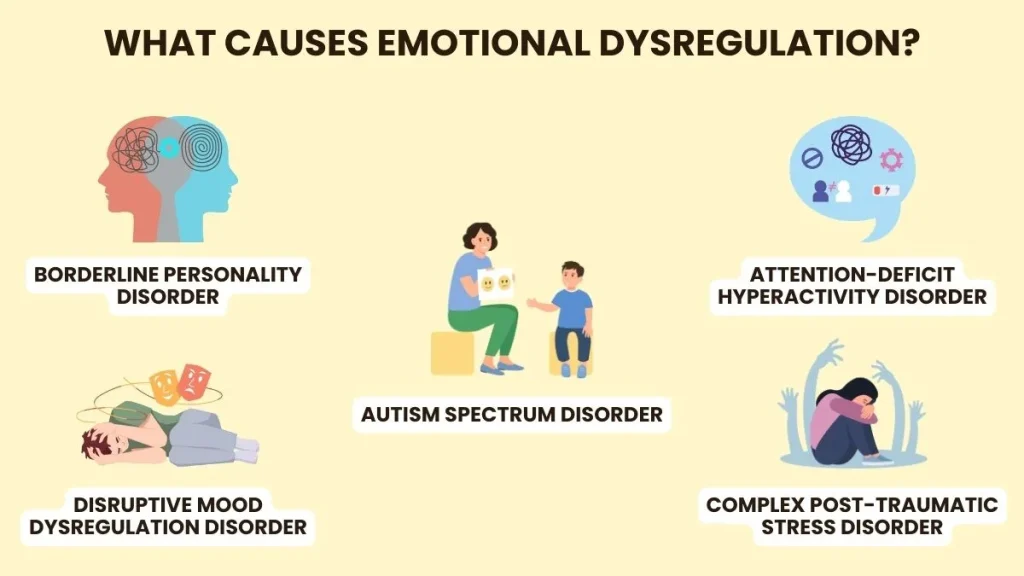
5 Causes of Emotional Dysregulation
- Borderline Personality Disorder: People with BPD often suffer from self-image, behavior and mood problems. These issues are an ongoing pattern and can result in strained relationships and impulsive actions.
- Autism Spectrum Disorder: Signs of autism can start as early as 2 years old and is a condition that can make communication and certain behaviors difficult. Emotions can be confusing and overwhelming for those with ASD.
- Attention-deficit Hyperactivity Disorder: This neurodevelopmental disorder is often diagnosed in children but carries on throughout adulthood. Those with ADHD have a hard time controlling impulsive behavior and concentrating.
- Disruptive Mood Dysregulation Disorder: This a serious childhood condition that causes children to not be able to control intense mood swings and extreme temper outbursts. This condition might need medical help as it can affect a child’s quality of life and development.
- Complex Post-traumatic Stress Disorder: This condition is diagnosed in children and adults who have experienced repeated or severe trauma such as neglect, abuse and violence. Making their emotional state very difficult to navigate and understand.
Other Contributing Factors
Some conditions cause emotional dysregulation.
They are:
- Substance abuse disorders
- Temporary emotional dysregulation from intoxication
- Brain-related conditions (strokes, infections, seizures, brain injuries and brain diseases)
The Symptoms of Emotional Dysregulation
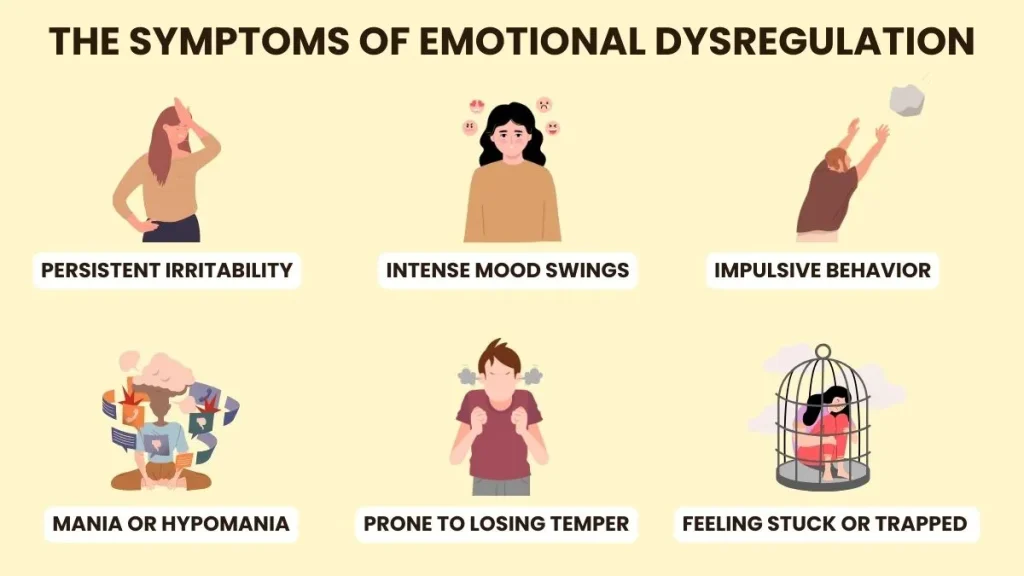
The symptoms of mood dysregulation disorder show themselves more clearly in what is said and in physical actions. Everyone experiences emotional dysregulation differently, especially if it is caused by a different source. However, there are common symptoms.
Here are the symptoms of emotional dysregulation:
- Unable to get out of negative moods or struggling to make yourself feel better
- Feeling stuck or trapped
- Easily frustrated and annoyed
- Triggered by small inconveniences
- Intense mood swings
- Mania or hypomania
- Emotions getting in the way of pursuing goals
- Prone to losing temper
- Persistent irritability
- Anger in between outbursts
- Impulsive behavior
More severe symptoms:
- Violent or aggressive behavior towards people, animals or objects
- Verbal outburst such as shouting and yelling
- Having a hard time maintaining social connections like friendships and relationships
Emotional Dysregulation in Children
Children who don’t have problems with regulating their emotions and are able to freely express their feelings often have better relationships, mental health and work-life when they get older. There is a close bond between emotional intelligence and overall life quality and satisfaction. This is because they do not face the struggles of concentrating, asking for help and creating connections as a child with emotional dysregulation does.
There are many childhood psychiatric conditions where emotional dysregulation can be present. This often means that children who experience this will have troubled behavior, but helping them learn how to regulate their emotions can help better this kind of behavior. Now, let’s take a look at treatment!
Treatment and Management of Emotional Dysregulation
Although people with emotional dysregulation can learn to manage it and improve their quality of life, treatment makes it that much easier.
Treatment depends on the condition’s cause. Brain damage-related causes usually get the bad end of the stick, while those with neurodivergent-related conditions often see a better outcome.
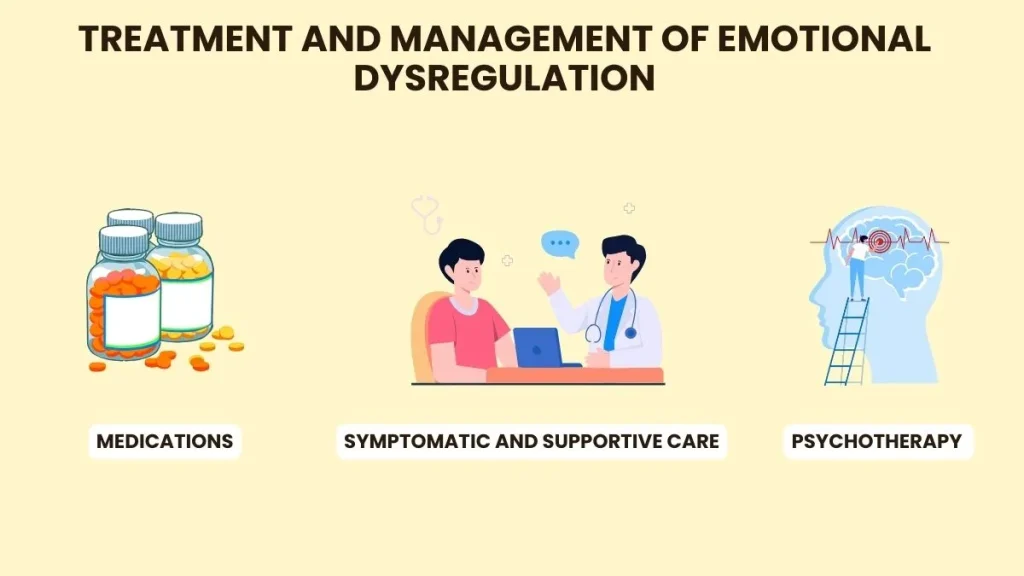
Main Types of Emotional Dysregulation Treatment
-
Medications
There are a few factors that go into medication to help emotional imbalance, which are usually the condition that’s causing it. From there, the medication itself will be adjusted and will be different for most people.
-
Symptomatic and Supportive Care
A good example of this would be that a concussion can’t be directly treated, but the symptoms can be. The main cause of emotional dysregulation is treatment, which in turn will ease and improve it.
-
Psychotherapy
This is also known as mental health therapy, and it involves working closely with a mental health professional. They can help you understand why individuals are experiencing emotional dysregulation and teach patients important coping strategies and skills.
Preventive Tips
- Manage health conditions such as epilepsy, diabetes and more
- Wear safety equipment to prevent head injuries
- Maintain a healthy weight for your body
- Avoid nonmedical drug use and substance abuse
- Take medications exactly as prescribed by a professional
Conclusion
Emotional dysregulation can be a difficult condition to experience, especially since it mostly affects adults. Many conditions and disorders can cause mood dysregulation disorder, but seeking treatment can result in better management and improved quality of life. Ready to make that change?
