

So, what makes for a good morning routine? Which advice is truly worth taking? Did you idly scroll through social media or repeatedly hit the snooze button this morning? These seemingly unimportant choices can make all the difference in how your day unfolds. Before you try a quick fix to shake up your morning, remember to change it in a way that works for you. Let’s start learning about how it contributes to your success and ways that you can do it, too!
How Can a Morning Routine Contribute to Success?
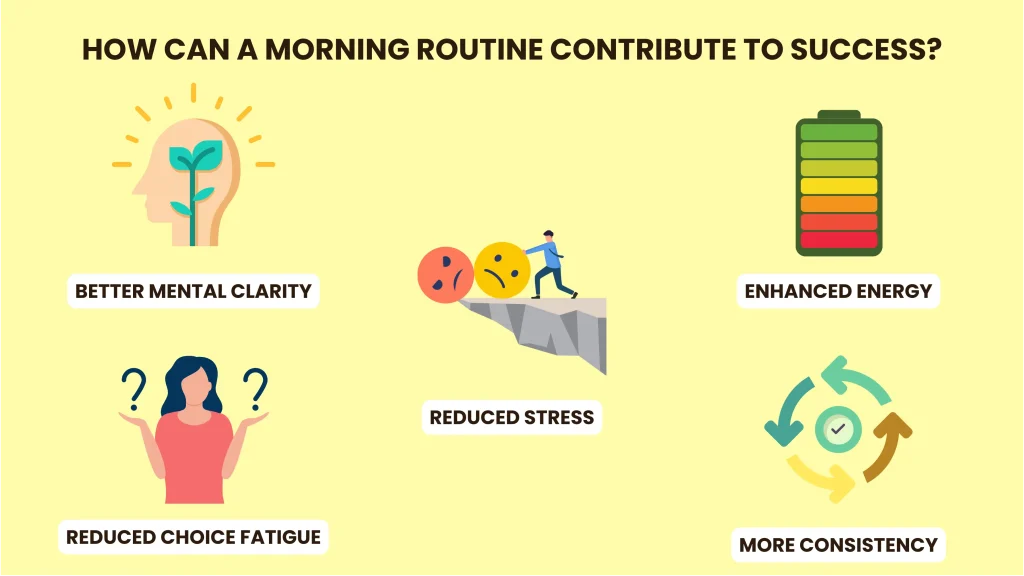
You may have heard the statement created by author Tim Ferriss: “If you win the morning, you win the day.” And it is true that how you begin your morning sets the tone for the rest of your day. The link between good morning routine and success is more than coincidence; it’s causal. According to a study, people with a morning ritual earn $12,500 more per year than those without. A morning regimen, on the other hand, will provide you with benefits other than money.
- Better mental clarity – A healthy morning routine helps clarify your mind, making it easier to decide what’s most essential. Clarity improves decision-making in both work and life.
- More consistency – Consistent morning routines result in predictable patterns. Every day begins with intention and discipline. This is the foundation for long-term personal and professional growth and success.
- Reduced stress – A consistent and successful morning routine can make your morning preparations less stressful since you know what to anticipate and feel more in control. You establish a pleasant and peaceful tone for the day by taking proactive steps for your well-being.
- Enhanced energy and motivation – Along with light exercises, a nutritious breakfast in the morning boosts your natural energy, and your body wakes up recharged for the day up ahead. These daily habits may even minimize the need for excessive caffeine intake. As your energy increases, so does your motivation to continue these positive habits, which affects the rest of your day.
- Reduced choice fatigue – According to Natacha Duke, MA, RP, decision fatigue is a phenomenon in which the more decisions you make, the more tired you feel. Too many choices, especially over time, can leave you physically, intellectually, and emotionally exhausted. A well-structured morning routine helps mitigate this by simplifying your choices.
Tips to Create a Successful Morning Routine
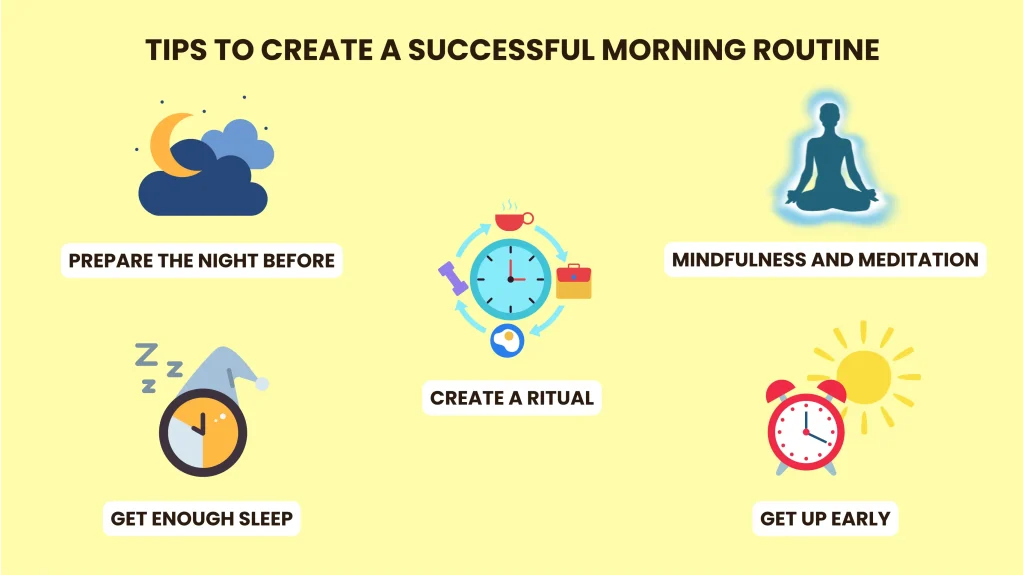
1. Prepare The Night Before
Consider the goals you want to achieve or the habits you want to develop the night before. Your morning list informs you what you need to do when you wake up. Creating to-do lists is a type of planning that reduces tension and boosts your sensation of control. Writing down chores also saves mental energy that might otherwise be spent remembering your priorities.
2. Create A Ritual
Finding an effective morning routine can take some time. You don’t have to start off with something complex or unusual; your routine might be as simple as waking up, making your bed, and drinking a fruit smoothie. The most important thing is to create a routine that matches your goals and lifestyle.
For example, if you want to keep active and healthy, you can include a 30-minute jog in your routine. Don’t be concerned if your first attempts don’t “click” because experimenting with different routines is part of the process. Once you’ve found one that works for you, consistency is crucial to keeping it.
3. Practice Mindfulness And Meditation
Do you wake up to the sound of your alarm, leap out of bed, put on your clothes, eat breakfast, and dash out the door in under 15 minutes? Instead of rushing through the day, why not give yourself and your body time to breathe and relax? Begin with tasks that help you focus your thoughts.
You may develop your awareness by taking a few moments to breathe and notice how your body feels. Enhance your morning routine with apps like Headspace or Calm for a more structured meditation practice.
4. Get Enough Sleep
Most of us would acknowledge that going to sleep and getting up at the same time every day requires a great deal of discipline. But it’s totally worth the effort. Research has indicated that inconsistent sleep patterns are linked to high blood pressure, risk of heart attacks, and bad gut health.
Sleep deprivation has a severe impact on our ability to focus and pay attention at work. To avoid these serious consequences, establish a regular bedtime and wake-up time as part of your morning routine, and stick to it for optimal health and productivity.
5. Get Up Early
What exactly defines “early”? It depends on who you speak with. Many people believe 5 a.m. to be the optimal wake-up time. The goal of waking up early is to have uninterrupted time to complete your morning routine before moving on to the remainder of the day. Because this can vary depending on your specific schedule, there is no one-size-fits-all solution.
It also depends on how much you want to do in the morning and how much time you want to dedicate without jeopardizing sleep or other life obligations. If you’re not a “morning person,” gradually change the time you wake up by setting your alarm clock 15 minutes earlier each week for a few weeks.
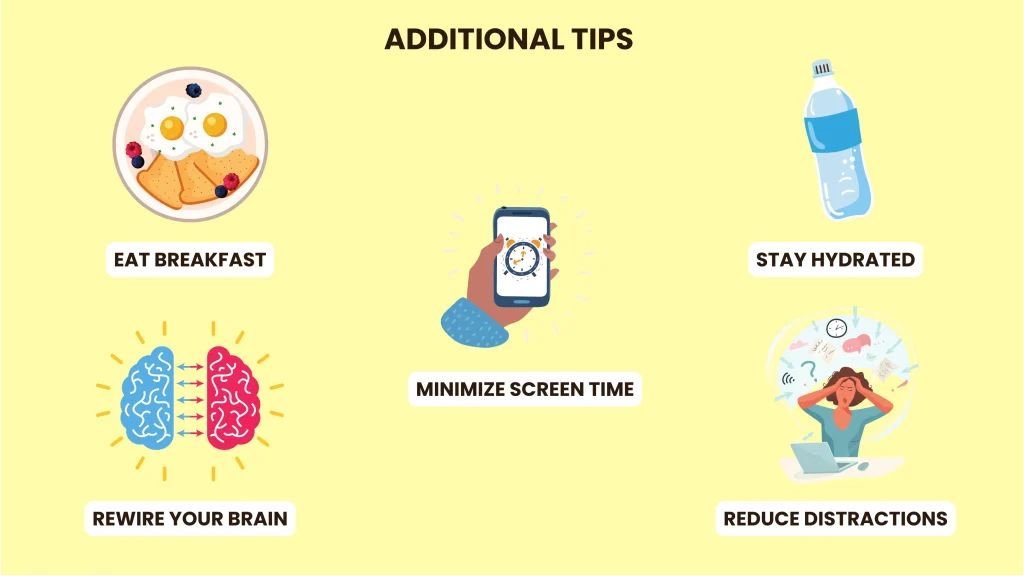
6. Minimize Screen Time
89% of Americans check their phones within 10 minutes of waking up, which can disrupt your morning routine. If you’re like me, this may be a massive time sink that utterly disrupts your morning. However, if your phone sits on your nightstand or bedside table, you may struggle to follow this advice and pick it up as soon as you wake up.
To avoid this, charge your phone in another room overnight or store it in a drawer on your nightstand. You can also change your surroundings. Instead of relying on your phone to wake you up, set an alarm. This way, you won’t be tempted to check your text messages or read the news first thing.
7. Eating Breakfast
Those who advocate for breakfast believe it provides a daily metabolic boost. A breakfast meal might help you burn more calories throughout the day while also providing critical nutrients. Others, however, believe that skipping breakfast is advantageous. Intermittent fasting, or paying attention to when you eat, boosts cognitive performance and memory.
Finally, it boils down to your particular preferences and unique health objectives. It is crucial to meet your nutritional needs and properly feed your body with nutritious foods. If eating breakfast helps you achieve this, eat it. If not, then don’t.
8. Stay Hydrated
73% of Americans consume coffee on a regular basis, and it’s likely that they start their day with the first cup. While you may be one of them, avoid reaching for the coffee machine right away. Instead of reaching for coffee first thing, start your morning routine with a glass of water. Hydrating after a lengthy night of sleep helps to restart your metabolism and wash out any toxins that may have accumulated in your system overnight.
It stimulates your digestive system, allowing your body to metabolize meals and burn calories more efficiently throughout the day. You feel awake, alert, and refreshed as a result. Dehydration, on the other hand, could ruin your morning. Dehydration symptoms include weariness, confusion, short-term memory loss, and mood changes such as anger or despair.
9. Rewire Your Brain for a Better Morning Routine
Don’t let yesterday’s disappointments define today. Every morning provides a new start and an opportunity to refresh. Tony Robbins, a well-known life and business coach, has a thorough daily practice that helps him reset his mind and focus for the day ahead. For example, Robbins’ 10-minute “priming” workout combines yoga and Buddhist mindfulness meditation.
He begins by remaining still for a minute before expressing gratitude for three things. He continues with two visualization exercises to help him imagine himself as successful. So, take a few minutes to visualize your daily or long-term goals. This activity can improve your mood and train your brain to stay motivated, enhancing your morning routine.
10. Remove or Reduce Distractions in Your Morning Routine
You’ve probably heard it before: It takes 23 minutes and 13 seconds to resume your original task following a distraction. That’s a lot of time, especially if you are easily sidetracked. Distractions are unique to each person. TikTok may be important to one person, while email may be important to another. To begin eliminating those distractions in your morning routine, identify what usually distracts you and devise strategies to minimize or eliminate them.
Conclusion
Morning habits might mean the difference between a good and a terrific morning. Your productivity begins when you wake up, so learning healthy morning routines is critical to a successful workday. The activities you prioritize, such as eating a healthy breakfast, exercising, or reading, have the power to change your perspective. Choose a schedule that makes you happy, prepares you to finish critical activities, and fosters and supports work-life balance.
Ready to transform your morning routine? Incorporate these tips today, and let’s rise and shine together!
