
Do you pick up your phone to check the news and end up being lost in a virtual hole of comments on a post about a topic you don’t even care about? Do you get stressed from doom scrolling? Blurry-eyed and with a kink in your neck every night after gazing at screens all day? In today’s digital age, screens are essential to our life. We are always surrounded by screens, whether on smartphones, laptops, or televisions. However, evidence suggests that excessive screen usage can have a negative impact on our overall health.
How Does Screen Time Affect Adolescents?
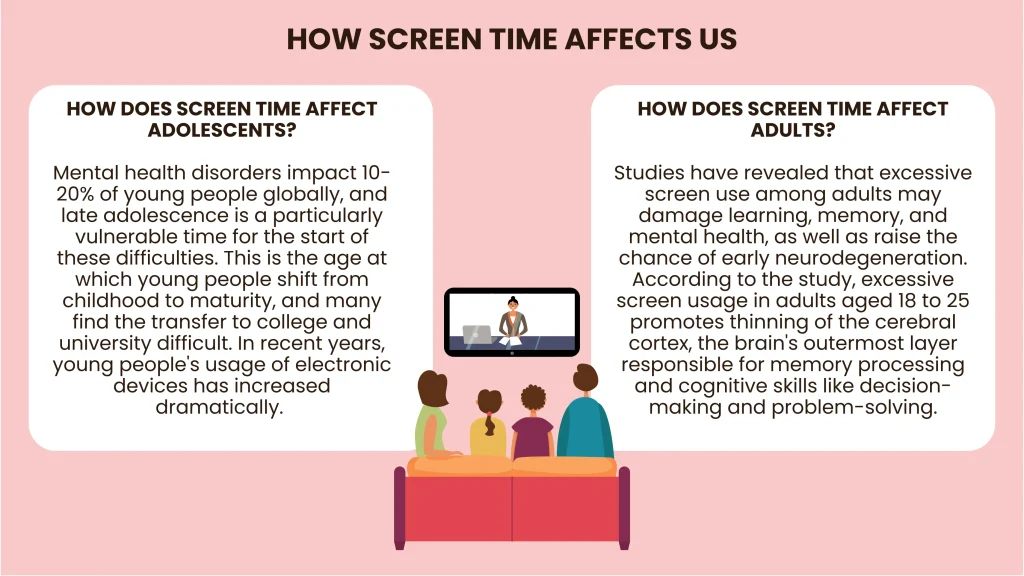
Mental health disorders impact 10-20% of young people globally, and late adolescence is a particularly vulnerable time for the start of these difficulties. This is the age at which young people shift from childhood to maturity, and many find the transfer to college and university difficult. In recent years, young people’s usage of electronic devices has increased dramatically. Meanwhile, adolescents’ mental health has deteriorated substantially. Excessive screen usage has been identified as a potential risk factor for mental health.
Recent research has indicated that many adolescents consistently spend more time on their phones despite the two-hour limit recommended by experts. According to research, increasing screen usage is related to a negative self-concept and an increased risk of obesity. Unsurprisingly, increasing screen time has been linked to insufficient physical activity.
How Does Screen Time Affect Adults?
Studies have revealed that excessive screen use among adults may damage learning, memory, and mental health, as well as raise the chance of early neurodegeneration. According to the study, excessive screen usage in adults aged 18 to 25 promotes thinning of the cerebral cortex, the brain’s outermost layer responsible for memory processing and cognitive skills like decision-making and problem-solving. Another study discovered that those who watched television for five or more hours per day were more likely to acquire brain-related diseases such as dementia, stroke, or Parkinson’s.
How Much Screen Time is Too Much?
Adults have also been studied to see if there are any links between increased screen time and physical activity. Screen time has been defined as a sedentary activity marker. Sedentary behavior has been linked to type 2 diabetes, in addition to being obese. The consequences on mental health are significantly more difficult to determine. According to research, minimizing screen time and boosting physical exercise can be quite helpful.
Disadvantages of Too Much Screen Time
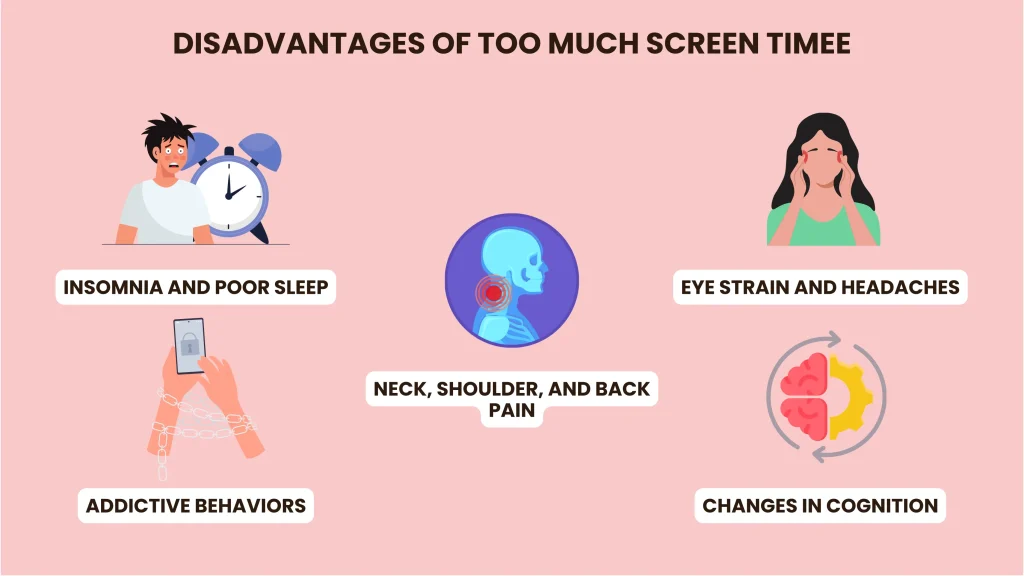
- Insomnia and poor sleep – Light from screens encourages your brain to stay alert, and this constant input throughout the day might make it harder to relax at night. If you have persistent sleep problems, you may consider getting a sleep study at a sleep facility.
- Eye strain and headaches – Spending too much time looking at screens can create fatigue or discomfort in your eyes, as well as decreased eyesight. The glare and the brightness of the display can put extra strain on your eyes. Eventually, this tension can cause headaches.
- Addictive behaviors – Social media and cell phones have only been around for less than two decades. However, recent research has discovered that people can develop addictive behaviors with phones and social media, such as obsessively thinking about the device or platform, using smartphone or social media apps to cope with their mood, and experiencing withdrawal symptoms when not able to use their phone or apps.
- Neck, shoulder, and back pain – Typing by a desk or holding a phone while looking down causes strain to your neck, shoulders, and back. Holding these positions for an extended period of time can cause pain and, in some cases, more severe musculoskeletal difficulties.
- Changes in cognition – We know that too much screen time is bad for children’s developing brains, but what effect does it have on adult brains? According to a 2020 study, those who have been identified with smartphone addiction have difficulties with the area of their brain that transmits messages, as well as worse cognitive ability.
- Reduced physical activity levels – The time spent on screens is time that people in previous generations would have spent being physically active, such as walking, gardening, playing sports, working on projects, and so on.
Ways To Reduce Screen Time
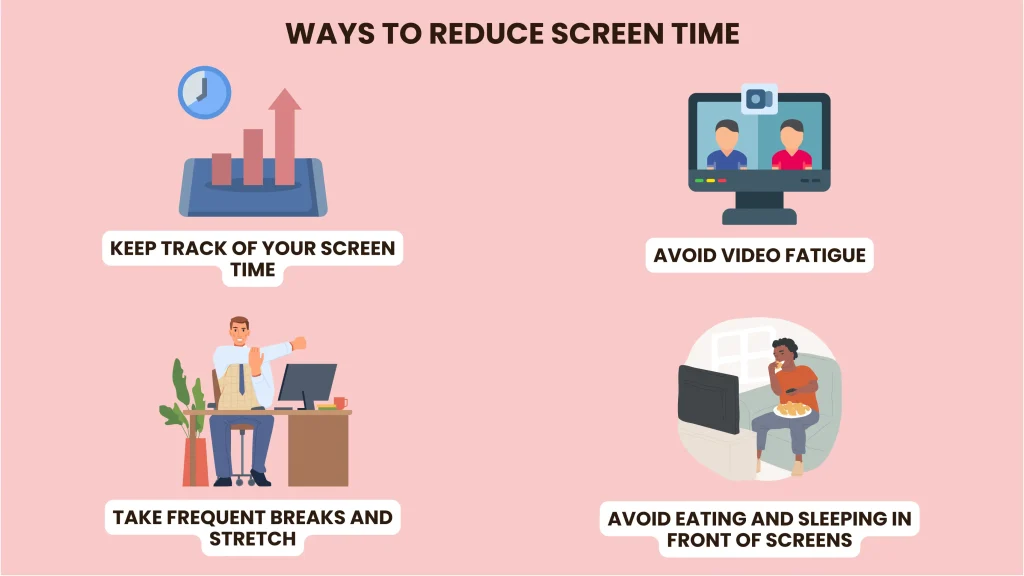
Keep Track of Your Screen Time
During the pandemic, many people worked from home, traveled less, ate out less, and spent more time on their screens to keep connected. However, now that things have returned to normal, you might still have a close attachment to your screens. But it’s a good idea to assess your screen use and create limitations. Smartphones now feature screen time functions that allow you to monitor your daily and weekly usage and make changes, such as putting limitations on social networking apps.
Avoid Video Fatigue
Long periods of looking at a camera can be uncomfortable and tiring. If you spend a lot of time on video calls or virtual meetings, you may get meetings or Zoom weariness. Try to limit the amount of time you spend on video conversations to what is absolutely essential, or arrange time in between video sessions to get up and walk about.
Leverage Technology
If you find it difficult to disconnect from your screen, let technology assist you in becoming screen-free for a period of time throughout your day. Set reminders on your phone or calendar to remind yourself to take breaks. To reduce distractions, turn off messaging and social media notifications. This way, you may leave your phone alone until you’re ready and finished with other tasks.
Take Frequent Breaks and Stretch
If you work in front of a screen, make sure to take a break and look away every 30 minutes. Stand, stretch, and walk around. Back and neck stretches can assist maintain muscles relaxed when sitting in your chair. Learn a few “chair yoga” techniques and repeat for five minutes at regular times throughout the day.
Avoid Eating and Sleeping In Front Of Screens
We eat more when we are watching TV or playing video games. To counteract this propensity, set distinct mealtimes and stick to them. Remove refreshments from the entertainment zone. Avoid using any type of backlit screen in the hour before bedtime because it emits light that can interfere with your sleep. If possible, keep all devices, including televisions, out of the bedroom entirely.
Conclusion
Electronics have become a notable part of our lives and aren’t going anywhere soon. However, this does not imply that we should sacrifice our health for the sake of utilizing screens. Instead of pitting screens against health in an all-or-nothing game, find strategies to make your screen time more sustainable.
