
Did you know that a healthy lifestyle can help prevent or slow the progression of type 2 diabetes? Some risk factors for Diabetes mellitus type 2 cannot be changed, such as age, race, or heredity. However, we can all control our food choices, activity level, stress, and other aspects. There are three types of diabetes.
Type 2 diabetes is the most common and progresses gradually. With this type of diabetes, your cells have difficulties using insulin properly over time. This is known as insulin resistance. The article delves into healthy habits that can help you avoid or manage Diabetes mellitus type 2, including an in-depth overview of the condition.
What Is Type 2 Diabetes?
Type 2 diabetes is a chronic condition characterized by chronically elevated blood sugar levels (hyperglycemic). Healthy blood sugar (glucose) levels range between 70 and 99 milligrams per deciliter. If you have undiagnosed Diabetes mellitus type 2, your levels are often 126 mg/dL or higher. Type 2 diabetes occurs when your pancreas fails to generate enough insulin (a hormone) or when your body fails to use insulin adequately.
This is separate from Type 1 diabetes, which occurs when an autoimmune attack on the pancreas results in the entire absence of insulin synthesis. T2D is incredibly frequent. Diabetes affects around 37 million people in the United States (almost one in ten), with T2D accounting for 90% to 95% of occurrences. According to studies, Diabetes mellitus type 2 affects around 6.3% of the world’s population. Type 2 diabetes is more common in those over 45, but it can also affect people under 45, including children.
What Are The Symptoms Of Type 2 Diabetes?
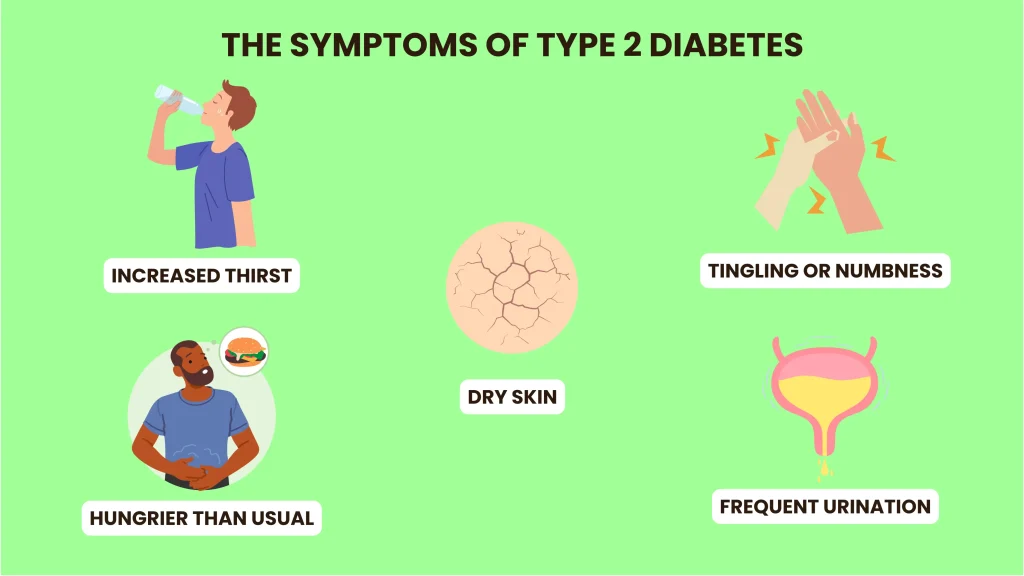
Symptoms of Type 2 diabetes typically arise gradually.
They could include:
- Increased thirst (polydipsia)
- Frequent urination
- Hungrier than usual
- Fatigue
- Cuts and sores heal slowly
- Tingling or numbness in the hands and feet
- Blurred vision
- Dry skin
- Unexplained weight loss
People who are designated female at birth (AFAB) may have recurring vaginal yeast infections and/or urinary tract infections. If you experience these symptoms, see your doctor. Simple blood tests can detect type 2 diabetes in people.
What Causes Type 2 Diabetes?
Insulin resistance is the primary cause of type 2 diabetes. Insulin resistance occurs when cells in your muscles, fat, and liver do not properly respond to insulin. Insulin is a hormone generated by the pancreas that is essential for survival and regulates blood sugar levels. If your body does not respond well to insulin, your pancreas must create more insulin in order to balance rising blood glucose levels (hyperinsulinemia). Type 2 diabetes occurs when your cells become insulin resistant, and your pancreas is unable to create enough insulin to overcome them.
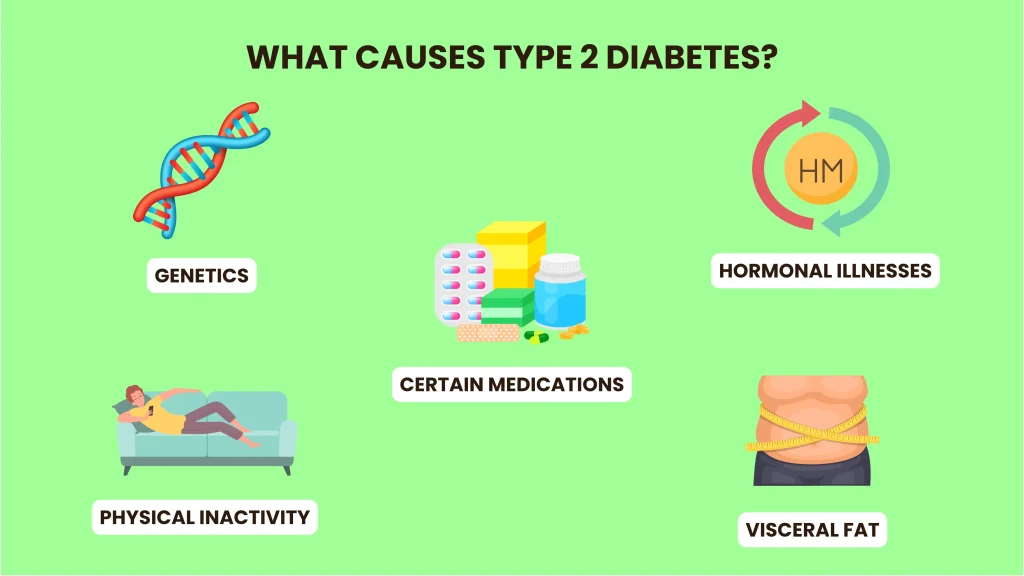
Insulin resistance can be caused by numerous factors, including:
- Genetics
- Visceral fat is excess body fat, mainly in the belly and organs
- Physical inactivity
- Consuming highly processed, high-carbohydrate foods and saturated fats consistently
- Certain medications, such as prolonged corticosteroid use
- Cushing syndrome and hypothyroidism are two examples of hormonal illnesses
- Chronic stress and inadequate sleep
Is Type 2 Diabetes Genetic?
The cause of type 2 diabetes is complex, but researchers believe genetics play a key role. Your lifetime risk of developing T2D is 40% if one of your biological parents has it and 70% if both of your biological parents have it. Researchers have uncovered at least 150 DNA variations connected with the likelihood of developing type 2 diabetes; some increase the risk, while others lower it. Some of these alterations may directly affect insulin resistance and production. Others may increase your risk of getting type 2 diabetes by making you more overweight or obese.
Risk Factors For Type 2 Diabetes
You’re more likely to get type 2 diabetes if:
- Have a family history of type 2 diabetes (parents or siblings).
- More than 45 years of age
- Overweight or obese (BMI greater than 25)
- Are physically active less than three times per week
- Had gestational diabetes when pregnant
- Have elevated blood pressure or cholesterol
- Have prediabetes
- Have polycystic ovarian syndrome
Because type 2 diabetes symptoms normally arise gradually, it is crucial to see your primary care physician regularly if you are at risk of developing the disease. This permits them to conduct tests, such as a basic metabolic panel (BMP), to monitor your blood glucose levels. Early detection of Diabetes mellitus type 2 is better than late diagnosis.
How Is Type 2 Diabetes Diagnosed?
Your healthcare professional can use the following blood tests to diagnose Type 2 diabetes:
- Fasting plasma glucose test: This laboratory test measures your blood sugar levels. This test is administered in the morning following an eight-hour fast (nothing to eat or drink except water). A result of 126 mg/dL or greater indicates that you have diabetes.
- Random plasma glucose test: This lab test analyzes your blood sugar but can be done at any time without fasting. A test of 200 mg/dL or greater indicates that you have diabetes.
- The A1C test measures your average blood sugar levels over the previous two to three months. A value of 6.5% or higher indicates that you have diabetes.
In some situations, your doctor may perform an autoantibody blood test to determine whether you have type 1 diabetes rather than type 2.
What Is The Treatment For Type 2 Diabetes?
Unlike many health conditions, you mainly manage type 2 diabetes on your own with medical guidance and support from your healthcare team.
This could include you:
- Primary care physician (PCP) or endocrinologist
- Registered dietitian
- Certified diabetes care and education specialist (CDCES)
- Ophthalmologist (eye doctor)
- Dentist.
Managing type 2 diabetes can be challenging – you have to make several decisions every day for it. But everything you do to improve your health is worth it.
The core features of Type 2 diabetes management include:
- Lifestyle changes, like more exercise and eating adjustments.
- Blood sugar monitoring.
- Medication.
Exercise for Type 2 Diabetes Self-Care
Exercise is good for your health because it:
- Lowers your blood sugar level without medication in the short and long term
- Burns calories and may help with weight loss
- Improves blood flow and blood pressure
- Increases your energy level and boosts your mood
- Helps with stress management
Talk to your provider before starting any exercise program. You may need to take special steps before, during and after physical activity, especially if you take insulin. The general goal is to get at least 150 minutes per week of moderate-intensity physical activity.
Type 2 Diabetes Self-Care Diet
Ask your healthcare provider or registered dietitian to recommend a meal plan that’s right for you. What you eat, how much you eat, and when you eat are all important in keeping your blood sugar levels in the range that your healthcare team recommends. The key to eating with Diabetes mellitus type 2 is to eat a variety of nutritious foods from all food groups in the amounts your meal plan outlines.
In general, these types of foods can help support healthy blood sugar levels:
- Lean proteins, like chicken, eggs, fish and turkey
- Non-starchy vegetables, like broccoli, green beans, salad greens and cucumbers
- Healthy fats like avocados, nuts, natural peanut butter and olive oil.
- Complex carbohydrates, like beans, berries, sweet potatoes and whole-wheat bread
Can I Prevent Type 2 Diabetes?
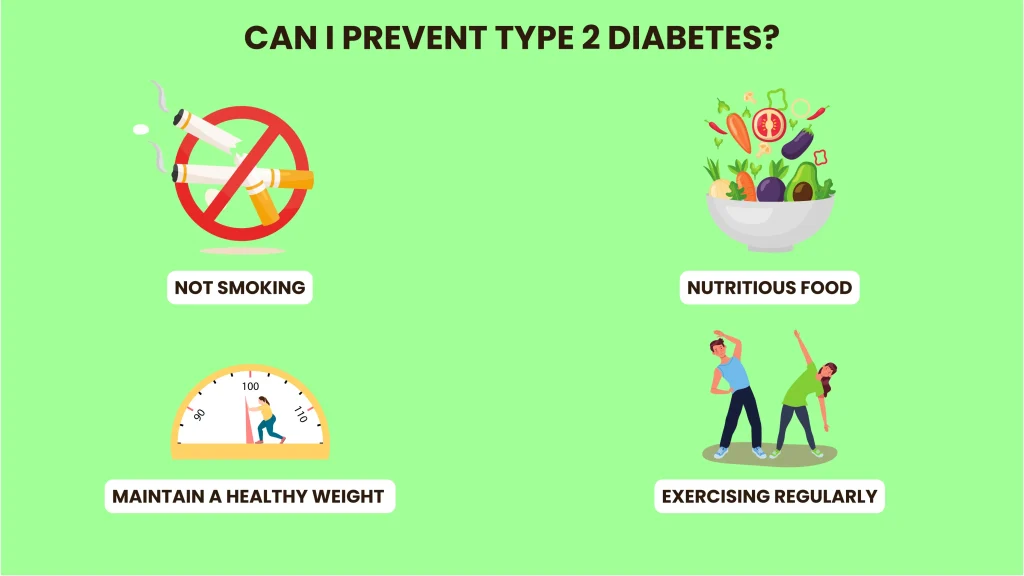
Certain strategies can help lower your risk of developing Type 2 diabetes or delay its onset, including:
- Exercising regularly (at least 150 minutes a week)
- Maintaining a weight that’s healthy for you
- Eating nutritious food
- Not smoking
Unfortunately, some people have such strong genetic risk factors that even lifestyle changes aren’t enough to prevent developing type 2 diabetes.
Type 2 Diabetes Self-Care Survey
Type 2 Diabetes Self-Care involves constant day-to-day management and attention. While it’ll likely be very overwhelming at first, over time, you’ll get a better grasp on how to manage the condition and how to be in tune with your body. Be sure to see your healthcare team regularly. Managing Diabetes mellitus type 2 involves a team effort, so you’ll want both medical professionals and friends and family on your side.
