
The two little lymphoid tissue organs on either side of the back of your throat are called tonsils. They serve as a line of defense and keep infections out of your body. Tonsillitis can be caused by ordinary viruses and bacteria, as well as germs that can spread to other people. Streptococcal bacteria are among the germs that cause Strep throat. Without treatment, strep throat-related Strep throat can have major side effects. This article discusses all the information you need to know about tonsils, including helpful remedies and symptoms. Let’s start!
Tonsillitis Symptoms
It can be incredibly uncomfortable for both adults and children. Let’s take a look at the different symptoms down below.
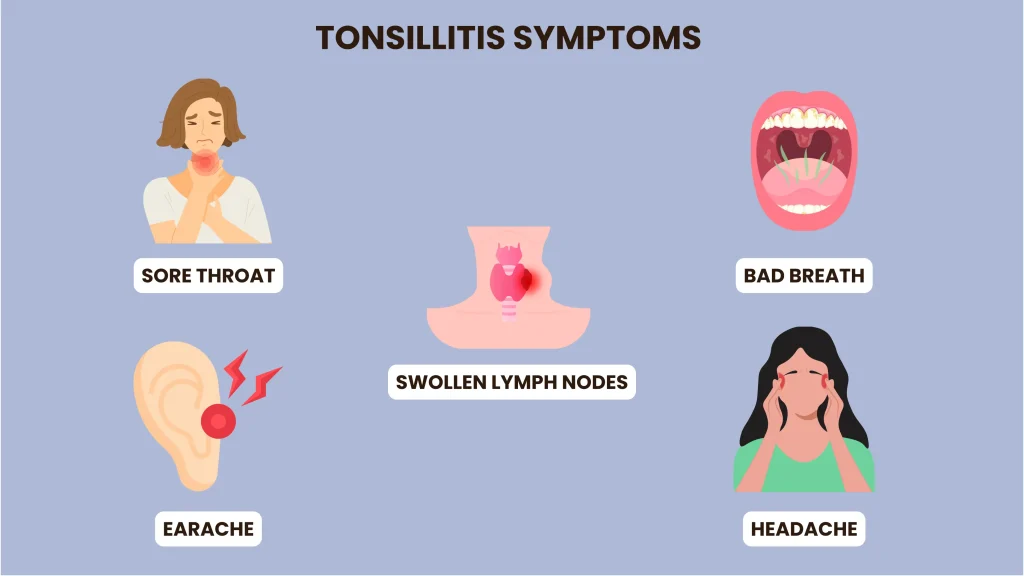
Symptoms of tonsillitis include:
- A really sore throat
- difficulty or pain during swallowing
- A scratchy-sounding voice
- Bad breath
- Fever and chills
- Earache
- Abdominal pain
- Headache
- A stiff neck
- Swollen lymph nodes cause discomfort in the jaw and neck
- Tonsils appear red and swollen
- Tonsils with white or yellow dots
In small children, you may also notice:
- Increased irritability
- Poor appetite
- Excessive drooling
How to Treat Tonsillitis
A minor case of tonsillitis may not require treatment, especially if a virus, such as a cold, causes it. More severe forms of Strep throat may require antibiotics or, less commonly, a tonsillectomy.
Tonsillectomy
This is the surgical removal of the tonsils. Usually, a tonsillectomy is only advised by medical professionals in cases of chronic or recurrent tonsillitis, Strep throat-related problems, or symptoms that don’t go better. Recurrences of tonsils or strep throat may be prevented with a tonsillectomy if they have occurred five to seven times in the previous year. The breathing or swallowing issues that Strep throat might cause can also be resolved by surgery.
Tonsillitis Antibiotics
If your tonsillitis was brought on by a bacterial infection, your doctor may recommend medications to treat the illness. Antibiotics could make your symptoms go away a little bit quicker. They may cause various side effects, such as upset stomach and raise the risk of antibiotic resistance. Those who are more likely to experience complications from Strep throat should take antibiotics. It’s crucial that you finish the entire antibiotic treatment. If you don’t take the entire prescribed amount of medication, the infection may worsen even though your symptoms seem to be entirely healed.
Diagnosing Tonsillitis
To make a diagnosis, a doctor will check your throat. By carefully swabbing the back of your throat, they might also take a throat culture. The cause of your throat infection is determined by sending the culture to a lab. For a full blood count, a doctor can additionally request a sample of your blood. This test may determine if your illness is bacterial or viral, which may have an impact on your available treatment options.
Types of Tonsillitis
Did you know that there are different types of tonsillitis or strep throat? Yes, that is right! This section discusses each of them so that you can identify them.
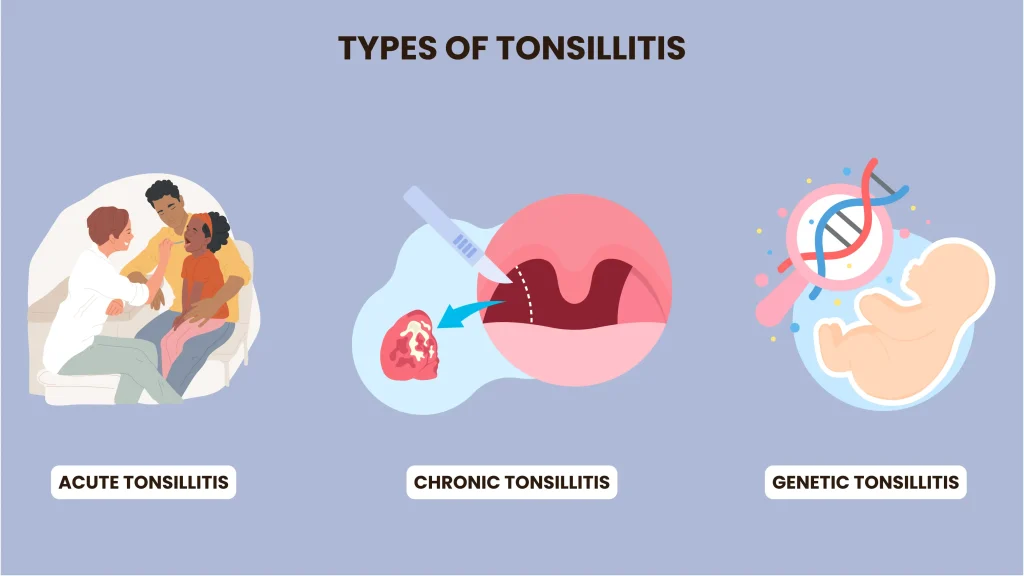
Acute Sore Throat
In children, Strep throat is extremely common. Actually, Strep throat is a condition that almost all kids will likely develop at some point. A doctor will diagnose acute tonsillitis if symptoms persist for ten days or less. It can be chronic or recurrent Strep throat if symptoms last longer or if the illness recurs frequently throughout the year. With at-home therapies, acute sore throat symptoms typically get better. However, in certain situations, you might need to take antibiotics or other medications.
Chronic Tonsillitis
Chronic tonsillitis symptoms last longer than acute sore throat. You may have the following symptoms on an ongoing basis:
- Sore throat
- Halitosis (bad breath)
- Tender nodes in the neck
Chronic tonsillitis can also result in tonsil stones, which occur when dead cells, saliva, and food accumulate in the crevices of your tonsils. Eventually, the material may solidify into little stones. These may break free on their own or require a doctor to remove them. If you have persistent tonsils, your doctor may propose a tonsillectomy, which involves surgically removing your tonsils. Tonsillectomy is the conventional treatment for recurrent Strep throat, just as it is for chronic tonsillitis.
Genetic Tonsillitis
A 2019 study looked at children with recurrent Strep throat and their tonsils. Researchers discovered that the group A streptococcus bacteria, which cause strep throat, may induce an inadequate immune response due to genetics.
Home Remedies for Tonsillitis
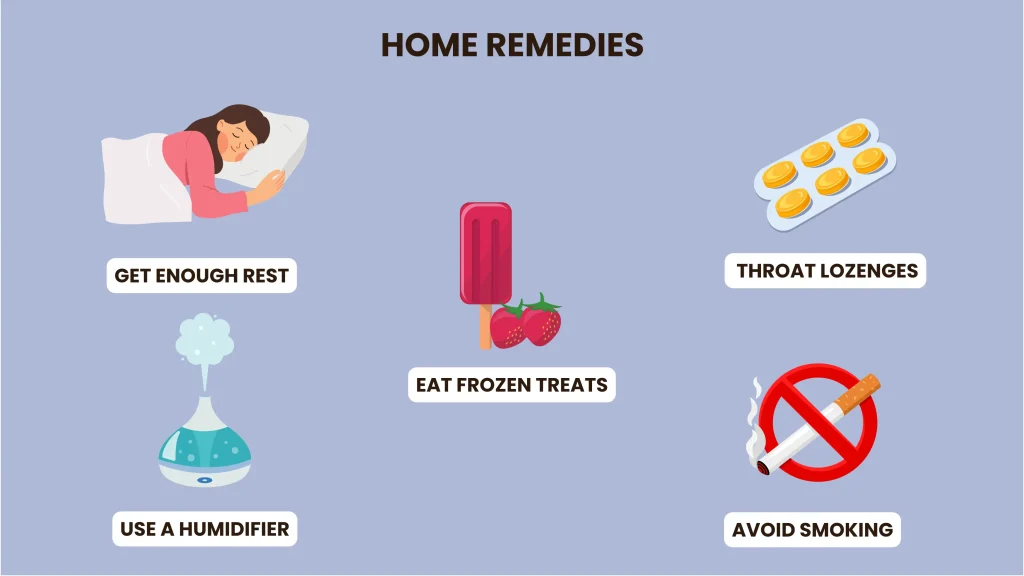
To relieve tonsillitis-related throat pain at home, you can attempt the following:
- Drink plenty of liquids
- Get enough rest
- Gargle with warm salt water multiple times per day
- Use throat lozenges
- Eat popsicles or other frozen treats
- Use a humidifier
- Avoid smoking
- Take acetaminophen or ibuprofen
Use throat sprays rather than lozenges for small children, and consult with a pediatrician before administering drugs.
Potential Complications
Tonsillitis problems are possible if you don’t complete the course of antibiotics or if the drugs don’t eliminate the bacterium.
- Tonsillar cellulitis: The infection may become worse. This condition is known as tonsillar cellulitis.
- Peritonsillar abscess: A peritonsillar abscess is an accumulation of pus near the tonsils caused by an infection. This could necessitate drainage and surgery.
- Obstructive sleep apnea (OSA): People with chronic tonsillitis may develop obstructive sleep apnea. This occurs when the airways enlarge and hinder a person from sleeping properly, resulting in additional medical problems if not treated.
Conclusion
Although tonsillitis can be bothersome and unpleasant, it is rarely a serious health issue. Most people recover from Strep throat in a few days, regardless of whether they take medicine. Most symptoms will disappear within 7-10 days. However, you should visit your doctor if symptoms persist, worsen, or if have difficulty breathing or swallowing.
