

Every day, a new weight loss diet emerges, ranging from raw food diets to meal plans based on smoothies and prepackaged items. The difficulty is that while mainly restricted diets and elimination meal plans may result in short-term weight loss, most individuals are unable to maintain them and give up after a few weeks.
The DASH Diet
Dietary Approaches to Stop Hypertension (DASH) is a dietary regimen intended to help treat or prevent high blood pressure, also known as hypertension. While it’s not specifically a weight loss diet, it promotes eating various fruits, vegetables, nutritious grains, and lean meats.
How It Works
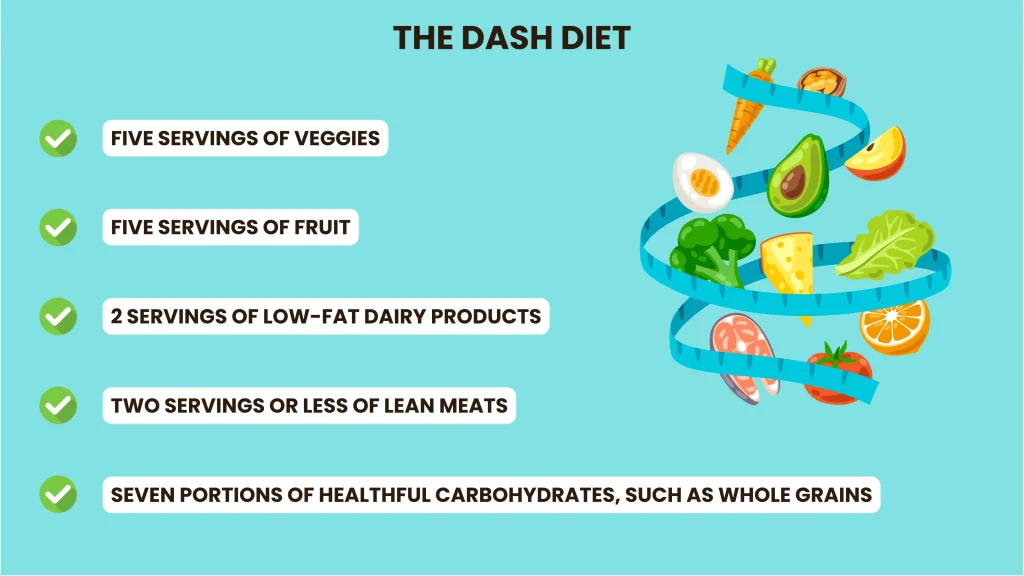
The DASH diet prescribes precise servings from several food groups. The number of servings recommended is based on your daily calorie intake, which makes it flexible for those who are aiming to use it as a weight loss diet. For example, a typical individual following the DASH diet would eat approximately:
- Five servings of veggies
- Five servings of fruit
- Seven portions of healthful carbohydrates, such as whole grains.
- 2 servings of low-fat dairy products
- Two servings or less of lean meats
Health Benefits
The DASH diet has been found to lower blood pressure and other cardiovascular risk factors. It may also help reduce your risk of developing breast and colorectal cancer. According to studies, the DASH diet can help you lose weight. For example, a meta-analysis of 13 trials discovered that those on the DASH diet lost more weight over 8-24 weeks than those on a control diet.
Another 12-week trial in people with obesity indicated that the DASH diet helped study participants lose total body weight, body fat percentage, and absolute fat mass while maintaining muscle strength.
Other Benefits
In addition to weight loss, the DASH diet may help alleviate depressive symptoms. A study conducted over eight years indicated that even moderate adherence to the DASH diet was associated with a decreased risk of depression.
Downsides
While the DASH diet may help with weight reduction, not all weight loss diets work for everyone. There are different views on the connection between salt intake and blood pressure. For instance, eating too little salt has been related to increased insulin resistance, and a low-sodium diet is not suitable for everyone, especially those without hypertension.
A low-sodium diet, such as the DASH diet, is better suited for people who have hypertension or other health disorders that benefit from or require sodium restriction. More research is needed to determine how a reduced salt diet affects insulin resistance in people without hypertension.
The MIND Diet
The Mediterranean-DASH Intervention for Neurodegenerative Delay (MIND) diet combines elements of the Mediterranean and DASH diets, creating a brain-healthy weight loss diet that can reduce cognitive decline.
How It Works
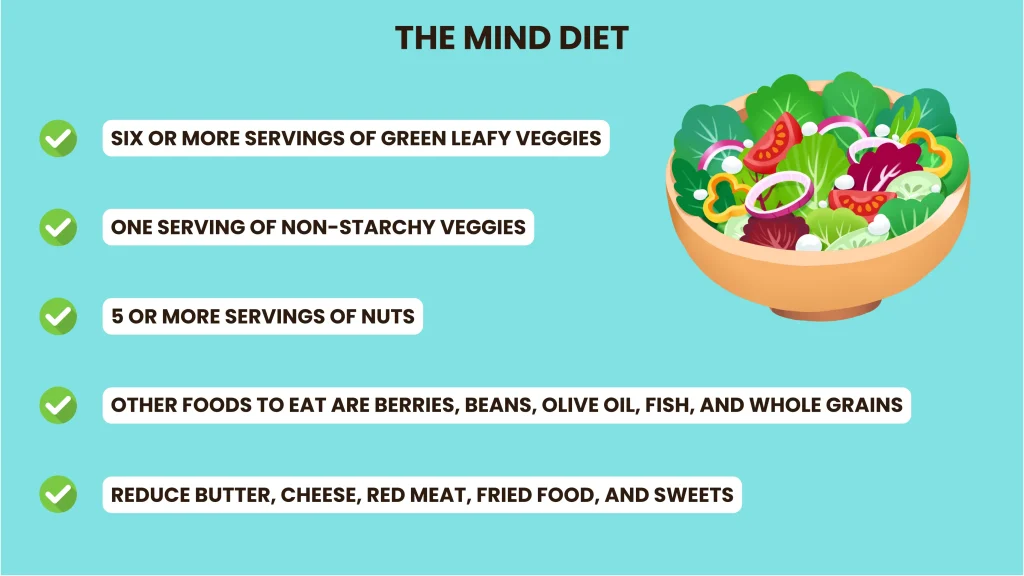
The MIND diet, like the flexitarian diet, does not have a set meal plan. Instead, this weight loss diet emphasizes consuming ten specific foods with brain health advantages. Each week, MIND includes eating:
- Six or more servings of green leafy veggies
- One serving of non-starchy veggies
- 5 or more servings of nuts
Other foods to eat a couple of times a week are:
- Berries
- Beans
- Olive oil
- Whole grains
- Fish
- Poultry
Health Benefits
According to research, the MIND diet may lower a person’s risk of acquiring Alzheimer’s disease, and it outperforms other plant-rich diets regarding cognitive improvement. According to research, the MIND diet can help reduce cognitive decline and increase adaptability in older persons.
It may also assist in postponing the beginning of the movement disorder Parkinson’s disease. There is limited research on the MIND diet and weight loss. However, the MIND diet may also aid in weight loss because it combines two diets that encourage weight loss. It can assist in stimulating weight loss by encouraging you to reduce your consumption of foods like:
- Butter
- Cheese
- Red meat
- Fried food
- Sweets
However, additional research is needed on the MIND diet and weight loss.
Other Benefits
The MIND diet has much to offer as it can be easily adapted as a weight loss diet. While more research is needed on the impact on weight, the plant-based principles are aligned with many effective weight loss diets.
Plant-Based And Flexitarian Diets
Vegetarianism and veganism are the most common plant-based weight loss diets that exclude animal products for health, ethical, and environmental reasons. However, more adaptable plant-based diets exist, such as the flexitarian diet. This is a plant-based diet that allows for moderate consumption of animal items.
How It Works
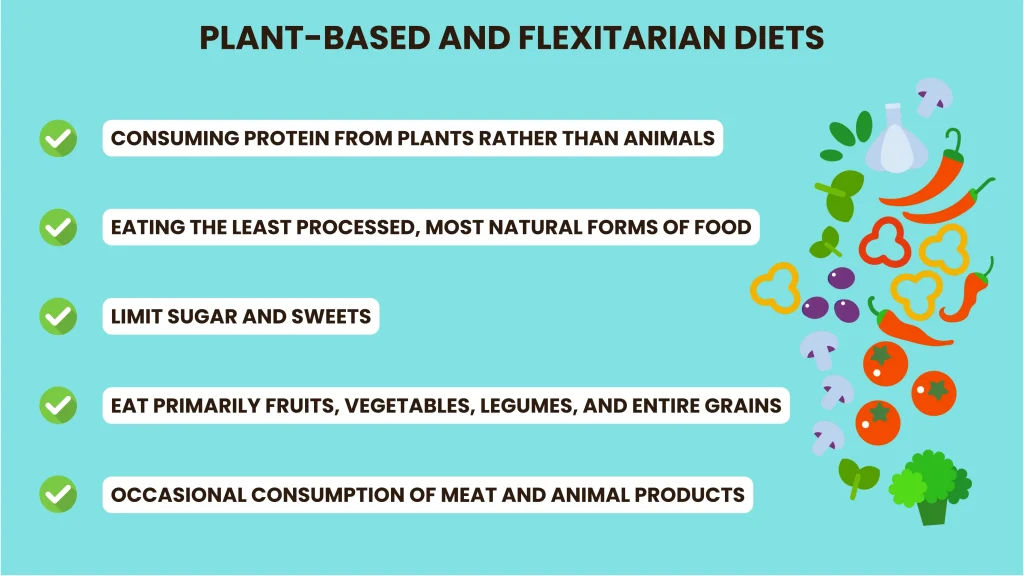
Vegetarian diets often prohibit all types of meat while allowing dairy. Vegan diets typically exclude all animal products, including dairy, butter, and occasionally other byproducts such as honey. The flexitarian weight loss diet lacks clear-cut rules or recommendations for calories and macronutrients, making it more of a lifestyle than a diet. Its principles are:
- Consuming protein from plants rather than animals
- Eat primarily fruits, vegetables, legumes, and entire grains
- Eating the least processed, most natural forms of food
- Limit sugar and sweets
It also permits for the occasional consumption of meat and animal products.
Health Benefits
Numerous studies have indicated that plant-based weight loss diets can lower your risk of acquiring chronic diseases, such as improved metabolic indicators, lower blood pressure, and a lower risk of type 2 diabetes. They may also help you lose weight. Flexitarian diets have also been found to lower the risk of type 2 diabetes, improve metabolic health and blood pressure, and may have weight loss advantages.
Other Benefits
For people seeking a sustainable lifestyle, reducing meat consumption can help to reduce greenhouse gas emissions, deforestation, and soil degradation.
Downsides
Plant-based eating patterns such as vegetarianism and veganism can be challenging to maintain. They may feel restrictive, particularly if you’re transitioning from a meat-based diet. While the flexitarian diet is easy to follow, being overly flexible may negate its benefits.
The Mediterranean Diet
The Mediterranean diet has long been considered the gold standard for nutrition, disease prevention, wellness, and longevity. This is based on its nutritional benefits and sustainability.
How It Works
The Mediterranean diet is based on meals that people in countries such as Italy and Greece have traditionally consumed, which makes it an excellent weight loss diet.
It is plentiful in:
- Vegetables
- Fruits
- Whole grains
- Fish
- Nuts
- Lentils
- Olive oil
Poultry, eggs, and dairy products should be consumed in moderation, while red meat should be limited. Furthermore, the Mediterranean weight loss diet limits:
- Refined grains
- Trans fats
- Processed meats
- Added sugar
- Other highly processed foods
Health Benefits
This diet’s concentration on minimally processed foods and plants has been linked to a lower risk of chronic diseases and a longer life expectancy. Studies have also shown that the Mediterranean diet can help avoid some malignancies.
Though the diet was created to reduce heart disease risk, multiple studies show that its plant-based, high-unsaturated fat eating pattern can also help with weight loss. A systematic evaluation of five trials indicated that the Mediterranean diet resulted in more weight loss after one year compared to a low-fat diet.
When compared to a low-carb diet, it had equal weight loss results. A 12-month study of more than 500 adults indicated that better adherence to a Mediterranean diet was related to twice the odds of weight reduction maintenance. Furthermore, the Mediterranean diet encourages the consumption of antioxidant-rich foods, which may aid in the prevention of inflammation and oxidative stress by neutralizing free radicals.
Other Benefits
Recent research has also indicated that the Mediterranean diet is connected with a lower risk of mental diseases such as cognitive decline and depression. Eating less meat is also linked to a more sustainable diet for the environment. This means that the weight loss diet is not just good for shedding a few pounds but for the overall well-being of individuals and even the planet.
Downsides
Although the Mediterranean diet is an effective weight loss diet, it’s low in dairy, which may lead to calcium and vitamin D deficiency.
Conclusion
Dieting is more than just weight loss. Many diets offer extra health benefits. You must first identify the program that best meets your specific requirements to achieve the best results. The most challenging part is determining which one it will be.
Before beginning any weight loss diet, it’s a good idea to consult your doctor about your medical history. They can help you decide which plan is ideal for you. Here is to a HEALTHIER and leaner you!
