
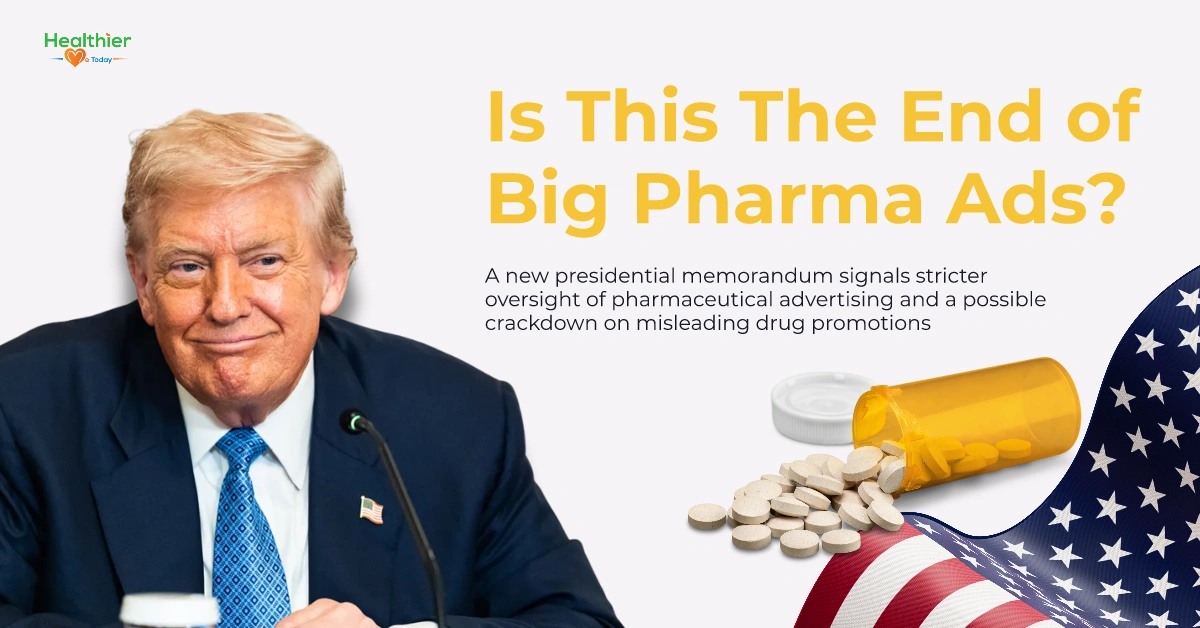
Artificial intelligence and healthcare may be stealing headlines lately, but another major shake-up is brewing in the United States… Trump is fighting against the pharma lobby! Prescription drug costs have long frustrated Americans, and for Donald Trump, taking on Big Pharma has remained a central part of trump healthcare campaign promises.
His latest move, a presidential memorandum signed on September 9, 2025, marks another step in his ongoing effort to reshape pharmaceutical advertising regulation and increase drug price transparency across the U.S. healthcare system.
The question now is whether this is merely a warning shot or the start of a broader crackdown on Big Pharma advertising. Find all the information about the Trump ban on pharma ads you need right here!
Trump vs Pharmaceutical Industry Throughout The Years
Few political fights have been as persistent, or as personal, as Donald Trump’s war with Big Pharma. For nearly a decade, he’s turned the spotlight on what he calls America’s biggest healthcare hypocrisy (drug companies charging U.S. patients far more than anyone else in the world, then spending billions to convince them it’s justified).

In 2018, his “Blueprint to Lower Drug Prices” promised to finally close that gap, a plan that earned applause from frustrated consumers and outrage from industry lobbyists. By 2020, he signed the Most Favored Nation Executive Order, an attempt to force drugmakers to sell medications in the U.S. at the same prices they offer in countries like Canada and Germany. Courts later blocked it, but the message was clear, Trump was willing to take on Big Pharma where others wouldn’t.
That same year, he pushed for another reform, requiring pharmaceutical ads on television to display the list price. Because if Americans could see what drugs really cost, the pressure for honesty would rise. Big Pharma fought back, arguing the rule oversimplified a complex system, and eventually got it overturned.
And the memorandum he signed on September 9, 2025, made it clear that he’s still not backing down. So what is it all about?
Trump Big Pharma Policies 2025
The 2025 memorandum doesn’t create a new law, it directs government agencies to enforce the ones already on the books but rarely used [whitehouse.gov].
Under current U.S. law, the Food, Drug, and Cosmetic Act (FDCA) already prohibits false or misleading drug advertising. The Food and Drug Administration (FDA), which enforces this law, can technically warn or penalize companies that break it. But in reality, that rarely happens. For years, enforcement has been inconsistent, with most violations ending in quiet corrections instead of public consequences.
Trump’s memorandum changes that by telling the FDA to actively use the authority it already has. Instead of waiting for new legislation, it pushes the agency to take immediate action against misleading pharmaceutical marketing. If a company exaggerates a drug’s success rate, hides side effects, or uses emotional advertising to downplay risks, it could now face real penalties and public accountability.
The Department of Health and Human Services (HHS), which oversees the FDA, confirmed that the agency will begin issuing warning letters and cease-and-desist orders to companies that violate advertising rules [fdalawblog.com].
The Future of FDA Drug Ad Rules
For years, drug ads have followed the same pattern, glossy storytelling, light disclaimers, and emotional persuasion. The new memorandum changes that. It doesn’t just ask for honesty, it demands it.

Here’s what’s different under the new enforcement plan:
| Area | Before the 2025 Memorandum | After the 2025 Memorandum |
| FDA Oversight | The FDA could warn companies about misleading ads, but enforcement was rare. | The FDA is now required to actively review and penalize misleading or incomplete ads. |
| Ad Content | Emotional stories often overshadowed medical facts, with fine print shown briefly. | Ads must clearly display side effects, pricing details, and proven medical data. |
| Digital & Influencer Ads | Online ads and influencer promotions often went unchecked. | Digital marketing now falls under the same strict FDA advertising rules as TV and print. |
| Creative Freedom | Companies had wide freedom in tone and presentation. | Campaigns must prioritize accuracy and balance emotional appeal with verified information. |
| Impact on Viewers | Patients saw persuasive ads but lacked full transparency. | Patients will get clearer, fact-based messaging designed to inform, not manipulate. |
Is There Really A Trump Ban On Pharma Ads?
It’s not a total ban [cnbc.com]. Trump’s memorandum doesn’t outlaw pharmaceutical advertising, but it does send a clear message (the era of unchecked marketing is ending).

The order doesn’t create new laws, instead, it empowers agencies like the FDA and HHS to enforce existing ones with far greater force. That means companies can’t rely on vague disclaimers or emotional storytelling to dodge accountability anymore.
If the industry resists or continues to blur the line between persuasion and information, Trump’s next step could be a full or partial advertising ban, particularly on high-risk or high-cost drugs [tucsonsentinel.com].
Conclusion: The Future of Drug Marketing Under Trump
By tightening oversight on pharmaceutical advertising, he’s sending a message that misleading marketing will no longer go unchallenged.
But beyond the policy, this fight is about public perception. Trump is reframing himself as the voice of accountability in an industry few Americans trust. Whether you see it as genuine reform or calculated politics, the impact is the same, the conversation around drug pricing and honesty in healthcare is changing.
One thing is very clear… this isn’t the end of Trump’s fight against Big Pharma, it’s the start of a rebrand with real political power! For more news updates, subscribe to our newsletter and follow us on social media.

Disclaimer:
Information in this article is based on publicly available reports and statements as of October 2025. Political and regulatory developments can change quickly, and new updates may alter or expand on the details discussed here. This piece is intended for informational purposes only and should not be taken as legal, political, or medical advice. Readers are encouraged to follow official government announcements and verified news sources for the most current information.
FAQ’s About Big Pharma Advertising Ban Debate:
What is Trump’s proposed ban on pharma ads?
Trump supports stricter enforcement of pharmaceutical advertising regulations to ensure accurate risk disclosures and transparency. His approach does not altogether ban ads, but aims to stop misleading marketing and hold drug companies accountable for the claims they make.
How could a Trump ban on pharmaceutical ads affect drug prices?
A possible Trump ban or tighter limits on pharmaceutical ads could lower drug companies’ marketing costs, potentially lowering prices for consumers. The idea behind this move is that spending less on advertising could shift the focus toward fair pricing and transparency rather than flashy promotions.
What are Trump’s Big Pharma policies for 2025?
Trump’s Big Pharma policies 2025 focus on more burdensome advertising regulations, clearer risk disclosures, and stronger drug price transparency measures. These Trump healthcare policies also aim to limit Big Pharma’s influence in politics and ensure that pharmaceutical companies operate with greater accountability under federal oversight.
How does Trump’s executive order impact drug pricing?
Trump’s executive order was designed to lower drug prices by allowing the government to compare what Americans pay with the lower prices charged in other countries. The goal was to pressure pharmaceutical companies to offer fairer rates at home, helping to make prescription medication more affordable for U.S. patients.
What is the connection between Trump and prescription drug costs?
Lowering prescription drug costs has been central to Trump’s agenda for years. His administration continues to challenge high prices through advertising reform, transparency policies, and pressure on companies that inflate costs through aggressive marketing and lobbying.
Will Trump’s healthcare policies reduce Big Pharma’s influence?
That’s the goal. Trump’s healthcare policies are designed to reduce Big Pharma’s influence in politics by limiting how much power pharmaceutical companies have over pricing and regulations. By enforcing stricter ad rules and transparency measures, Trump hopes to weaken corporate control and prioritize patients’ interests.
What does “direct-to-consumer drug advertising” mean?
Direct-to-consumer drug advertising refers to pharmaceutical marketing that targets the public rather than healthcare professionals, such as TV, radio, or social media ads. Trump’s reforms aim to ensure these ads present honest, complete information about risks and benefits, preventing misleading claims.
How might FDA drug ad rules change under Trump’s administration?
Under Trump’s leadership, the future of FDA drug ad rules could include more vigorous enforcement, mandatory risk disclaimers, and tighter controls over pharma- and influencer-sponsored political ads. The goal is to ensure accuracy and prevent deceptive marketing within the pharmaceutical industry under Trump.
What is Big Pharma lobbying, and how does it affect drug pricing?
Pharma lobbying involves large pharmaceutical companies spending billions to influence government policies, often to protect profits and maintain high drug prices. Trump’s stance on Big Pharma lobbying has been clear, he wants to reduce this influence, promote fair competition, and make pricing more transparent.
Could banning pharma ads lower prescription costs for Americans?
Potentially, yes. By reducing marketing and lobbying expenses, drug companies might have fewer excuses to keep prices inflated. Trump argues that stricter ad controls could shift the pharmaceutical industry under Trump toward fairness, where affordability and public trust outweigh profits and manipulation.
