
The relationship between social media and mental health is quite complex, and there is a dark side to it that goes unnoticed. For instance, are you having trouble sleeping? That could be the effects of social media. It can influence your sleep quality and mental health. Social media can lead to issues like depression and anxiety. But how does that happen? Let’s take a look at the science behind it all, the signs and solutions!
Science Behind Likes and Validation
Comments, shares, and likes are very rewarding. It’s like winning the jackpot at a casino! According to Reich and Binstock, social media and mental health are closely linked because social media releases a feel-good chemical called dopamine. So, it’s natural that people are after it. Let’s see why and how social media makes people feel lonely.
Social Media and Loneliness
Did you know that social media makes you feel isolated? Strange! Social media allows you to share things and connect with others all over the world.
So, how does that end up making you feel lonely? Because it shows the best and most exciting parts of their lives, which is not what life looks like. Life is filled with stress, loss and grief, health issues, financial struggles, trauma, relationship issues, etc.
Some also get FOMO. Ever heard of that? It’s the fear of missing out. Once you see how marvelous other’s life’s look, from fancy cars to expensive dinners, you can get FOMO, which then leads to loneliness. highlighting the complex relationship between social media and mental health.
The Role of Comparison and Self-Esteem
Comparison might be the biggest issue users face on social media. As many as 60% have issues with their self-esteem. Low self-esteem can impact you emotionally, change your behavior, affect your relationships, cause stress, and impact your quality of life. In some cases, it can lead to self-harm. Now, let’s discuss the mental health risks related to social media and mental health.
Mental Health Risks
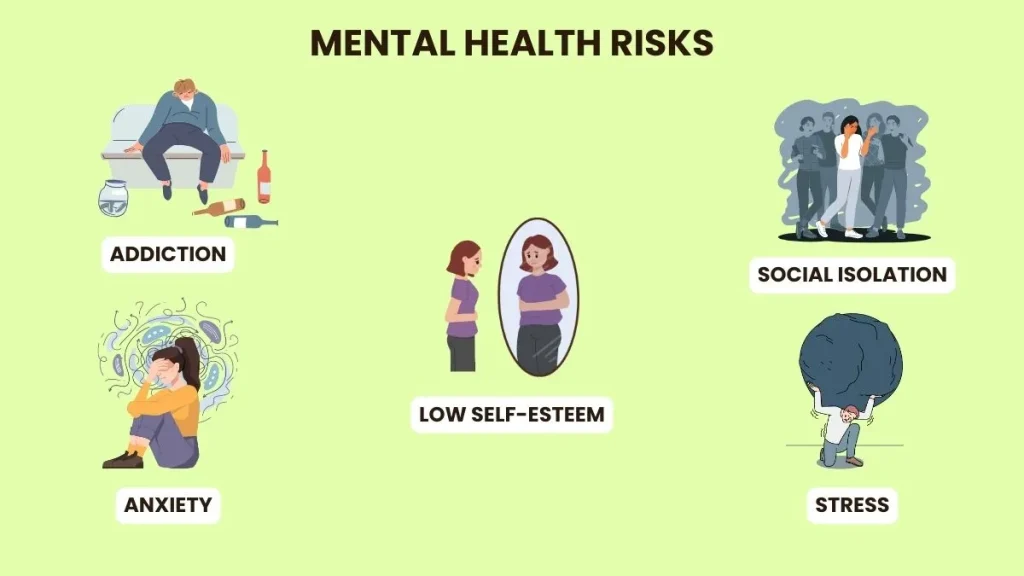
Social media and mental health can have some nasty effects. Let’s take a look at what it can lead to!
Mental Health Issues
- Addiction
- Low self-esteem
- Anxiety
- Depression
- Social isolation
- Sleep disruption
- Stress
- Digital overload
The Addiction Cycle
Symptoms and Signs
- Continuous scrolling: Have you ever scrolled for hours on social media? This might be a sign of an addiction. It’s very unhealthy to scroll for so long, almost like stuffing your face with a whole lot of junk food.
- Having withdrawals without social media: Feeling bored with social media can be a sign of withdrawal. Other symptoms are anxiety, frustration and anger.
- Excessively tracking strangers: Following every detail of either a celebrity or other strangers on the internet is anything but healthy.
- Spending a lot of time on social media: Although most people spend hours on social media, it’s not normal. Experts say that 30 minutes to 2 hours a day online is fine but anything more might be unhealthy.
- Altering life to be perfect: Because social media portrays this perfect little life, you might want yours to look like that. This can get very unhealthy and lead to conditions like depression.
Recognizing these signs can help you address and manage your social media and mental health addiction.
Coping Strategies and Solutions
Addictions are hard, but there are ways to cope with it. Some strategies improve your mood and productivity. Isn’t that great?
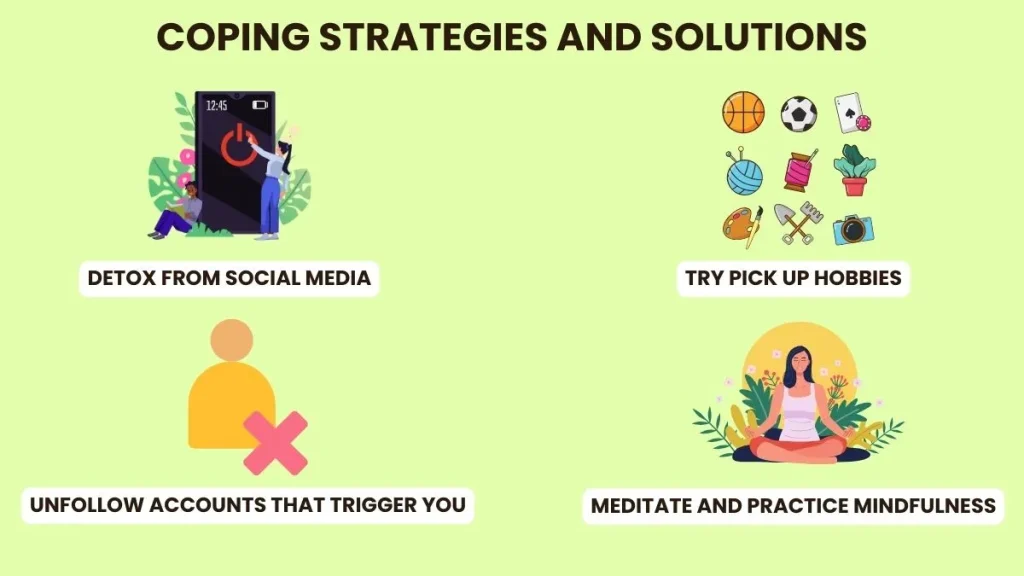
Here are some strategies and solutions for a social media and mental health addiction:
- Detox from social media.
- Meditate and practice mindfulness.
- Unfollow accounts that trigger you.
- Try hobbies; they can be a great way to keep you busy.
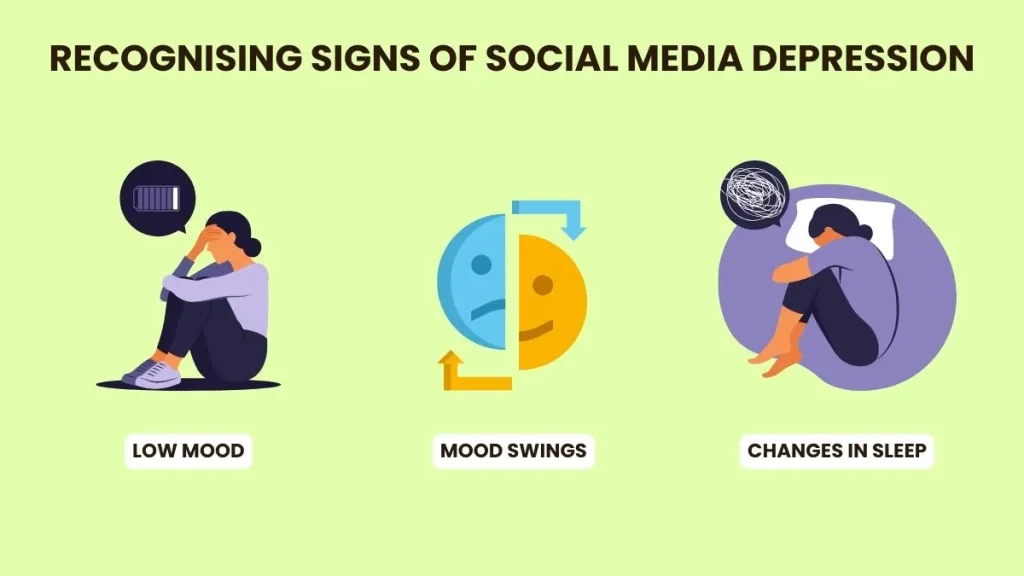
Recognising Signs Of Social Media Depression
Platforms like Facebook, Snapchat, WeChat, Instagram, TikTok and Pinterest can bring joy but can also cause depression
Here are some signs that you need to look out for:
- Low mood
- Anxiety
- Changes in sleep
- FOMO
- Mood swings
- Loneliness
- Increased sensitivity
These signs indicate that social media and mental health issues might be affecting you, so it’s crucial to be aware and take necessary actions.
FAQs
What are the signs that I need to take a break from social media?
Mindless scrolling, having FOMO, feeling isolated and struggling to cope without social media are signs that you need to take a break.
Does social media have some positive effects on your mental health?
Yes, it can! The great thing about social media is that you get to connect with people, whether it’s family or someone sitting in front of a screen thousands of miles away. It can also make you feel supported, raise awareness, allow you to network and give you the space to express yourself. It’s about how we use social media and mental health that matters!
What is the best way to cope with loneliness?
The best way depends on your needs and circumstances. Try connecting with people, engaging in activities that make you happy, taking care of yourself, getting help, and changing the way you think. These can help you cope with your loneliness.
Conclusion
Social media can affect your mental health. So, be careful and take action when you notice the signs of addiction and depression. They can be a combination but are not limited to excessive scrolling, withdrawal, depression, anxiety, FOMO, mood swings, etc. But you can manage this!
Try a detox from social media, spend some time on your hobbies, unfollow accounts that trigger you and meditate to practice mindfulness. Remember that social media and mental health are closely connected. While social media can be a great tool and a way to express yourself, just use it wisely!
