
If you’ve contemplated quitting smoking, you’re not alone. Almost 7 in 10 smokers say they want to quit. Deciding to quit smoking is one of the best things you can do for your health because it impacts almost every organ in your body, including your heart. Tobacco usage and secondhand smoke account for nearly one-third of all heart disease deaths.
The popularity of vaping has grown dramatically, particularly among teenagers. A survey found that 14.1% of high school students used e-cigarettes in 2022. Want to know more? This article discusses what juuling is, the dangerous side effects, nicotine addictions, how to quit vaping, and what the benefits are of quitting.
What is Vaping?
Vaping is the inhalation of an aerosol (mist) produced by a vaping device or an e-cigarette. E-cigarettes (also known as vape pens) are battery-powered juuling devices that heat a liquid till it forms an aerosol (mist) that is inhaled. The aerosol is not only water vapor. It typically includes nicotine, other hazardous substances, and flavorings. Even e-cigarettes claiming to be nicotine-free have been confirmed to contain nicotine. Some may contain marijuana, botanicals, or oils.
Some electronic cigarette devices are disposable and intended for single use. The user discards the device when the liquid is depleted, or the battery expires. Others can be replaced with liquid, recharged, and used repeatedly. Some purchase pre-filled cartridges for their e-cigarettes.
Others purchase a bottle of liquid and refill their e-cigarettes as needed. According to CDC research, 99% of vaping devices sold in the United States contain nicotine. Obviously, nicotine is addicting. And while this information is frequently presented in advertising, we know from past experience with ordinary cigarettes that warnings don’t always work!
Consumers who inhale the aerosol from their e-cigarettes may be breathing in potentially harmful substances. Such as:
- Nicotine
- Ultrafine particles
- Dangerous organic compounds linked to cancer
- Flavorings like diacetyl
- Heavy metals like lead, nickel, and tin
Dangers and Side Effects of Vaping
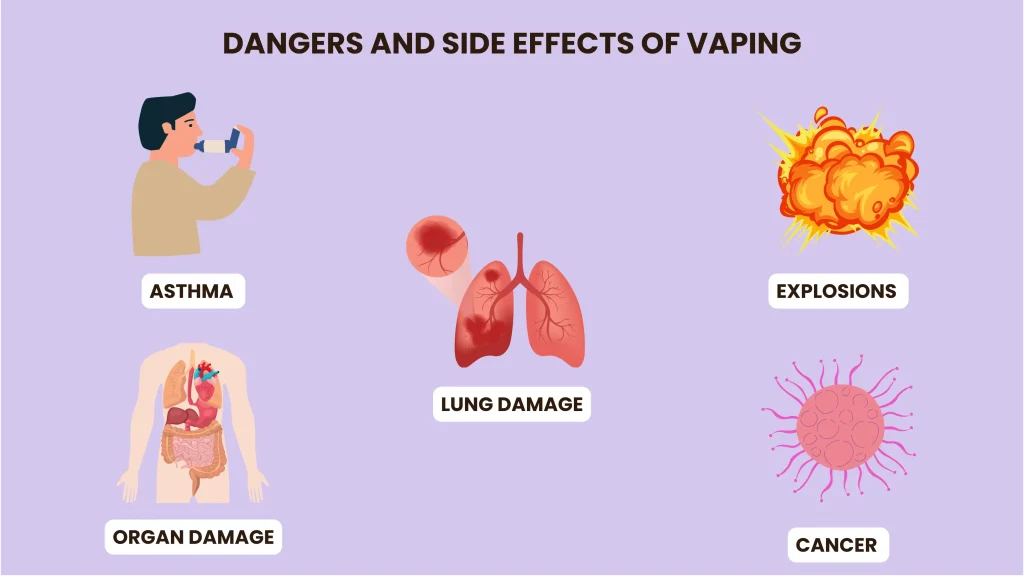
Vaping has a number of hazards, including lung and other organ damage, respiratory difficulties, addiction, and more. Vape use is commonly misconstrued as being “safer” than smoking even though it’s unsafe.
E-cigarette use can cause the following issues:
- Asthma – Vape use increases your risk of developing asthma and other respiratory diseases. It might exacerbate any asthma you already have.
- Lung damage – A flavoring ingredient called diethyl may result in bronchiolitis obliterans, also known as “popcorn lung.” Your lungs will always have scars from bronchiolitis obliterans.
- Organ damage – Nicotine and other ingredients in e-liquid can harm your heart and brain in addition to your lungs. We are aware that nicotine can affect brain growth, increase blood pressure, and cause arteries to narrow.
- EVALI – E-cigarette use can lead to the dangerous lung disease EVALI. It includes symptoms like coughing, shortness of breath, and chest pain, in addition to extensive lung damage. It’s crucial to know that EVALI has the potential to be lethal.
- Addiction – Nicotine is a very addictive substance. It alters your brain in a way that makes you need more and more nicotine. If vape use begins to negatively impact your health, you might not be able to quit even if you want to. Small quantities of nicotine are present in even nicotine-free e-liquids.
- Smoking cigarettes – A lot of people who start vaping eventually switch to cigarettes, which have more dangerous substances in them.
- Secondhand exposure – Although vape use doesn’t produce smoke, it does expose those around you to toxins and nicotine.
- Explosions – Vape devices have caused battery explosions that have resulted in burns and other significant injuries.
- Cancer – It’s known that some substances in e-liquids might cause cancer.
Short-term side effects of vaping include:
- Coughing
- Shortness of breath
- Eye irritation
- Headaches
- Dry mouth and throat
- Nausea
Nicotine Addiction and Withdrawal
Most tobacco products, including e-cigarettes, contain nicotine, which is highly addictive. The brain becomes acclimated to nicotine after prolonged use. They may believe that to feel normal, they need. Nicotine addiction includes an inability to quit using nicotine, cravings for it, and tolerance (needing more to feel the same) are all indicators of nicotine addiction.
Along with impairing performance at work, school, and other activities, nicotine addiction can also damage relationships with family and friends. An addicted person’s body and brain must adjust when they quit using nicotine. Over time, as the brain adapts to being nicotine-free, withdrawal symptoms lessen.
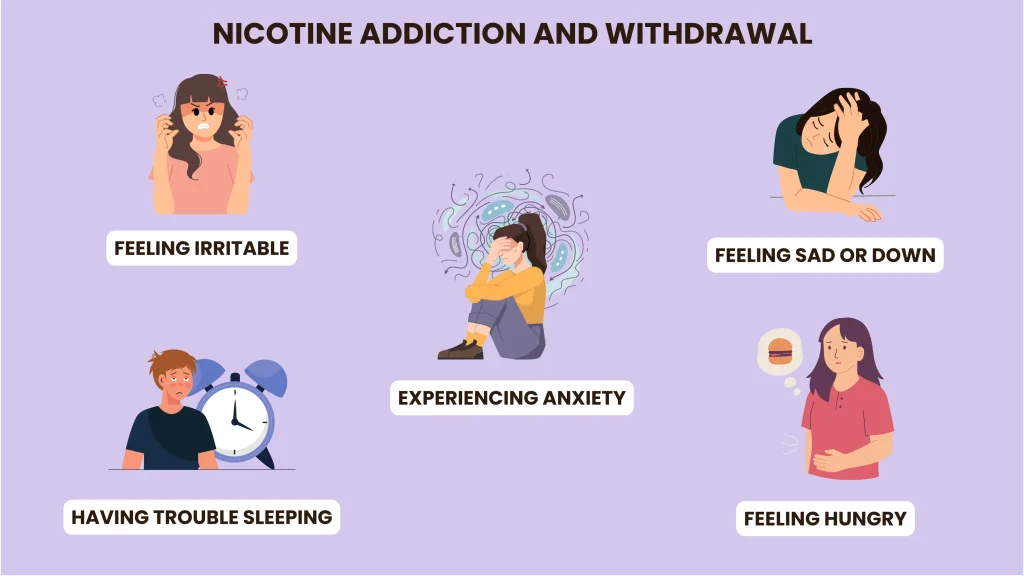
Short-term withdrawal signs from nicotine could be:
- Feeling irritable
- Being jumpy and restless
- Experiencing anxiety
- Feeling sad or down
- Having trouble sleeping
- Having a hard time concentrating
- Feeling hungry
- Craving nicotine
Benefits of Quitting Vaping
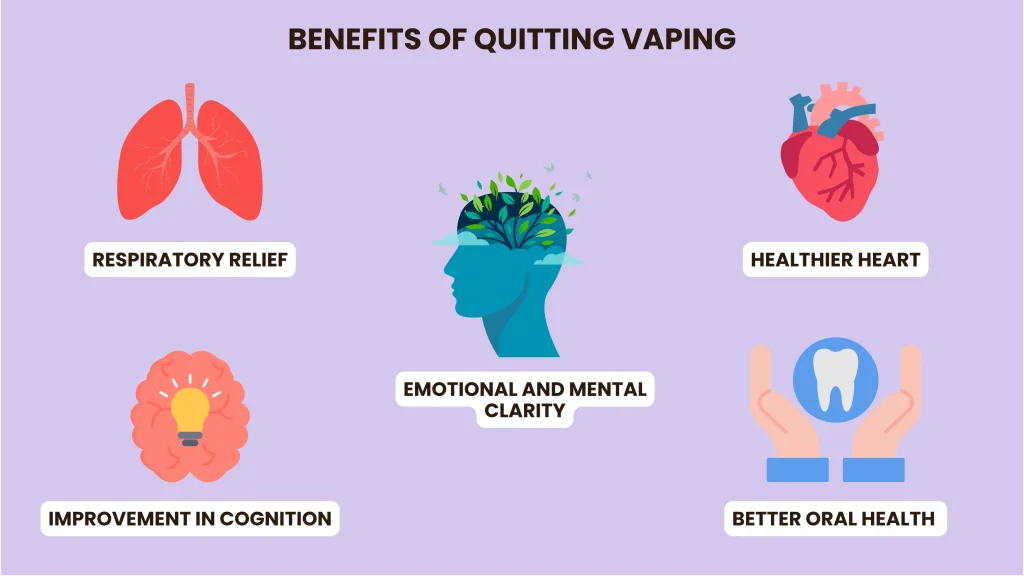
- Respiratory relief – Giving up vaping can help your lungs function better. By quitting, you lessen your exposure to the irritating substances and dangerous compounds found in e-cigarette aerosols, which can irritate and injure your lungs.
- Healthier heart– One of the many advantages of quitting vaping is that it can improve the health of your heart by enhancing endothelial function, which is the function of the blood vessel lining. This results in improved blood flow, healthier blood vessels, and a decreased risk of heart-related problems.
- Emotional and mental clarity – Giving up vaping, whether with THC or nicotine-based products, can help with mood and mental health. Additionally, giving up can lessen the urge to use vaping as a coping mechanism for mental health issues and help you establish healthier coping mechanisms.
- Improvement in cognition – Vaping and smoking have both been connected to adult self-reported cognitive problems. An investigation into the association between adult Americans’ self-reported cognitive problems and vaping was conducted. It was discovered that in comparison to those who never used these products, dual users – those who used both e-cigarettes and traditional cigarettes – and current e-cigarette users had a considerably higher correlation with cognitive symptoms.
- Better oral health – Stopping vaping may be advantageous for oral health since it prevents the disruption of the oral microbiota that comes with using e-cigarettes, which can cause periodontal disease and other problems with oral health.
Skin Benefits
There are various ways that giving up vaping might improve your skin:
- Better hydration – Many vape products contain nicotine, which constricts blood vessels to lessen blood flow to the skin and perhaps dry it out.
- Enhanced skin healing – Nicotine inhibits the healing process in your body. Individuals who smoke or use vape devices may take longer to heal from injuries, surgeries, or skin diseases.
- Decreased early aging – Smoking and vaping expose the skin to pollutants and dangerous chemicals. These pollutants have the ability to degrade the skin’s collagen and elastin, which can cause wrinkles and sagging to appear earlier than they should.
- Clearer complexion – Vaping chemicals can exacerbate skin disorders like eczema and acne.
How to Quit Vaping
Finding The Willpower To Quit
People may give up vaping for a variety of reasons. In a 2019 survey, expenses were cited as the second most prevalent reason given by vapers for quitting after health. Identifying the cause of their quitting aids in both setting goals for their recovery process and, should motivation begin to wane, providing a boost.
Timing
Setting a particular quit date for vaping is important since it encourages accountability. It allows you to plan and acquire resources to assist them in overcoming the cravings and anxiety of the early stages of quitting.
Identify Triggers
A trigger is any emotion, action, place, or time that causes a person to want to vape. Spending time with friends and experiencing unpleasant events are common triggers, but everyone has their own. It’s about your well-being. So, if these triggers get too much for you, walk away. Don’t let a few seconds ruin all your hard work of resisting.
Personal And Professional Support
Support groups can help you quit e-cigarettes. Connecting with friends and family can provide a more personal level of support, especially if they have quit using e-cigs or smoking. Someone who wants to quit using electronic cigarettes can benefit from medical support. These strategies may be especially beneficial to people who have previously used other nicotine products or who have other underlying health concerns that require professional care.
Conclusion
Vaping can be quite tempting in terms of accessories and flavors. Unfortunately, it’s not as safe as it appears. Nicotine and other substances in e-liquids might harm your body. Short-term effects include coughing, shortness of breath, eye irritation, headaches, and dry mouth and throat.
Stay informed and look after your health by quitting vaping today!
