
When your body does not have enough water, you get dehydrated. Drinking before you become too thirsty is the most effective way to combat it. Thirst is a sign of mild dehydration, which can cause various symptoms such as headache, weariness, dizziness, and more. Heatstroke and other deadly disorders can be intensified by lack of water in body. So, let’s look at the causes, symptoms, and effective treatment options for dehydration.
What Is Dehydration?
You can sense the symptoms of dehydration right away. Your body experiences dehydration when it loses so much fluid that it becomes dysfunctional. It happens when you lose more fluid than you take in. On a particularly hot day, lack of water in body may result from profuse sweating or from being sick with a fever, diarrhea, or vomiting. Poor water intake and prescription medications that increase urination are further risk factors.
Thirst is your body’s natural reaction when you are dehydrated. When you feel thirsty, you should drink something- ideally water. Usually, drinking more water will take care of mild dehydration. Lack of water in body is not always easy to recognize, though. It can be seen in a fussy newborn who can’t express their thirst or an elderly parent who forgets to drink water. Ensure the hydration of those you care about. You or a loved one may need to go to the hospital to receive IV fluids if you or they are suffering from moderate to severe dehydration. Severe lack of water in body can be fatal if untreated.
What Does Water Do For Your Body?
The water content of your body can reach up to 78%. Both your heart and brain are composed of 73% water. 31% of your bones, 79% of your muscles and kidneys, and 64% of your skin are made of water. Water makes up 83% of your lungs.
Water helps to:
- Aid digestion and eliminate waste
- Your joints work. Water lubricates them
- Make saliva (which you will need to swallow)
- Balance your body’s chemistry. Your brain uses water to produce hormones and neurotransmitters
- Deliver oxygen throughout your body
- Cushion your bones
- Control your body temperature
- It functions as a shock absorber for your brain, spinal cord, and, if pregnant, the fetus
Your body needs water, especially when it’s hot outside. It keeps the body from becoming too hot. Heat is produced by your muscles during exercise. Your body has to release heat in order to prevent burning. In warm weather, the main way your body loses heat is by sweating. As sweat evaporates, the tissues below get cooled. Your body’s water balance is lowered by sweating, which affects normal biological processes.
What Are The Symptoms Of Dehydration?
If you feel that you or your kid is dangerously dehydrated, get medical attention immediately.
Signs of dehydration in children include:
- Dry tongue and lips
- There are no tears when they cry
- Sunken soft place on your baby’s head
- Sunken eyes
- Dry and wrinkled skin
- Deep, fast respiration
- Cool, blotchy fingers and toes
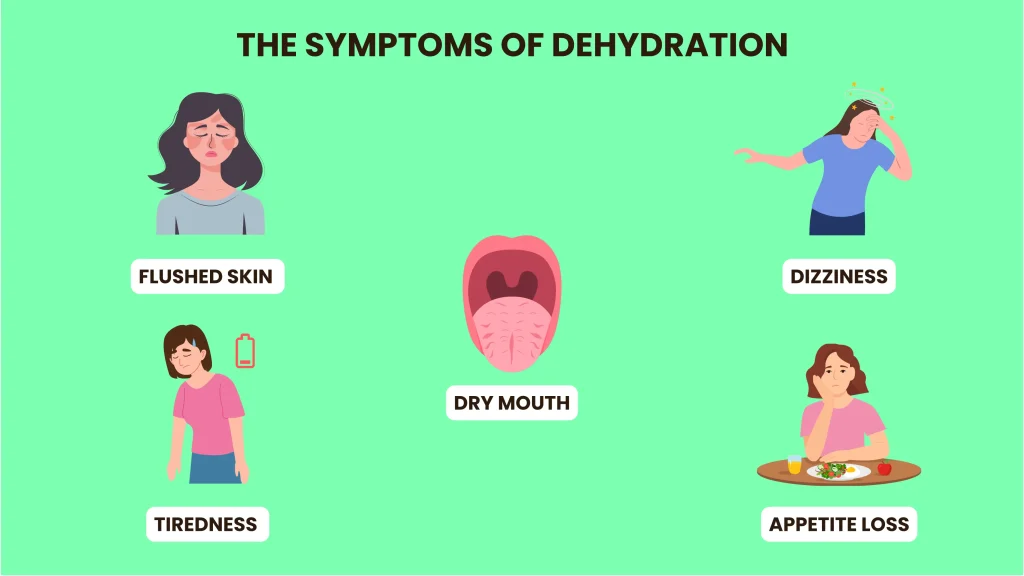
Adults with dehydration may experience the following symptoms:
- Headaches, delirium, and confusion
- Tiredness (fatigue)
- Dizziness, weakness, and lightheadedness
- Dry mouth and/or cough
- High heart rate, yet low blood pressure
- Appetite loss, but perhaps a craving for sweetness
- Flushed (red) skin
- Swollen feet
- Muscle cramping
- Heat intolerance and chills
- Constipation
- Dark-colored urine
What Causes Dehydration?
When you don’t drink enough water or lose water quickly from activities like perspiration, vomiting, or diarrhea, you risk becoming dehydrated. Dehydration and excessive urination are possible side effects of some drugs, such as diuretics (water pills). If anyone doesn’t drink enough water, they could become dehydrated. However, because they might not be able to express that they are thirsty, babies and young children are much more vulnerable.
This is particularly crucial when kids are ill. So, keep track of your child’s fluid intake. Adults 65 and older are also at an increased risk. They don’t carry as much water in their bodies and are less able to detect thirst. If you’re a caregiver, especially for someone with memory problems, make sure to bring them drinks frequently. Even if they have a painful infection, such as a UTI (urinary tract infection), they must drink liquids.
Complications Of Dehydration
If you or your kid shows symptoms of severe dehydration, get medical attention immediately.
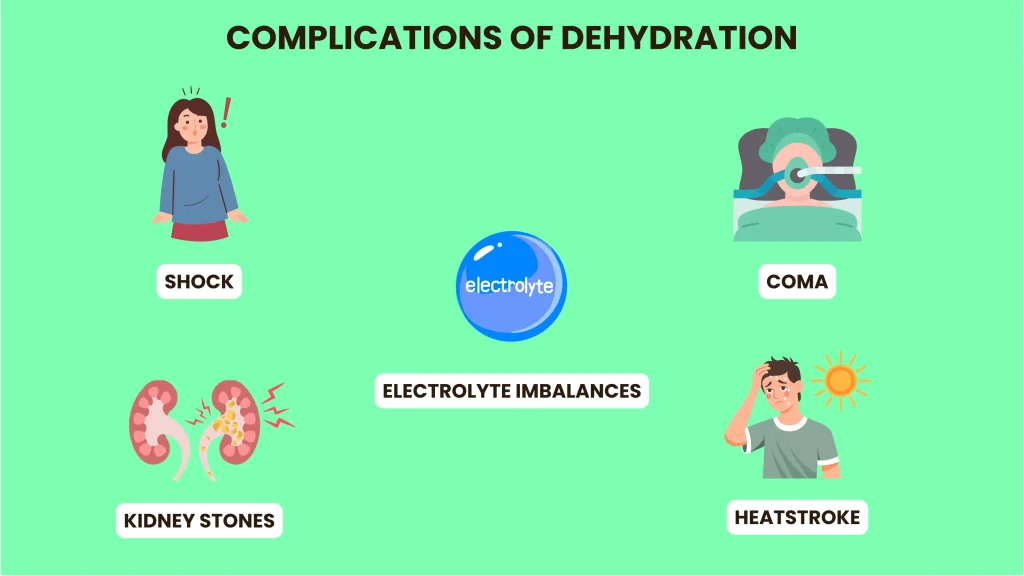
Severe dehydration can cause major complications, such as:
- Electrolyte imbalances
- Heat-related ailments include heatstroke
- Kidney complications include kidney stones and renal failure
- Shock, coma, even death
How Is Dehydration Diagnosed?
If you feel thirsty, you are already dehydrated. That’s the simplest way to detect if you need additional fluids. If you consult your doctor about probable dehydration, they may diagnose the condition based on your symptoms and a physical exam. Dehydration can also be diagnosed using laboratory studies.
These tests can include:
- Blood tests to monitor electrolyte levels and renal function
- Urine testing to determine possible causes of dehydration
What Are The Levels Of Dehydration?
Healthcare providers categorize dehydration as:
- Mild – Simply take in more fluids orally. Drink plenty of water, but if you sweat excessively or lose fluids due to vomiting or diarrhea, replace them with an electrolyte-containing drink. You should feel better within five to ten minutes.
- Moderate – An IV is required to treat moderate dehydration. This will be administered in an urgent care, emergency room, or hospital setting.
- Severe – If your dehydration symptoms are severe, consult a healthcare provider. Call 911, your local emergency services number, or visit an emergency room.
How Can I Help My Dehydrated Child Get Better At Home?
- Feed your youngster according to the guidelines provided by his or her caregiver.
- Children under the age of two should not be given over-the-counter (OTC) diarrhea medication unless instructed by their provider.
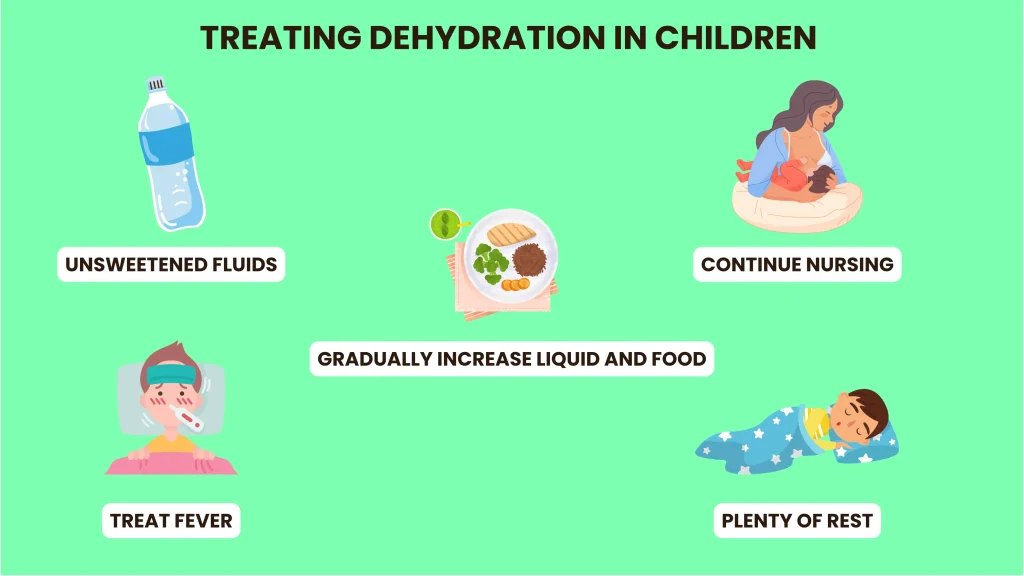
- Encourage your youngster to drink unsweetened fluids (sweetened sodas, juices, and flavored gelatin can cause diarrhea).
- Continue to nurse (breastfeed) newborns normally.
- Electrolyte solutions may be beneficial when administered as prescribed by their provider.
- Gradually increase the amount of liquid and food you offer your youngster.
- To treat a fever, give your child acetaminophen (Tylenol®). Don’t give your child aspirin.
- Allow your child plenty of rest.
- Watch for indicators of dehydration that worsen or return.
Hospital Treatment Of Dehydration
Dehydration can normally be treated at home, but in severe situations, hospitalization may be required.
Hospital treatment may involve:
- Fluids administered intravenously (IV) or through your vein
- Monitoring the electrolyte imbalance
- Acetaminophen for a fever
- Rest
Can Dehydration Be Prevented?
Yes, you can avoid dehydration by tracking how much fluid you consume. Drink water all day, including at meals. Avoid soda, alcohol, and caffeinated beverages. Checking your urine is one approach to ensure that you are sufficiently hydrated. It’s okay if it’s clear, light, or straw-colored. If it is darker than that, continue drinking.
To avoid dehydration, active people, such as those who play sports or exercise, should consume at least 16 to 20 ounces (oz.) of fluids one to two hours before engaging in an outside activity. After that, you should drink six to twelve ounces of fluid every ten to fifteen minutes while outside. When you’ve completed the task, you should drink more. Drink at least another 16 to 24 ounces to replenish your lost fluids.
How to Encourage Yourself and Loved Ones to Drink More Water
- Bring a water bottle with you. Keep it full!
- Choose water over sugary drinks, even at meals.
- Add taste. A wedge of lime or lemon could enhance the flavor. You can also experiment with flavored drink mixes, but watch out for the sugar.
- Eat foods with a high water content. Many soups, fruits, and vegetables fit this criteria.
- If you dislike drinking a large amount of water at once, try smaller doses scattered throughout the day.
Conclusion
When your body doesn’t contain enough water, you become dehydrated. It can occur for many reasons and, if left untreated, can be dangerous. Keep in mind that you are already dehydrated if you feel thirsty. If you’re thirsty, get some water right away. The dehydration symptoms could improve in five to ten minutes, but more severe cases can lead to hospitalization.
Make hydration a habit today and keep your body thriving!
