
Watermelon arose in Africa over 4,000 years ago, but did you know that the juicy, sweet summer fruit has many health benefits and can even improve your sex life? One of the key benefits of watermelon is its high water content, which keeps you hydrated while also providing essential vitamins. You might be sitting at the edge of your seat wondering HOW? Don’t worry – this article covers it all, including what each slice contains. Let’s start!
Nutritional Profile of Watermelon
Watermelon is filled with citrulline and lycopene, two potent plant mixtures that are related to lowering blood pressure, improving metabolic health, and decreasing muscle soreness after exercise. One of the key benefits of watermelon is its ability to provide these nutrients while being refreshing and hydrating.
Watermelon Nutrition Breakdown
Watermelon is a rich source of a variety of nutrients, including potassium, magnesium, and vitamins A and C. It’s also relatively low in calories.
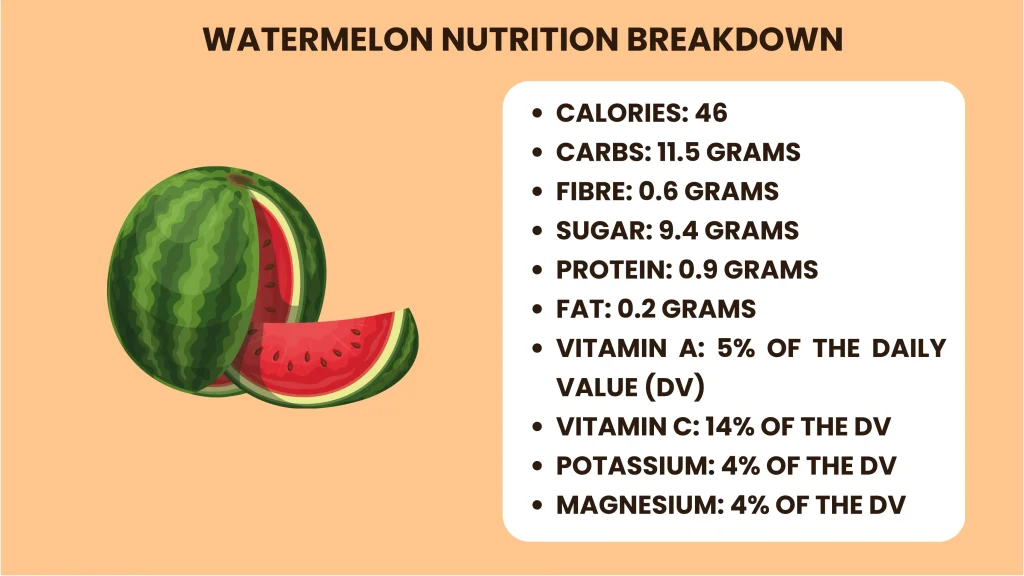
Here are the nutrients in 1 cup (152 grams) of raw, diced watermelon:
- Calories: 46
- Carbs: 11.5 grams
- Fibre: 0.6 grams
- Sugar: 9.4 grams
- Protein: 0.9 grams
- Fat: 0.2 grams
- Vitamin A: 5% of the Daily Value (DV)
- Vitamin C: 14% of the DV
- Potassium: 4% of the DV
- Magnesium: 4% of the DV
Fibre Content in Watermelon
Although watermelon doesn’t contain much fibre, it still contributes to gut health. One of the lesser-known benefits of watermelon is its ability to promote healthy digestion, which prevents constipation and supports regular bowel movements. Fruits like apples and bananas are much higher in fibre than watermelons, yet they have the same effect. The secret to fruit like watermelon is the combination of water and fibre. A study published in a Gastroenterology journal found that water intake is extremely important for bowel function and reduced constipation.
Health Benefits of Watermelon
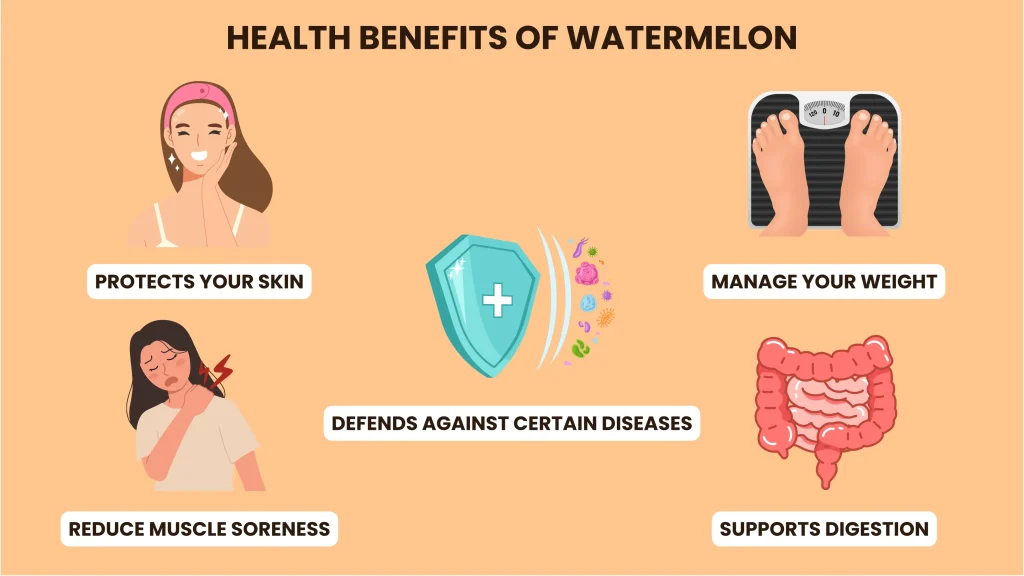
- Keeps you hydrated: Water isn’t in the fruit’s name by chance. Watermelon is about 95% water by weight and helps to avoid dehydration and other issues.
- Defends against certain diseases: Watermelon is one of the best sources of lycopene, an antioxidant known to combat oxidative stress caused by cell-damaging free radicals.
- Improves artery function: L-citrulline is an amino acid found in watermelon, particularly in the white part of the rind. It may improve artery function and lower blood pressure by helping blood vessels relax and improving circulation.
- Protects your skin: Watermelon may help keep your skin healthy. Its vitamins C and A support healthy skin.
- Manage your weight: Consuming watermelon instead of a processed sweet snack may help you manage your weight.
- Reduce muscle soreness: Those who drank the watermelon juice experienced less muscle soreness for up to 72 hours.
- Supports digestion: Although watermelon is not very high in fibre, the fibre in it helps support a healthy gut.
Watermelon Benefits for Men
A few studies have been done on erectile dysfunction, fertility, prostate health and even testosterone health, which indicates that one of the key benefits of watermelon is its amazing power, especially for men. The antioxidant lycopene in watermelon can help protect the prostate gland and improve fertility, while citrulline and amino acids increase blood flow that aid in erectile function. Isn’t that great?
Unique Aspects of Watermelon
Watermelon is a good source of antioxidants and nutrients. In addition to supporting hydration, one of the key benefits of watermelon is its ability to promote various aspects of health. But what are they?
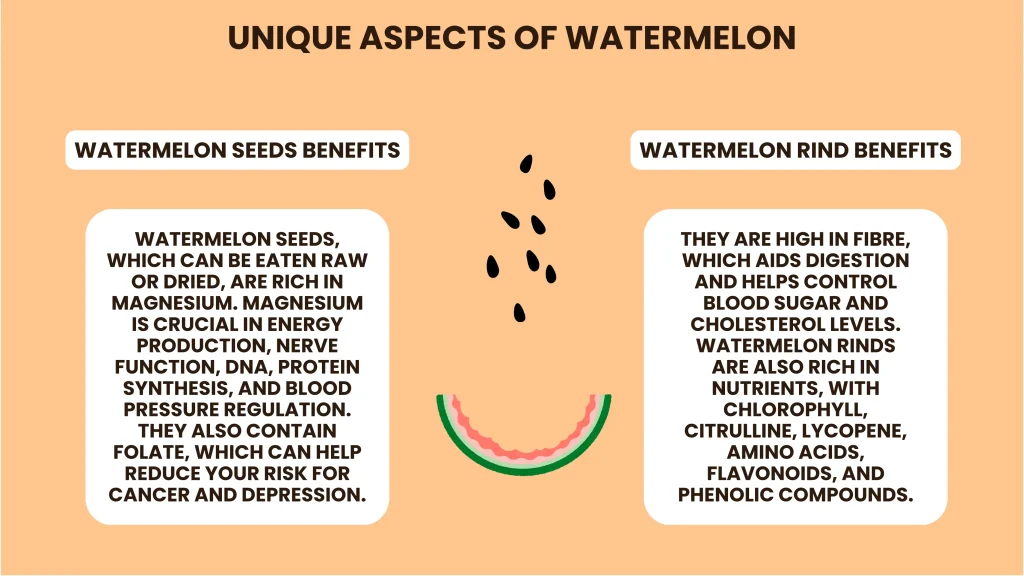
Watermelon Seeds Benefits
Watermelon seeds, which can be eaten raw or dried, are rich in magnesium. Magnesium is crucial in energy production, nerve function, DNA, protein synthesis, and blood pressure regulation. They also contain folate, which can help reduce your risk for cancer and depression. Another benefit of watermelon is that even the seeds are packed with nutrients that support overall health.
Watermelon Rind Benefits
They are high in fibre, which aids digestion and helps control blood sugar and cholesterol levels. Watermelon rinds are also rich in nutrients, with chlorophyll, citrulline, lycopene, amino acids, flavonoids, and phenolic compounds.
Watermelon and Digestive Health
Watermelon contains a small amount of fibre, key to keeping your digestion moving smoothly. One of the benefits of watermelon is that fibre adds bulk to your stool and keeps you regular, while water helps move waste through your digestive system.
Does watermelon make you poop?
Watermelon is considered a high FODMAP food because of its high amount of fructose. Anyone with GI issues may experience urgent bowel movements after consuming it, especially in large amounts. Another benefit of watermelon is its ability to support digestion, although some individuals may need to consume it in moderation.
Can watermelon cause diarrhea?
Watermelon doesn’t directly lead to diarrhea, but large quantities can cause digestive issues for some individuals. One of the lesser-known benefits of watermelon is its natural laxative effect due to its high water content, which makes up 90% of the fruit. However, for those with fructose absorption issues or sensitivity, the fruit’s high fructose levels can cause bloating and even loose stools, as it overwhelms their digestive system.
Additionally, because it makes up 90% of the fruit, it can be a natural laxative and, when consumed in excess, cause diarrhoea. But this is only in some cases. Individuals who have gastrointestinal issues like irritable bowel syndrome (IBS) experience discomfort after eating large portions due to its classification as a high-FODMAP food. Another benefit of watermelon is that moderate consumption is generally safe and won’t cause issues for most people, making it a healthy treat when enjoyed in appropriate servings.
Moderate consumption of watermelon isn’t likely to cause issues for most people. This fruit is best to enjoy inappropriate serving to avoid potential digestive disturbances.
Conclusion
Watermelon is not just a refreshing treat like we thought. It is also a powerhouse of nutrition that offers individuals various health benefits. The high water content keeps you hydrated, and nutrients such as lycopene and citrulline improve your heart health, enhance your digestion, and even offer sexual benefits.
This treat is definitely worth eating, not to mention saving space on your plate. The unique combination of both vitamins and antioxidants supports your overall well-being. Understanding their wonderful health advantages, you can appreciate them for more than just the taste; they promote health all year round. Just ensure that you eat it in moderation.
Here is to a healthier YOU!
