

Low libido (low sex drive) refers to a decrease in sexual desire. It is common and might last for a short or lengthy time. Libido varies from person to person and may fluctuate throughout one’s life. Depending on a person’s lifestyle, numerous factors might affect and repair low sex drive. If you are concerned about a decline in libido, you should visit a healthcare specialist.
What Is Low Sex Drive?
Libido is influenced by sex hormones (testosterone and estrogen), as well as neurotransmitters (dopamine and oxytocin). Libido naturally varies significantly from person to person. Your sexual desire can fluctuate throughout your life. There is no correct or inappropriate level of desire. Some people have or wish to have sex every day, whilst others may only have sex once or twice a year, if ever. Your individual preferences and life circumstances govern the “right” or “normal” libido.
What Are The Symptoms Of Low Libido?
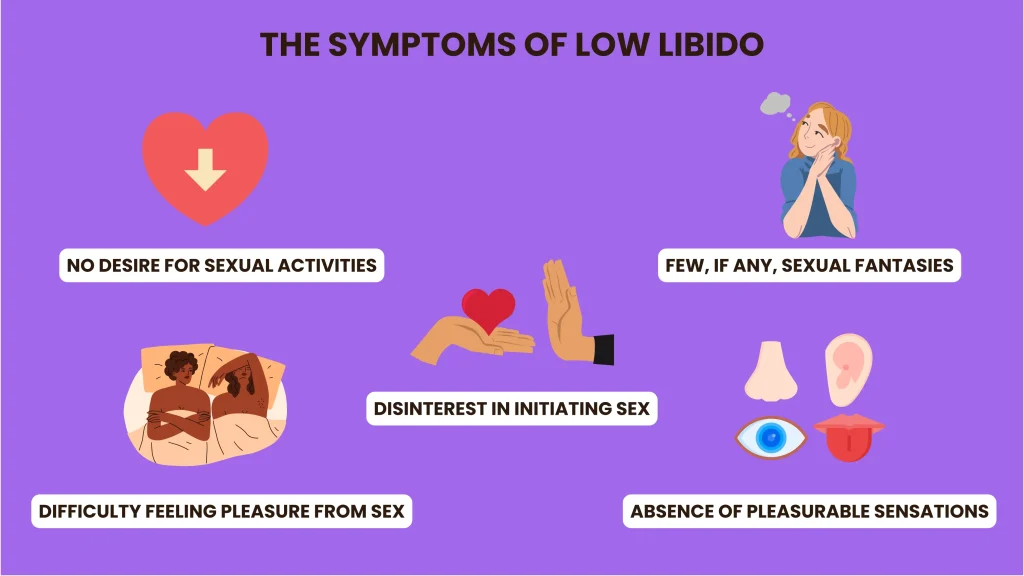
The main symptom of having a low libido is a decline in sexual desire as compared to your regular interest in sex.
Other symptoms include:
- Little or no desire for sexual activities
- Few, if any, sexual ideas or fantasies
- Disinterest in initiating sex
- Difficulty feeling pleasure from sex
- The absence of pleasurable sensations when sexually stimulated
What Can Cause a Low Libido?
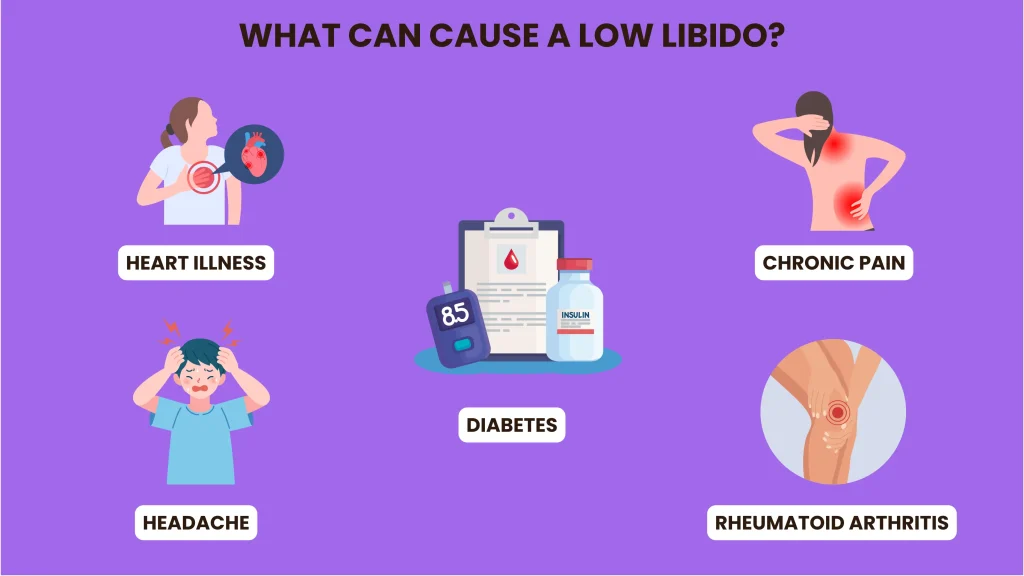
Many biological, psychological, and social factors can play a hand in low libido.
There are also health issues that include, but are not limited to:
- Chronic kidney disease
- Cancer
- Chronic pain
- Headaches
- Diabetes
- Heart illness
- Hyperprolactinemia
- High blood pressure
- Hypothyroidism
- Rheumatoid arthritis
Psychological And Social Factors
- Relationship issues with your partner: Communication, trust, and intimacy concerns are some of the most common causes of sex drive reduction. A couple’s desire for sex often lessens during their relationship.
- Stress and exhaustion: Stress, whether from work, family, or life in general, can reduce your sexual drive by shifting your focus away from sexual desire. Chronic stress can also cause hormonal imbalances, resulting in low libido.
- Depression, low self-esteem, and physical tiredness: These can all lower your libido. Depression also causes an imbalance in the neurotransmitters that regulate desire.
- History of sexual trauma: Sexual harassment, assault, or rape can all have an impact on one’s sexual desire.
- Anxiety: Anxiety disorders can cause higher amounts of cortisol (the “stress hormone”). High cortisol levels can impair the sex hormones that regulate sexual urges.
- Alcohol, smoking, or recreational drugs: Excessive alcohol intake and improper drug usage can also cause a loss of sexual desire. Smoking can lower testosterone levels, leading to a lower libido.
- Medications: Certain medications can reduce your sex drive. These include antidepressants, antipsychotics, chemotherapy treatments, and blood pressure meds.
Diagnosing Low Sex Drive
A decrease in your sex drive has various probable causes.
Your doctor will ask you the following:
- Symptoms you’re experiencing
- Your medical history
- Medications
- Sexual history
- Relationships
- Stress level
- Ideas about sex
Suppose they feel a physical condition is causing a low libido. In that case, they may perform or prescribe the following tests to help discover the cause:
- Physical exam
- Pelvic exam
- Hormone levels can be measured in blood testing
- Imaging tests
How Is Low Libido Treated?
- Education and communication: Learning about sex, sexual behaviors, and sexual responses might help you overcome your concerns about sexual function. Open communication with your partner about your needs and worries can also help you overcome many of the hurdles to a good sex life.
- Stress management: Stress management entails applying ways to improve your response to life challenges. These approaches can help avoid or alleviate stress-related symptoms like low libido. Stress management techniques may include journaling, exercise, meditation, and other forms of self-care.
- Hormone therapy for menopause: Hormone therapy (HT) increases hormone levels and reduces some menopausal symptoms, such as low libido. The two primary kinds of HT are estrogen therapy and estrogen-progesterone/progestin hormone therapy (EPT).
- Hormone therapy for low testosterone: Male hypogonadism is treated with testosterone replacement therapy. There are numerous types of testosterone replacement therapy, such as tablets, creams, injections, and patches.
- Individual psychotherapy: Psychotherapy (talk therapy) refers to a wide range of treatment procedures aimed at assisting individuals in identifying and changing undesirable emotions, thoughts, and actions. Therapy with a mental health professional can help you address medical ailments, mental health issues, or situations that may be causing a reduction in libido.
- Couples therapy: Couples therapy is a process in which you and your partner engage with a mental health professional to enhance the overall quality of your relationship, address underlying issues, and learn how to boost intimacy and physical affection. This can help with low libido concerns.
- Sex therapy: Sex therapists are certified psychologists, doctors, or healthcare professionals who have received specialized training in assisting patients with sex-related issues, such as a loss of sexual desire.
Natural Tips to Increase Low Libido
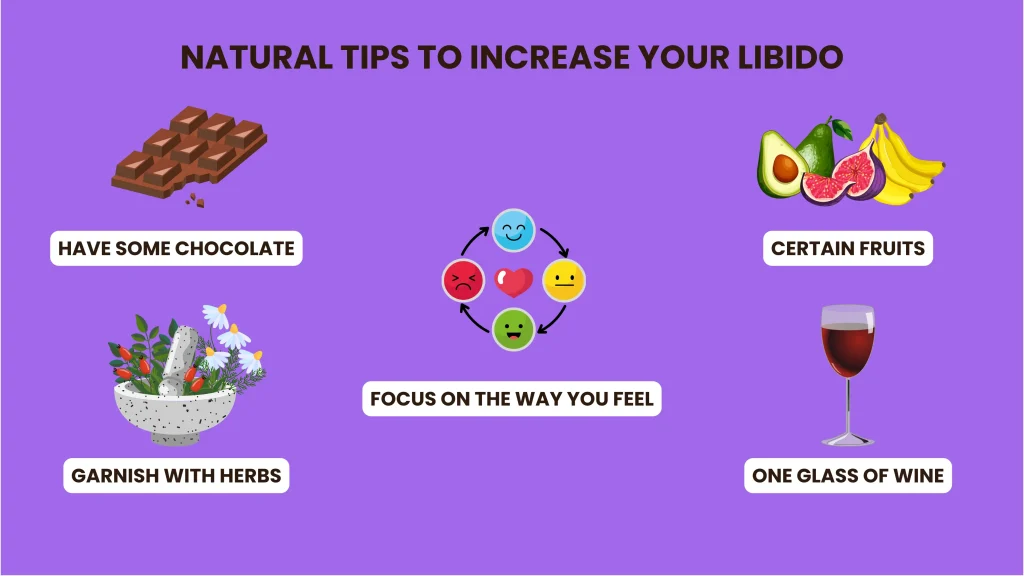
You can try various things, including eating specific foods and taking supplements, positive self-talk, and a renewed focus on pleasure.
Here are some great options:
1. Add More of These Fruits
There is little data to back up the effectiveness of certain foods, but there is no harm in experimenting. Figs, bananas, and avocados are libido-boosting foods, often called aphrodisiacs. These foods also contain crucial vitamins and minerals, which can boost blood flow to the genitals and promote a healthy sexual lifestyle.
2. Have Some Chocolate
Due to its fantastic taste and capacity to heighten erotic pleasure, chocolate has long been associated with desire. Increased release of neurotransmitters like serotonin, which has aphrodisiac and mood-boosting qualities, is brought on by chocolate. Moreover, serotonin may alter blood flow to vaginal tissues, which may explain part of its libido-enhancing properties.
3. Garnish With Herbs
Next time you have a romantic dinner, add basil or garlic to your dish. The smell of basil stimulates the senses, whereas garlic has high levels of allicin, a vasodilator that increases blood flow. Although additional research is needed, these results have the potential to benefit patients who have erectile dysfunction.
4. Focus On The Way You Feel
The way you feel about your body influences how you think about sex. Eating a healthy diet and regular exercise might help you feel more connected to your body and improve your self-image. You can also focus on the pleasure felt during sex.
5. Stick To One Glass Of Wine
Drinking a glass of wine can put you at ease and improve your desire to get intimate. However, excessive alcohol consumption can hamper your performance by lowering erectile function. Too much alcohol can also limit your capacity to orgasm.
Conclusion
If your lack of desire for sex persists or returns and causes personal suffering, consult your healthcare provider. You may have a curable illness known as a sexual interest-arousal disorder. However, you do not need to fit this medical criterion to get help. If you’re experiencing low or diminished sex drive, you can make efforts to increase your low libido. Lifestyle adjustments and sexual approaches may put you in the mood more frequently. Some medications may also provide promise.
Take charge of your sexual health today!
