
Giving up smoking is difficult. It requires time and a plan of action. You don’t have to quit overnight. Focus on each day and take it as it comes. Start your path to experiencing the benefits of quitting smoking by participating in the Great American Smokeout 2025 event and learning how to quit smoking effectively!
What is The Great American Smokeout?
The Great American Smokeout in 2025, its a national stop smoking campaign and initiative to encourage smokers to give up and increase public awareness of the benefits of quitting smoking. It highlights smoking and health risks as well as the advantages of stopping, including better health, longer life expectancy, and a lower chance of cancer and other illnesses. It also serves as a platform to educate people on how to quit smoking with the right tools and adequate quit smoking resources.
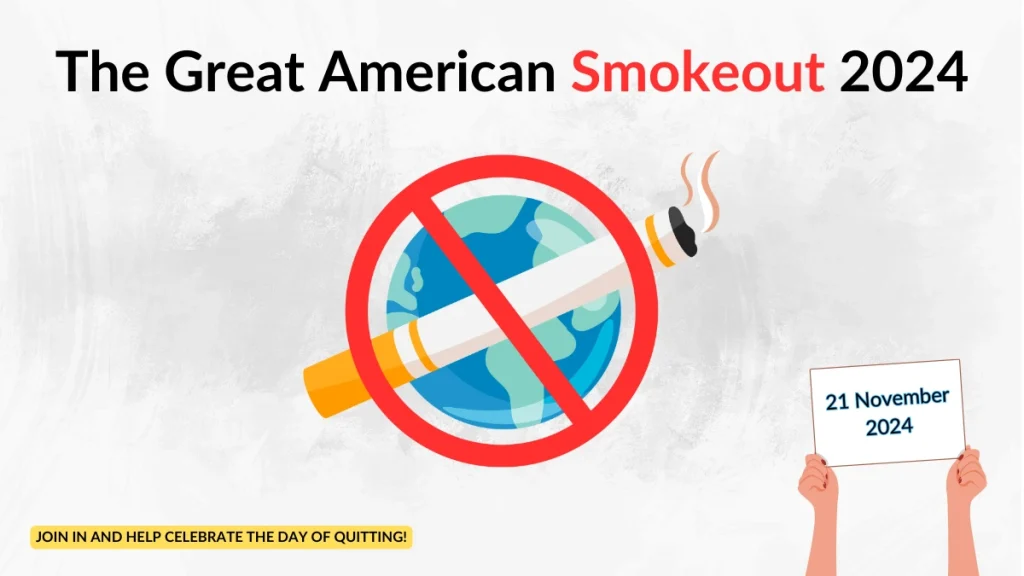
Every year, on the third Thursday in November, people celebrate the Great American Smokeout held by the American Cancer Society. This year, the event will be held on November 21st, 2025, continuing the Great American Smokeout history. It will give people, groups, and communities a chance to unite in the fight against tobacco addiction.
Smoking Cessation Timeline
Each person will have a unique experience with nicotine withdrawal, which can be better understood by examining the smoking cessation timeline. Some people have slight symptoms for a few days, while others have severe cravings and symptoms that last several weeks.
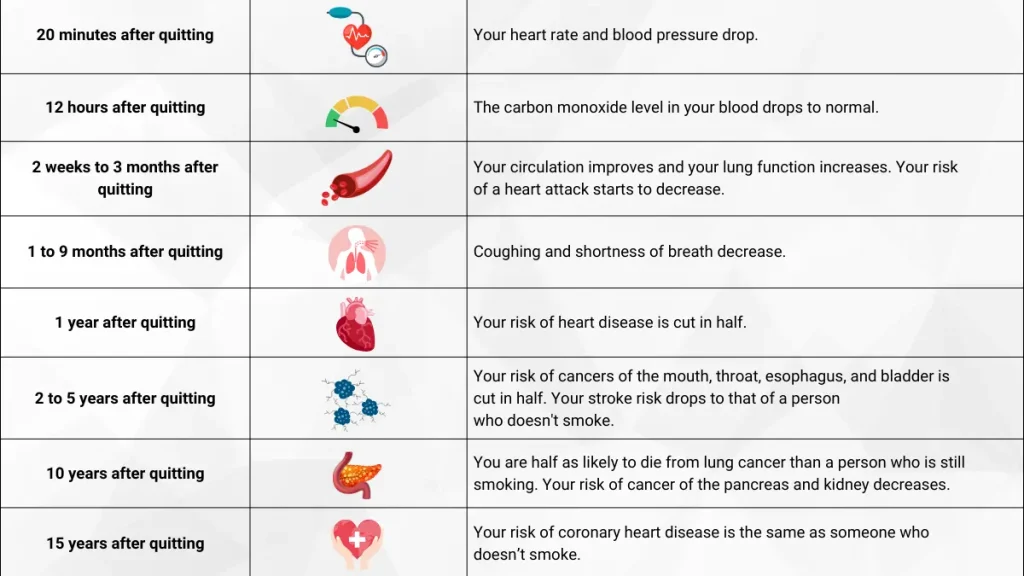
Withdrawal symptoms develop 4-24 hours after someone’s final cigarette. As part of the smoking cessation timeline, symptoms peak about 3 days after stopping and gradually lessen over the next 3-4 weeks. About two hours after smoking a cigarette, the body will have eliminated almost half of the nicotine.
Over the next few days, the level progressively drops until it no longer has any effect on the body. This stage is critical since it represents considerable physiological changes. People begin to observe beneficial changes along the smoking cessation timeline, in addition to signs of withdrawal.
This may include:
- A better sense of smell and taste
- Less coughing
- Better breathing, particularly during exercise
Individuals who understand the smoking cessation timeline can better prepare for hurdles and enjoy accomplishments on their path to better health.
The Benefits of Quitting Smoking
For those still deciding whether to participate in the Great American Smokeout 2025, the American Cancer Society says that your body will start healing almost immediately after your last cigarette. So, let’s look at more reasons to learn how to quit smoking.

Worthwhile benefits of quitting smoking:
Improved Circulation
One of the most notable benefits of quitting smoking is that your blood circulation improves in two to twelve weeks. This reduces your risk of having a heart attack and makes physical activity much easier.
Strengthening Your Immune System
Giving up smoking boosts your immune system, making it simpler to fend off colds and other ailments. It also improves circulation, raises oxygen levels, and reduces inflammation.
Better Smell and Taste
Smoking dulls your perceptions of taste and smell by harming the nerve endings in your mouth and nose. One of the best benefits of quitting smoking is your senses of taste and smell improve within 48 hours of stopping, and the nerve endings grow.
Broken Cycle of Addiction
Your brain’s many nicotine receptors will return to normal within a month after stopping, ending the addiction cycle. This is one of the best benefits of quitting smoking, as it lessens your chances of smoking again.
More Vitality
The increased oxygen in your body will give you more energy, which will help improve your breathing and physical activities.
Better Sexual Experience
Your sexual life may suffer if you smoke. By decreasing vaginal lubrication and orgasm frequency, it contributes to female sexual dysfunction and raises the risk of erectile dysfunction in men.
Reduced Cancer Risk
After stopping, it can take a few years, but you’ll reduce your risk of developing some malignancies, such as:
- Lung cancer
- Esophageal cancer
- Renal cancer
- Bladder cancer
- Cancer of the pancreas
Teeth and mouth cleaner
Oral health effects of smoking include infections, yellows your teeth, and produces unpleasant breath. You’ll start to notice and feel a change in your mouth a week after you stop.
Understanding how to quit smoking is a key step in reaping these benefits and embracing a healthier lifestyle.
Medications That Can Help with Quitting
Prescription medications are among some of the choices that can help you stop smoking and help you experience the benefits of quitting smoking. This will reduce your risk of lung illness, heart disease, stroke, and malignancies linked to tobacco use. However, be aware that some nicotine replacements require a prescription from a healthcare professional.

Varenicline
Nicotine addiction treatment recommended by your doctor are extremely excellent quitting tools. Varenicline, a pill formerly known as Chantix, is the most effective single product for helping you quit smoking. It reduces cravings by stimulating the brain in the same way as nicotine does. Varenicline functions in two ways. First, it binds to and inhibits the brain’s nicotine receptors. This makes smoking a cigarette less enjoyable and the benefits of quitting smoking more noticible. Second, it partially activates nicotine receptors in the brain.
Possible side effects are:
- Nausea
- Vivid or lucid dreams
- Constipation
- Gas
Bupropion
Bupropion, widely known as Wellbutrin or Zyban, is an oral medicine. It is also nicotine-free, and acts by inhibiting nicotine receptors in the brain.
Side effects could include:
- Insomnia
- Dry mouth
- Mild hand tremors
Nicotine Nasal Spray
Nicotine nasal spray has a similar size and shape to allergy or congestion nasal sprays, but it is administered entirely differently. Instead of inhaling the spray into the sinus cavities, users let it sit in their nostrils, allowing nicotine to be absorbed into the nasal lining and bloodstream.
Potential side effects include:
- Nasal irritation
- Runny nose
- Watery eyes
Over-the-Counter Options
Nicotine replacement therapy delivers nicotine without the toxic components found in cigarettes. This can help you control your urges and wean off tobacco with less withdrawal symptoms.
The nicotine replacement medications listed below are available over the counter in most pharmacies:
Nicotine patches
Nicotine patches are usually 3 to 4 inches wide and constructed of rubber. These patches deliver a continuous amount of nicotine. They are applied to the upper body, such as the arm, shoulder, or back, and replaced once every day. For persons allergic to latex, there is a hypoallergenic, latex-free brand name version of the patch available.
Potential side effects are:
- Skin redness beneath the patch
- Allergy or rash
- Sleep disturbances or strange dreams
- Racing heartbeat
Lozenges
Candy-like lozenges melt and deliver a nicotine dose. They also keep your tongue active, which may minimize the desire to smoke. Lozenges are available in two dose sizes: 2 mg and 4 mg, as well as small and regular. Mini lozenges may take 10 to 15 minutes to take action. Regular-sized lozenges may take 15 to 20 minutes to take action.
Possible side effects include:
- Nausea
- Hiccups
Gum Nicotine
Use the “chew and park” method when using nicotine gum. Chew the gum for five to ten seconds, or until you experience the tingling feeling that is the result of nicotine. After that, shift the gum and keep it “parked” for five to ten seconds between your teeth or between your teeth and cheek. Chew the gum again and place it in various areas of your mouth for a total of 20 to 30 minutes.
Possible negative effects are:
- Hiccups
- Feeling queasy
- Might stick to dentures
How to Participate in The Great American Smokeout 2025?
Participating in The Great American Smokeout includes taking steps to quit smoking and encouraging others who are trying to quit.
Here’s how to quit smoking and get involved:
- Quit smoking: If you smoke, try The Great American Smokeout to quit. Seek help from friends, family, or stop-smoking programs.
- Support quitters: Support and motivate your friends and family members who wish to stop smoking. Provide support, understanding, and encouragement.
- Spread the word: Share information about the dangers of smoking and the advantages of quitting on social media and in your community.
- Organize activities: Communities, companies, and schools can all hold events, workshops, or instructional sessions to promote awareness about smoking cessation.
- Quit smoking resources: Use the American Cancer Society’s quit-smoking materials and other helplines.
- Share achievements: Celebrate the accomplishments of those who have quit smoking and are living a smoke-free lifestyle.
Conclusion
There are many ways to quit smoking, and some work better than others. By taking the initial step and deciding to quit, your body can begin to heal in minutes, and participating in events like the Great American Smokeout will provide you with the support and bravery you need to quit. The benefits of quitting smoking can significantly improve your quality of living and life expectancy!
FAQ’s:
What is the Great American Smokeout?
The Great American Smokeout is an annual event held by the American Cancer Society on the third Thursday of November to encourage people to quit smoking.
When is the Great American Smokeout 2024?
The Great American Smokeout 2024 is Thursday, November 21
How can I participate in the Great American Smokeout?
Participating in The Great American Smokeout involves taking steps to quit smoking and supporting others in their efforts to quit.
What quit smoking resources are available to help me quit smoking?
There are plenty of different quit smoking resources to help people quit smoking. Some of these include:
> Medications
> Therapy
> Online quit smoking resources
> Nicotine replacement therapy
> Counselling
> Support groups
> Organizations such as the American Cancer Society, The American Lung Association and more.
Does quitting smoking reduce cancer risk?
Yes, one of the benefits of quitting smoking is that it can significantly reduce your risk of developing cancer.
What strategies work best for quitting smoking?
> Avoid triggers
> Find safe substitutes
> Reach out and find smoking cessation support groups
> Use medication or nicotine replacements
> Cut down gradually
> Make a plan and stick to it as best you can
