
Did you know that Autism can be diagnosed at any age? It’s described as a “growth disorder” because symptoms usually appear in the first two years. Autism, known as spectrum disorder (ASD), is a developmental and neurological disorder that influences how people correspond with others, communicate, learn, and behave. World Autism Awareness Day, observed on April 2, allows us to raise awareness and support those affected.
Want to know more? This article discusses the characteristics, symptoms, different kinds, how it’s diagnosed, treatment options, and even famous people with this disorder. Let’s start!
What is Autism Spectrum Disorder?
Autism spectrum disorders (ASD) are a different group of conditions. They are characterized by difficulty with communication and social interaction. Other elements are atypical patterns of activities and behaviors, such as difficulty transitioning from one task to another, focus on details, and unusual reactions. The capabilities and needs of autistic people vary and can evolve.
While some people with Autism can live independently, others have serious disabilities and require lifetime support and care. Autism often affects education and employment opportunities. In addition, the demand on families to provide care and support can be significant. Social attitudes and the level of support offered by local and national authorities are essential for determining the quality of life of people with Autism. So, what are the characteristics? Let’s take a look at them next!
Characteristics of Autism Spectrum Disorder
Signs of autism could be detected in early childhood, but autism often does not get diagnosed until a much later stage. People with autism frequently have the same conditions, including anxiety, epilepsy, depression, and minimal brain dysfunction, as well as challenging behaviors such as self-injury and difficulty sleeping. The level of brain power among autistic people differs widely, extending from profound impairment to superior levels.
Autism Spectrum Disorder Symptoms
Social communication and interaction skills can be more challenging for people living with ASD. Let’s take a look at their habits!
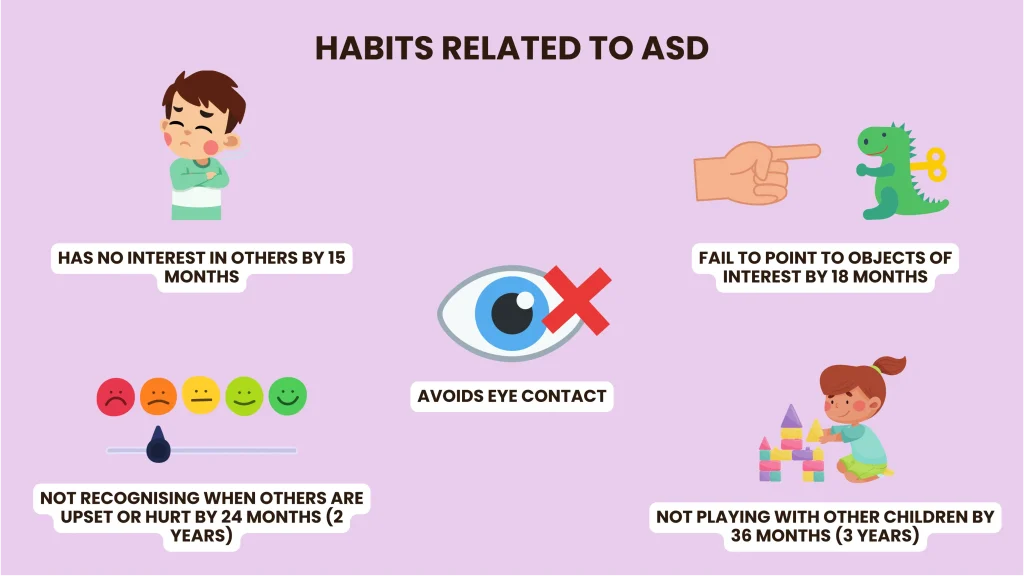
Habits relating to ASD can include the following:
- Avoids eye contact.
- Doesn’t respond to their name by 9 months.
- Lack facial expressions by 9 months.
- Not playing communal games by 12 months.
- Uses no or few gestures by 12 months, like not waving goodbye.
- Has no interest in others by 15 months.
- Fail to point to objects of interest by 18 months.
- Not recognising when others are upset or hurt by 24 months (2 years).
- Not playing with other children by 36 months (3 years).
- Not engaging in pretend play, like being a teacher or superhero, at 48 months (4 years).
Different Kinds of Autism Spectrum Disorder
Autism spectrum disorder is diagnosed at three levels. The levels indicate how Autism affects an individual’s communication and self-care. They are:
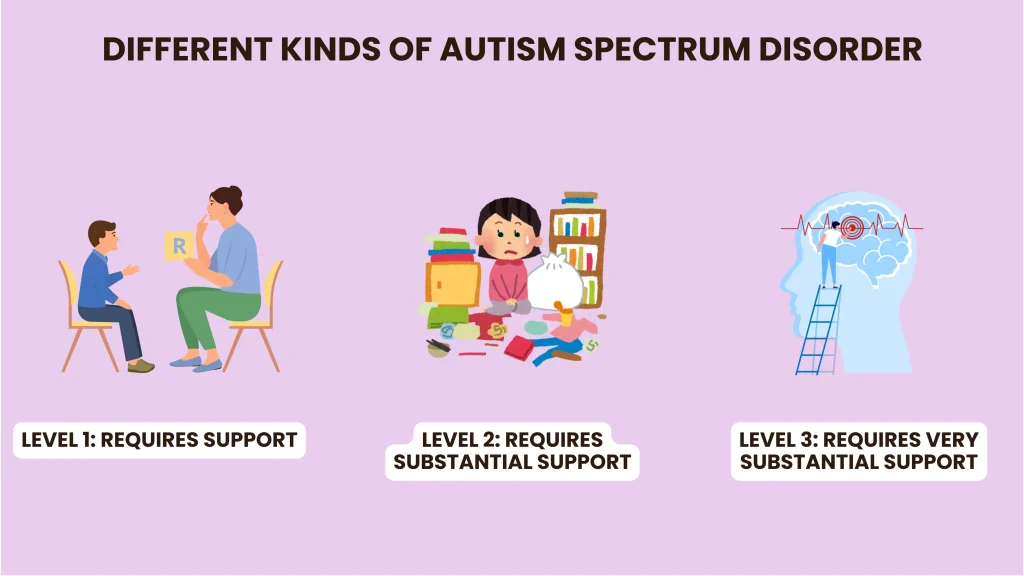
Level 1: Requires Support
Level 1 is for individuals who can function independently with minimal support. They may have communication difficulties, such as understanding social cues and body language, but they can manage their daily activities.
Level 2: Requires Substantial Support
Individuals diagnosed struggle to mask their condition and may find it hard to communicate or socialize in ways that society accepts or understands. They also find it challenging to change focus or move from one activity to the next.
Level 3: Requires Very Substantial Support
Those with level 3 need the most support and are subsequently at very high risk for neglect, abuse, and discrimination. They have the same traits as those with levels 1 and 2 diagnoses but can’t mask the condition.
Autism Spectrum Disorder Diagnosis
There are many tools for diagnosing Autism in children, but no single tool should be used as the basis for diagnosis. Diagnostic tools usually rely on two primary sources of information: caregivers’ or parents’ descriptions of their child’s development and a professional’s description of the child’s behavior.
Treatment and Support for Autism Spectrum Disorder
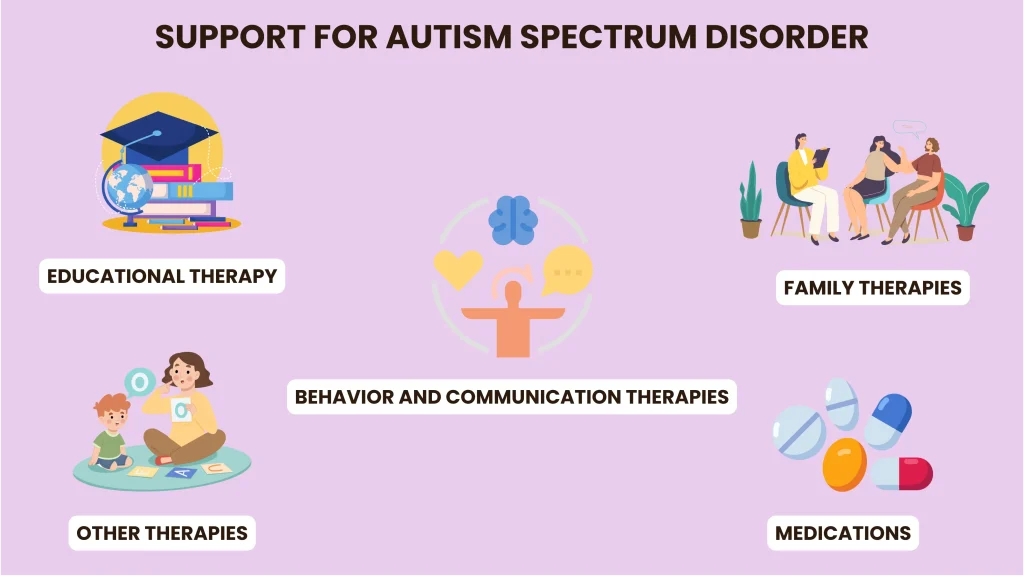
There is no cure for Autism. Treatment aims to extend a child’s ability to function by minimizing symptoms and supporting development and learning. Early identification in preschool years can help children learn critical social, communication, functional, and behavioral skills. Here is a breakdown!
- Behavior and Communication Therapies: Numerous programs address the range of social, language, and behavioral difficulties associated with an autism spectrum disorder. Some programs focus on reducing problem behavior and teaching new skills. Other programs focus on teaching children how to act in social crowds and communicate better with others. Applied behavior analysis (ABA) can help children learn new skills and popularise these skills in multiple situations through a reward-based motivation system.
- Educational Therapy: They often respond well to highly structured educational programs. Effective programs typically include a team of specialists and various activities to improve social skills, communication, and behavior. Preschool children who receive intensive, individualized behavioral interventions often show good progress, giving parents and caregivers reasons to be optimistic.
- Family Therapies: Family members and parents can learn how to ‘link’ and play with their children in ways that promote social interaction skills, manage problem behaviors, and teach daily living skills and communication.
- Other Therapies: Depending on your child’s needs. Speech therapy to improve communication skills, ‘rehabilitation’ to teach daily lifestyle activities, and physical therapy to improve mobility and balance can be highly beneficial. A psychologist can recommend ways to mark problem behavior, ensuring you, as a parent or caregiver, feel supported and understood in the journey.
- Medications: Medication can improve the actual signs of autism disorder, but certain medications can help to control the symptoms. For example, certain medications may be prescribed if your child is hyperactive; antipsychotic drugs are sometimes used to treat severe behavioral problems, and antidepressants may be prescribed for anxiety. Keep all healthcare providers updated on your child’s medications or supplements. Most medicines and supplements can interact, causing dangerous side effects.
Famous People with Autism Spectrum Disorder
Many believe that this disorder is easy to spot, but it’s not that simple. At first glance, you might not notice that they have autism. Here is a list of famous people:
-
Dan Aykroyd – Film Writer and Actor
Aykroyd is famous for his role in and writing the 1984 movie Ghostbusters. He has openly discussed his condition.
-
Albert Einstein – Mathematician and Scientist
There’s no way to be sure, but it’s believed that Albert Einstein had autism spectrum disorder because of his behavior and cognitive style.
-
Bill Gates – Co-founder of the Microsoft Corporation
Bill Gates is thought to have Autism. He displays a rocking motion and speech pattern and avoids eye contact with others, but Gates has not been diagnosed with autism.
-
Michelangelo – Sculptor, Painter, Architect, Poet
Michelangelo, born in 1475, is a famous artist thought to have been highly fixated on his work. He had difficulty with emotional regulation and social interactions and thrived on strict routines.
-
Elon Musk – Entrepreneur
Elon Musk announced he has Asperger’s syndrome while on the Saturday Night Live show in May 2021. He stated he was “the first person with Asperger’s” to host the show. Musk is one of the world’s wealthiest people, with over $150 billion net worth.
Conclusion
World Autism Awareness Day on April 2 reminds us of the importance of understanding and supporting individuals with Autism Spectrum Disorder. While there is no cure, therapies and treatments can help improve quality of life. If you or a loved one displays signs of Autism, seeking professional guidance can make a significant difference.
There is no cure for this disorder, but it can be managed through different therapies and medication. See a healthcare professional if you or your loved one displays any signs or symptoms of this disorder. This can significantly improve your quality of life!
Join the movement, wear your autism awareness day shirts, and help spread awareness!
