
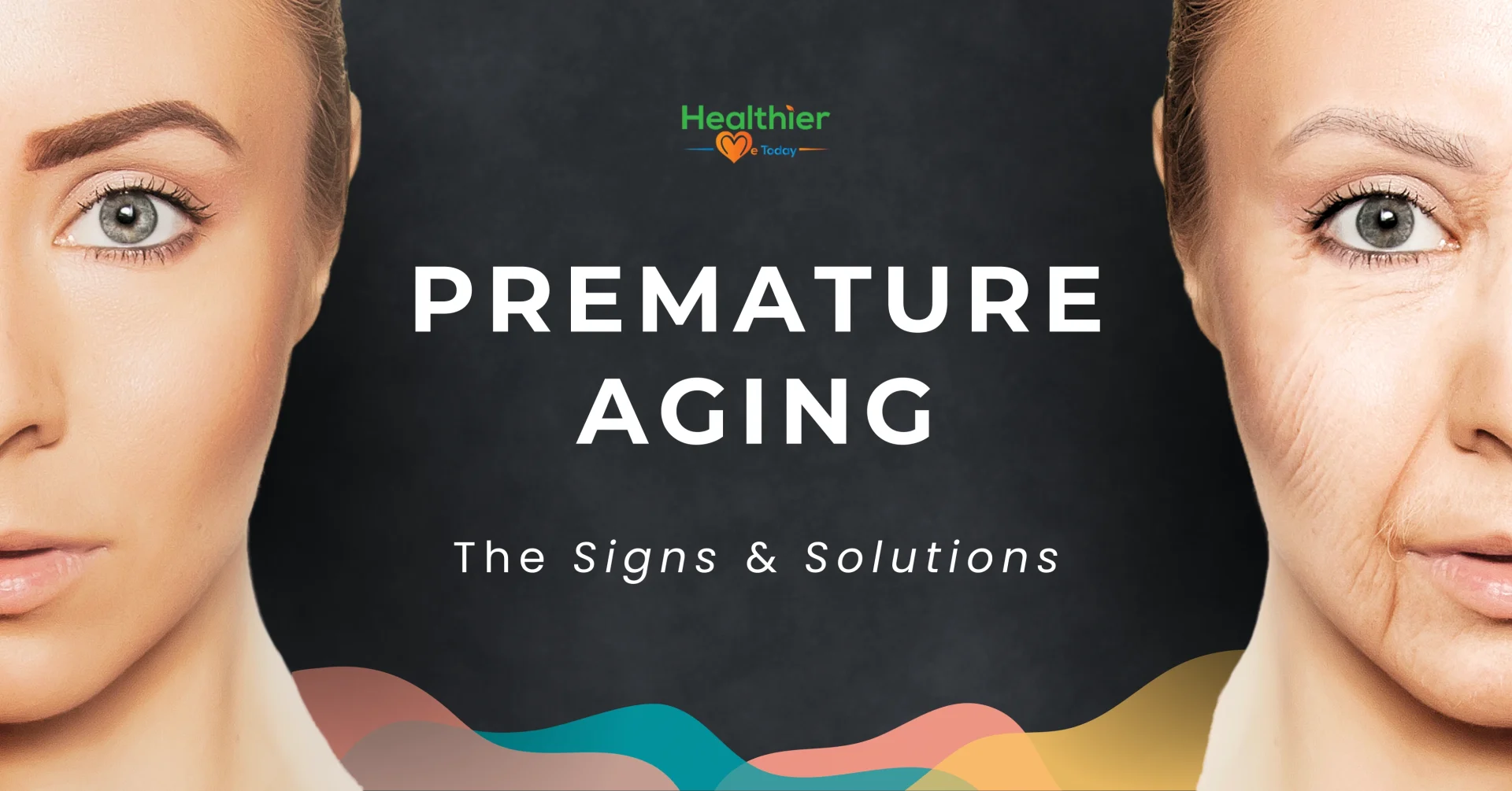
Aging is a natural process, but when your body starts showing wear and tear earlier than expected, it’s a sign of premature aging. Wrinkles, fatigue, or creaky joints may appear sooner than they should, suggesting that your lifestyle or environment is accelerating the aging process. The good news? Spotting these signs of aging early lets you take control and slow the process.
Let’s explore what premature aging is, its causes, and 15 key indicators, complete with essential preventative anti-aging tips!
What is Premature Aging?
Premature aging occurs when your body shows age-related changes, like thinning hair, sagging skin, or low energy, before they’re typical for your age. It’s not just about looks; it affects your whole system, from your skin to your brain. Genetics can play a role, but factors such as sun exposure, stress, or poor habits often accelerate the aging process. Understanding it is the first step to fighting back.

Here are the primary causes of premature aging:
- Sun Exposure: UV rays break down collagen and elastin, leading to wrinkles and age spots.
- Smoking: Toxins reduce blood flow, accelerating the aging of skin and hair.
- Poor Diet: Low nutrients weaken skin, nails, and muscles.
- Chronic Stress: Cortisol inflames tissues, accelerating cellular aging.
- Lack of Sleep: Skimping on rest slows repair, dulling skin and energy.
- Dehydration: Dry skin and slow healing result from insufficient water intake.
- Sedentary Lifestyle: Inactivity weakens muscles and joints.
- Excessive Alcohol: Dehydrates skin and disrupts repair.
- Pollution: Free radicals from toxins harm skin and cells.
15 Signs Your Body Is Aging Faster Than You Are
Below are 15 clear indicators that your body may be aging faster than it should, each accompanied by detailed explanations and practical steps on how to slow down the aging process.
The signs of speed aging are:
1. Wrinkles and Fine Lines
Tons of people wonder how to get rid of wrinkles. But what are they? Wrinkles and fine lines, as well as creases around the eyes or mouth, signal premature aging due to collagen breakdown caused by UV exposure, smoking, or repetitive expressions. Dehydration, free radicals, and even x-rays cause premature aging, thin skin, and deepening lines. A beachgoer skipping sunscreen might notice crow’s feet in their 20s, while repetitive frowning etches forehead lines, aging the face faster than peers.
- Manage: Apply retinoid creams nightly to enhance cell turnover and reduce the appearance of wrinkles. Start with a low-strength retinol (0.25%) to minimize irritation [healthline.com]. Consult a dermatologist for prescription options.
- Avoid: Wear SPF 30+ sunscreen daily, even indoors near windows. Use sunglasses to reduce squinting. Moisturize your skin with hyaluronic acid nightly to help it stay hydrated. Limit smoking and sugar intake to protect your collagen.
- Natural Sources: Eat oranges (vitamin C), berries (antioxidants), and avocados (healthy fats) to support collagen and fight free radicals.
2. Sagging Skin
Drooping skin around the jawline or arms indicates premature aging caused by the loss of collagen and elastin due to exposure to UV rays, a poor diet, or weight fluctuations. Low hydration and gravity worsen it, contributing to sunlight aging. A former tanner might start to notice jowls in their 30s, or rapid weight loss can leave loose skin, diminishing facial contours.
- Manage: Use peptide-rich creams twice daily to tighten skin; try facial yoga (cheek lifts) 10 minutes daily to tone muscles; consider microneedling for results.
- Avoid: Eat protein-rich foods like eggs, salmon, or lentils to boost collagen; limit sun with hats or shade; drink 8-10 glasses of water daily to keep skin firm.
- Natural Sources: Consume salmon (omega-3s), nuts (vitamin E), and spinach (vitamin A) to promote collagen and skin elasticity.
3. Age Spots
Dark, flat patches on the face or hands are called age spots. Can X-rays cause premature aging? Yes, x-rays, along with UV rays, overstimulate melanin, which can also be worsened by pollution. Oxidative stress contributes to uneven pigmentation, a hallmark of premature aging. A construction worker without sunscreen may develop spots in their 20s, or frequent flyers may notice patches from cosmic radiation, as well as changes in the appearance of their aging skin.
- Manage: Apply hydroquinone (2%) or vitamin C serums twice daily to fade spots [allure.com]; exfoliate the skin once a week. Consult a dermatologist for laser treatments if the spots persist.
- Avoid: Use a broad-spectrum SPF 30+ daily, reapply every two hours outdoors, wear gloves or long sleeves in the sun, and avoid tanning beds to prevent new spots.
- Natural Sources: Eat citrus fruits (vitamin C), strawberries (antioxidants), and kale (vitamin K) to brighten skin and reduce pigmentation.
4. Thinning Hair
Excessive hair shedding or volume loss can indicate premature aging, often driven by stress, low iron levels, biotin deficiency, or hormonal imbalances such as thyroid issues. Follicles weaken, thinning strands, one of the signs you’re getting older. A stressed parent might notice more strands in the shower, or postpartum changes can reduce hair density, leading to an aging appearance of the scalp.

- Manage: Take biotin (5,000 mcg) daily; massage scalp with rosemary oil nightly to boost circulation; consult a dermatologist for deficiency tests.
- Avoid: Eat nuts, greens, and eggs for iron and protein; meditate for 10 minutes daily to reduce stress; and avoid tight hairstyles or heat styling to protect your follicles.
- Natural Sources: Include eggs (biotin), spinach (iron), and pumpkin seeds (zinc) to nourish hair follicles and promote growth.
5. Brittle Nails
Nails that crack or peel signal premature aging, from dehydration, low zinc, or overexposure to water and chemicals. Weak cuticles and slow growth exacerbate the issue. A dishwasher can cause splitting nails, and frequent manicures can weaken them, resulting in an aged appearance.
- Manage: Take biotin (2,500 mcg) daily; apply cuticle oil and thick hand cream nightly to strengthen nails; consult a doctor if persistent.
- Avoid: Wear gloves for chores; drink 8-10 glasses of water daily; avoid acetone removers; eat zinc-rich foods like oysters to support nail health.
- Natural Sources: Eat oysters (zinc), almonds (vitamin E), and sweet potatoes (vitamin A) to strengthen nails and cuticles.
6. Dry Skin
Rough, flaky skin indicates a loss of moisture. This could be due to harsh soaps, hot showers, or low humidity, which can accelerate the signs of premature aging. Sebum production drops, thinning the skin’s barrier, making you wonder, ‘Why do I look older than my age?’ Someone in a dry climate might notice tight, scaly skin, or winter months can exacerbate flaking and a dulling complexion.
- Manage: Use fragrance-free cleansers, apply hyaluronic acid moisturizer twice daily, layer ceramide cream at night, and use a humidifier indoors.
- Avoid: Shorten showers to 5 minutes with lukewarm water, pat dry to preserve your skin’s natural oils, drink at least eight glasses of water daily, and opt for alcohol-free skincare products.
- Natural Sources: Consume avocados (rich in healthy fats), cucumbers (for hydration), and flaxseeds (rich in omega-3 fatty acids) to hydrate and nourish your skin.
7. Loss of Skin Elasticity
Skin that doesn’t snap back when pinched signals collagen loss from UV exposure, dehydration, or oxidative stress, marking premature aging. Elasticity fades, causing the skin to lose its elasticity, which is often noticeable in the arms or cheeks. A tanner might see this in their 30s, or chronic dehydration can reduce the skin’s bounce, aging its texture.
- Manage: Apply vitamin C serum twice daily to boost collagen production. Use retinol cream at night. Consider taking collagen supplements after consulting a doctor.
- Avoid: Drink 8-10 glasses of water daily; use SPF 30+ sunscreen; wear hats in the sun; avoid smoking; limit sugar to preserve elastin and collagen.
- Natural Sources: Eat oranges (vitamin C), walnuts (omega-3s), and tomatoes (lycopene) to support collagen and skin elasticity.
8. Uneven Skin Tone
Blotchy or red skin resulting from sun damage, inflammation, or hormonal changes can prematurely age your appearance, a sign of early aging. Melanin irregularities and broken capillaries cause patches, often on the cheeks or nose. A teacher in the sun might see redness, or hormonal shifts can trigger discoloration, dulling the glow.
- Manage: Use a niacinamide serum twice daily to help even out your tone; exfoliate with lactic acid once a week; consult a dermatologist for IPL treatments.
- Avoid: Apply SPF 30+ daily; soothe your skin with aloe after sun exposure; avoid harsh scrubs; and eat anti-inflammatory foods like berries to help reduce redness.
- Natural Sources: Include berries (antioxidants), spinach (vitamin A), and turmeric (anti-inflammatory) to balance skin tone and reduce inflammation.
9. Thinning Lips
Lips losing fullness or gaining lines can signal premature aging due to collagen loss caused by sun exposure, smoking, or volume decline. A smoker might notice fine lines around their lips, or sun exposure can cause lip volume to shrink, leading to facial aging.
- Manage: Apply SPF lip balm with shea butter 3 times daily; use hyaluronic acid lip plumpers; consult a dermatologist for fillers.
- Avoid: Quit smoking; shield lips with scarves in sun or wind; sip through straws less; eat collagen-rich foods like fish to maintain fullness.
- Natural Sources: Eat salmon (omega-3s), bone broth (collagen), and strawberries (vitamin C) to support lip fullness and skin health.
10. Dark Circles Under Eyes
Dark shadows under the eyes, caused by thin skin, sleep deprivation, or genetics, can prematurely age your face. Blood vessels become visible through the darkening skin, often exacerbated by allergies or fatigue. A night-owl student might see persistent shadows, aging their expression.
- Manage: Apply caffeine eye cream twice daily to reduce puffiness. Use cold compresses for 5 minutes daily. Consult a doctor if you experience allergies.
- Avoid: Sleep 7-9 hours nightly, cut back on salty snacks to reduce puffiness, dim screens before bed, drink water to hydrate your skin and reduce shadows.
- Natural Sources: Consume cucumbers (for hydration), blueberries (for antioxidants), and almonds (for vitamin E) to brighten your skin and reduce puffiness.
11. Fatigue or Low Energy
Constant tiredness despite adequate rest can signal premature aging due to a poor diet, stress, or inactivity [verywellhealth.com]. Mitochondria weaken, slowing energy, leaving you drained after routine tasks. A desk worker may feel sluggish by midday, which can affect their productivity and mood.
- Manage: Eat nutrient-rich foods like quinoa and berries, walk for 20 minutes daily, take B12 supplements if deficient, and consult a doctor.
- Avoid: Limit caffeine, pace your workloads, eat balanced meals with greens and protein, and get 7-9 hours of sleep nightly to boost energy and reduce stress.
- Natural Sources: Include bananas (B6), spinach (iron), and salmon (omega-3 fatty acids) to boost energy and cell function.
12. Weak Grip or Muscle Strength
Struggling with jars can be a sign of premature aging, resulting from muscle loss caused by inactivity or a diet low in protein. Sarcopenia weakens the hands early, affecting daily tasks such as carrying groceries and other household items. A remote worker may notice a reduction in hand strength, which can affect their ability to function effectively.
- Manage: Perform resistance exercises with 5-pound weights three times a week, squeeze stress balls daily, and consult a trainer for personalized strength plans.
- Avoid: Stand hourly, eat protein-rich foods like fish or beans daily, limit prolonged sitting, and walk 15 minutes daily to maintain muscle mass and grip strength.
- Natural Sources: Eat chicken (protein), lentils (iron), and Greek yogurt (protein) to support muscle strength and repair.
13. Joint Pain or Stiffness
Creaky joints before the age of 40 may signal premature aging due to inflammation or low collagen levels resulting from overuse or a poor diet. Worn cartilage stiffens movement, limiting flexibility in the knees or hips. A runner might feel pain after short jogs, due to aging and reduced mobility.
- Manage: Do yoga 15 minutes daily, take turmeric supplements (500 mg) daily, apply warm compresses, and consult a doctor for arthritis.
- Avoid: Skip high-impact exercises, warm up before moving, eat anti-inflammatory foods like fish, and rest your joints to prevent wear and maintain flexibility.
- Natural Sources: Consume salmon (omega-3s), ginger (anti-inflammatory), and broccoli (vitamin C) to reduce inflammation and support joints.
14. Memory Issues or Brain Fog
Forgetting things or feeling foggy can be a sign of premature aging caused by stress, sleep deprivation, or a deficiency in omega-3 fatty acids. Slowed neurons impair focus, a concern that raises questions such as, ‘How to shift an aging brain into reverse?’ A parent might often misplace keys, which can affect cognitive sharpness.
- Manage: Play Sudoku 15 minutes daily; eat salmon weekly; take omega-3 supplements; consult a doctor for cognitive tests.
- Avoid: Sleep 7-9 hours; limit multitasking; eat walnuts for omega-3 fatty acids; reduce screen time before bed to sharpen focus and memory.
- Natural Sources: Eat walnuts (omega-3s), blueberries (antioxidants), and eggs (choline) to boost brain health and memory.
15. Slower Wound Healing
Lingering cuts can signal premature aging due to slow cell repair, often caused by a deficiency in vitamin C or zinc. Inflammation delays recovery, leading to scarring of the skin, which is usually seen in frequent gardeners with nicks that don’t heal quickly.

- Manage: Eat oranges daily, apply zinc cream to wounds, keep cuts clean, and consult a doctor if healing stalls.
- Avoid: Smoking; eat colorful vegetables for vitamins; moisturize your skin daily; clean wounds with soap to support healing and reduce scarring.
- Natural Sources: Include oranges (vitamin C), pumpkin seeds (zinc), and bell peppers (antioxidants) to speed healing and cell repair.
Speed aging isn’t an inevitable fate… It’s a signal to take action and reclaim your vitality. These 15 signs, from fine lines to sluggish wound healing, provide a clear guide to identify where your body needs support. By embracing simple, sustainable changes, such as these essential preventative anti-aging tips, you can address existing signs and prevent future ones.
Conclusion: Can You Prevent Speed Aging?
Yes, but it’s not about chasing the fountain of youth. It’s about aligning your habits with your body’s needs to feel vibrant, strong, and confident at any age. Start with one small step today, whether it’s swapping soda for water or adding a 10-minute walk to your routine. Over time, these efforts compound, yielding more energy, healthier skin, and a renewed sense of well-being. Making the right healthy choices can reverse your age by 20 years naturally, without resorting to drastic measures.
Your body is resilient, and with proper care, you can help slow down aging and enjoy more years of health ahead.
FAQ’s:
What are 4 weird signs you’re getting older?
A higher-pitched voice, decreasing height, larger ears and nose, and teeth shifting are 4 weird signs you’re getting older.
At what age do aging signs typically start appearing?
Fine lines often emerge in the late 20s, particularly around the eyes or forehead, due to reduced collagen. More noticeable signs of aging, like deep wrinkles or sagging skin, typically appear in the 40s or 50s.
Can stress accelerate the aging process?
Stress significantly accelerates aging by releasing cortisol, which inflames tissues and damages cells, resulting in wrinkles, dull skin, and fatigue.
How does poor sleep affect your skin and aging?
Poor sleep disrupts skin repair, reducing collagen production and leaving skin dull, dry, or prone to dark circles. It amplifies premature aging by slowing cell turnover, making fine lines more visible.
Is dehydration linked to looking older?
Dehydration dries out skin cells, deepening wrinkles and dulling your glow, a key reason for asking questions like, ‘Why do I look older than my age?’ Even a few days without sufficient water can temporarily age your appearance.
What role does sugar play in aging your skin?
Sugar triggers glycation, binding to collagen and stiffening it, which can lead to the formation of wrinkles and sagging skin [aad.org]. Regular sweets, such as daily pastries, can quietly damage the skin.
Does alcohol contribute to faster aging?
Alcohol dehydrates skin, causes puffiness, and disrupts sleep, accelerating premature aging. Heavy drinking leads to sallow, wrinkled skin.
Which foods help maintain a youthful glow?
Foods like berries (rich in antioxidants), leafy greens (high in vitamins A and C), and fatty fish (rich in omega-3s) nourish the skin, reducing wrinkles and boosting radiance. A salmon salad with spinach and blueberries supports a youthful appearance.
How does collagen affect how we age?
Collagen is the skin’s structural support, its decline leads to wrinkles, sagging, and weak joints, a hallmark of premature aging. Sun, smoking, or a poor diet hasten loss.
Does smoking weed make you age faster?
The debates on cannabis for aging properties vary, with many claiming smoking too much can age cells. However, tests have been conducted showing anti-aging results in small controlled quantities over long-term use [ncbi.nlm.nih.gov].
Disclaimer: The information in this article is for general knowledge and discussion only. The effects of cannabis on aging are still being studied, and individual results may vary. Always consult with a licensed medical professional before using cannabis, especially for health or anti-aging purposes. This content does not replace professional medical advice, diagnosis, or treatment.
Can your gut health influence how old you look?
A healthy gut reduces inflammation, keeping skin clear and firm, less prone to wrinkles. Poor gut health can dull the complexion and accelerate premature aging.
Are there exercises that can help slow visible signs of aging?
Facial yoga, such as cheek lifts, and whole-body exercises, like planks, improve circulation, firming the skin and muscles to slow down the aging process.
