
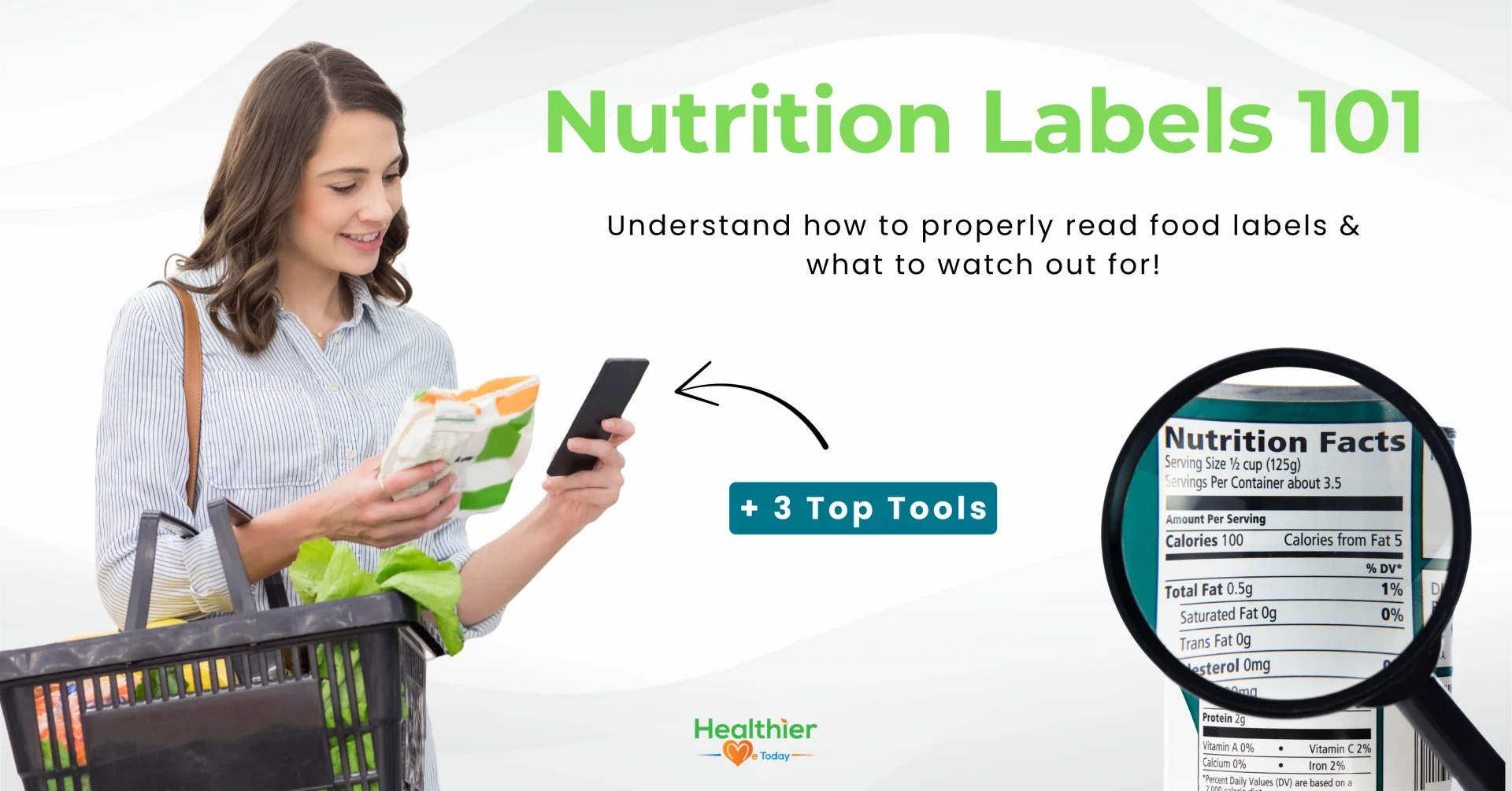
Ever stared at a Nutrition Facts label and felt like you needed a science degree to understand it? You’re not alone. While most shoppers glance at it quickly, very few actually know how to read nutrition labels correctly, and that confusion often leads to unhealthy choices.
Serving sizes that don’t match reality, hidden sugars disguised under different names, and sodium levels that sneak past unnoticed can all derail your goals. What looks like a “healthy” snack can sometimes be the exact opposite once you understand the fine print.
That’s why learning how to decode nutrition facts is such a powerful skill. It’s not just about counting calories, it’s about protecting your health, whether that means losing weight, controlling blood sugar, lowering blood pressure, or simply eating smarter.
Here’s what you need to know…
The Panel Basics
Before diving into the details, it’s important to understand what the Nutrition Facts panel actually shows. Think of this as the foundation for label reading, once you know what’s included, you’ll find it much easier to make sense of the numbers and terms.
Here’s a quick overview:
- Serving size and servings per container
- Calories per serving
- Macronutrients such as fats, carbohydrates, and protein
- Micronutrients like vitamins and minerals
- Percent Daily Value (%DV) to help you see if a food is high or low in a nutrient
This format is the same across all packaged foods, which makes it easy to compare products side by side. Once you know how to read nutrition labels, you can spot misleading marketing tricks and feel confident about what you’re putting into your body.
Recent FDA Nutrition Label Changes
For the first time in over two decades, the Food and Drug Administration (FDA) has given the Nutrition Facts panel a major makeover. The goal is to make labels easier to understand and harder for food companies to manipulate.
Calories are now printed in bold type, so you can’t ignore them. Added sugars, once buried in fine print under dozens of names, finally get their own line. Serving sizes have been recalculated to reflect how much people really eat, and daily values (%DV) have been updated to match today’s nutrition science.
The labels are clearer than ever, but you still need to know how to read them and, more importantly, what they mean.
How to Read a Nutrition Label (Step by Step)

Serving Size
Every label begins with the serving size, and this number sets the stage for everything that follows. If the serving size says 2/3 cup but you usually eat twice that, you’re automatically doubling the calories, sugars, and sodium without realizing it. This is one of the easiest ways people misread labels. Once you understand that all the numbers are tied to that serving size, the rest of the panel starts to make sense.
Calories

The calorie count comes next, and on newer labels it’s printed in bold to grab your attention. Calories are simply a measure of energy. They aren’t “bad,” but if you think a food is low in calories, double-check whether the serving size is realistic. A small bag of chips may say 150 calories per serving, but if the bag contains three servings, you’re actually eating 450 calories when you finish it.
% Daily Value
To the right of each nutrient, you’ll see a % Daily Value (%DV). Think of this as a quick guide: around 5% DV is considered low, while 20% DV or more is high. This shortcut helps you see whether a food is loaded with sodium, saturated fat, or sugar, or whether it’s a strong source of fiber, calcium, or iron. It’s not a perfect measure for every individual, but it’s a fast way to compare products.
Carbohydrates and Sugars
Under total carbohydrates, you’ll find fiber, total sugars, and added sugars. Fiber is something you want more of since it helps you stay full and keeps your digestion healthy. Sugars tell a different story. Total sugars include both natural and added, but the added sugars line reveals how much has been added during processing. This is key… a fruit yogurt with 10 grams of natural sugar from fruit is very different from one with 10 grams of added sugar.
The Good & Bad Fats
The label also breaks down total fat into saturated and trans fats. Small amounts of saturated fat can fit into a balanced diet, but keeping them lower is generally better. Trans fat, however, should always be avoided. Even if the label says “0 g,” check the ingredients list, if you see “partially hydrogenated oils,” that means there’s still some inside. On the flip side, healthy unsaturated fats from nuts, seeds, and oils are beneficial, even if they aren’t always highlighted.
Sodium
Sodium is one of the biggest troublemakers in packaged foods. Even items that don’t taste salty can pack in hundreds of milligrams. That’s why the %DV matters here, 5% is low, 20% is high. If you’re watching blood pressure, comparing sodium between brands can make a huge difference.
Protein, Vitamins, and Minerals
Don’t skip over protein and the vitamins and minerals listed near the bottom. Protein helps you feel satisfied and supports your muscles, while nutrients like vitamin D, calcium, iron, and potassium are highlighted because many people don’t get enough of them. Seeing higher percentages here is usually a good thing.
The Ingredients List
The ingredients list is where marketing claims fall apart. Ingredients are listed from most to least, so the first few matter most. If sugar shows up near the top, that “healthy” granola bar may not be so healthy after all. Look for whole foods like oats, beans, or nuts at the beginning, and keep an eye out for long, unrecognizable additives. The allergen statement, usually right after the list, is also crucial if you or your family have sensitivities.
Don’t Trust the Front of the Package
Finally, remember that the front of the package is designed to sell you something. Phrases like “all natural” or “made with whole grains” don’t mean much until you flip the box and check the facts. Once you get used to reading both the Nutrition Facts panel and the ingredients list together, you’ll be able to spot the difference between clever marketing and genuine nutrition in seconds.
Top Tools for Reading Nutrition Labels
Making sense of nutrition labels is easier with the right tools. Apps like Fooducate, Yuka, and MyFitnessPal let you scan barcodes, track nutrients, and compare foods in seconds. Fooducate grades foods based on overall healthiness, Yuka highlights additives and potential risks, and MyFitnessPal helps you log calories, protein, and carbs to see how each food fits into your diet. Using these apps can save time while helping you make smarter, healthier choices at the grocery store.
Let’s take a closer look at the apps:

Conclusion: What’s it Come Down to?
Mastering how to read nutrition labels gives you control over your diet. By carefully looking at serving size, calories, fat, sugar, sodium, and %DV, you can make informed choices that benefit your long-term health.
Labels are more than numbers… they are a guide to smarter eating. Whether you are using them for medical reasons, tracking macros, or checking for allergies, this skill pays off every day.
If you want to calculate just how much weight you need to lose, we have a tool that does it in seconds! It’s called the reverse BMI calculator & it’s pretty accurate.
FAQ’s:
What are the best apps for reading nutrition labels (USA)?
To help understand nutrition labels for beginners, Fooducate, Yuka, and MyFitnessPal are top options. Fooducate grades foods based on overall health, helping identify hidden sugars or unhealthy fats. Yuka breaks down ingredients and additives, pointing out potential risks. MyFitnessPal lets you log foods and track calories, protein, fat, and carbs, helping you see how individual foods fit into your daily intake.
What is the easiest way to read nutrition labels?
Start with serving size, since all numbers on the label are based on that. Then check calories, followed by fat, sugar, sodium, protein, and fiber. Using the same order each time makes it easy to compare products and quickly understand what you’re eating.
Do you subtract saturated fat from total fat?
No. Total fat already includes all fats, including saturated and trans fats. Saturated and trans fats are listed separately to guide healthier choices, as they have a bigger impact on heart health.
What are the six steps to read the food label?
> Serving size and servings per container
> Calories
> Fat content (total, saturated, trans)
> Sugars, especially added sugars
> Sodium
> Protein and fiber
How to read a nutrition label for sugar?
Focus on added sugars, which are added during processing. Women should aim for less than 25 grams per day, men less than 36 grams. Watch for different names like high fructose corn syrup, cane sugar, honey, and fruit concentrate.
How to read nutrition labels for allergies
Check the allergen statement, usually at the bottom of the label. It highlights common allergens like milk, eggs, peanuts, soy, wheat, fish, and shellfish. Warnings like “may contain traces of” indicate possible cross-contact.
What is the daily value on nutrition labels?
% Daily Value shows how much a serving contributes to your daily intake, based on a 2,000-calorie diet. 5% or less is low, 20% or more is high. It’s an easy way to see if a nutrient is a major or minor part of your daily needs.
What is the first thing to look at on a nutrition label?
Start with the serving size. Eating more than the listed serving doubles calories, fat, sugar, and sodium. Checking serving size helps prevent mistakes and gives an accurate view of what you’re actually consuming.
How can I spot hidden sugars on labels?
Look for sugar under different names like high fructose corn syrup, maltose, dextrose, agave, honey, or fruit juice concentrate. Even foods labeled “low fat” or “all natural” can be high in sugar, so always check the panel itself.
How can nutrition labels help me eat healthier?
They help you identify excess sugar, sodium, or unhealthy fats, compare foods, and choose higher fiber, protein, and nutrient-rich options. Learning to read labels lets you make informed choices rather than relying on marketing claims.
