
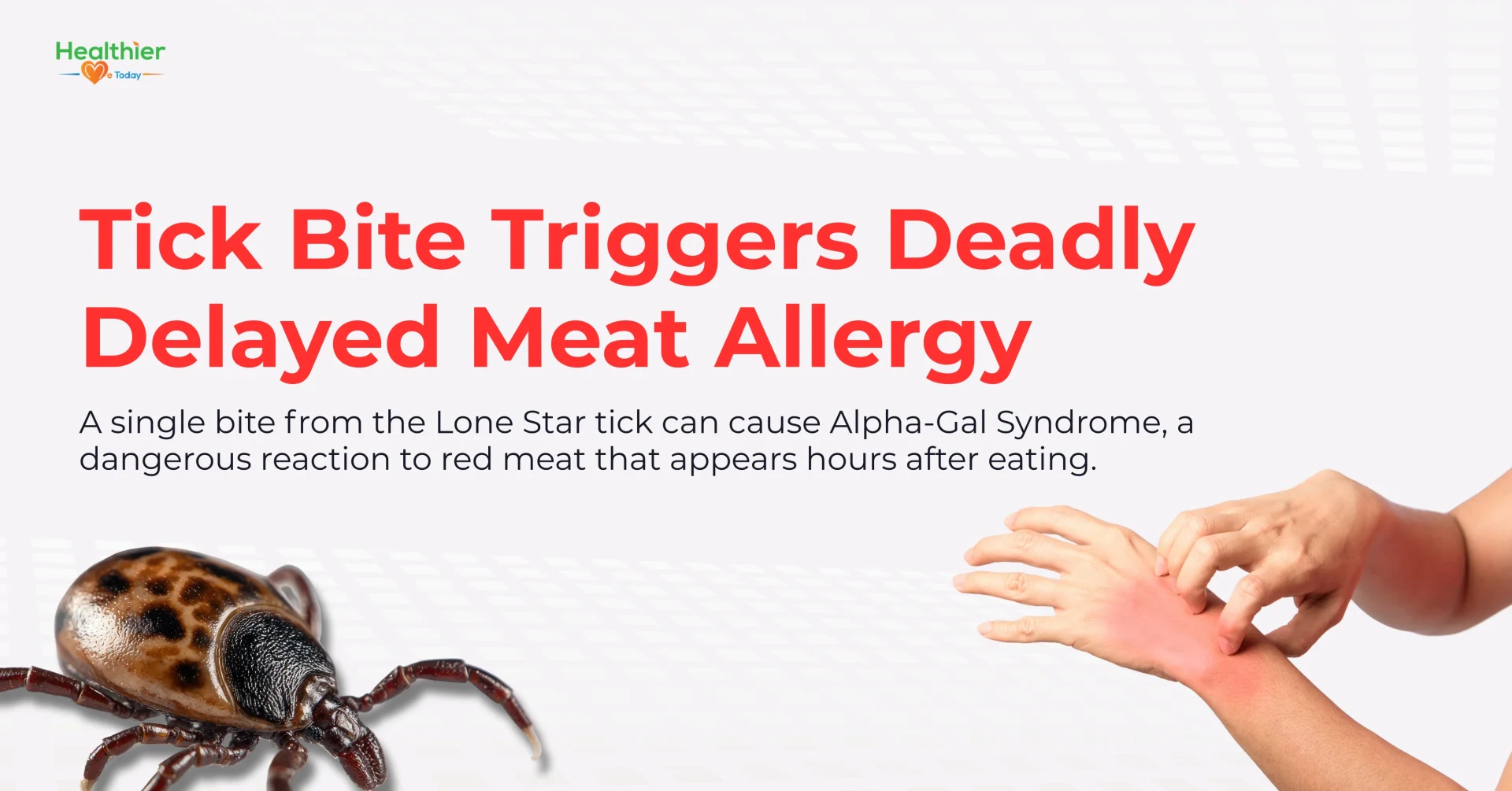
A tragic tick related meat allergy death in New Jersey has raised concern among health experts and the public. A single tick bite can cause a severe allergic reaction to red meat, and it can even be life-threatening.
This article explores what causes alpha gal allergy, the alarming symptoms of a tick-borne meat allergy, and the dietary changes that may result. Recent reports of tick related meat allergy death cases have pushed health experts to warn the public about the growing risks of Alpha-Gal Syndrome in the U.S.
Tick Related Meat Allergy Death: Understanding the Growing Alpha-Gal Syndrome Risk
Alpha-Gal Syndrome begins when the immune system becomes sensitive to a molecule called alpha-gal, a sugar found in most mammal-based foods and products. The body normally has no issue with this molecule, but things change after a tick bite introduces alpha-gal into the bloodstream, causing the immune system to see it as a danger. Once this happens, the body starts producing antibodies that react whenever foods containing alpha-gal are eaten, especially red meat like beef, pork, and lamb, as well as venison, and even products made with animal-derived gelatin or fats. As a result, following alpha gal dietary restrictions becomes essential to prevent allergic reactions.
What makes this condition stand out from typical food allergies is the delayed reaction. Instead of reacting within minutes, symptoms can appear 3 to 8 hours after eating, often at night after a dinner containing red meat. As more people learn about it, every new case of tick-borne meat allergy in the USA shows how common and serious this condition has become. This tragic tick related meat allergy death has highlighted how a single tick bite can cause a delayed but deadly immune reaction when red meat is consumed.
First Confirmed Alpha-Gal Syndrome Death Raises Concern
In the United States, Alpha-Gal Syndrome has become a growing public health concern, especially after the first confirmed fatal case linked to tick-related meat allergy was reported in New Jersey. According to medical reports, the man experienced a severe anaphylactic reaction after eating red meat, hours after a Lone Star tick bite had sensitized his body to alpha-gal [rheumatologyadvisor.com]. This case was officially recognized as the first documented AGS-related death in the country.

The CDC has also reported that thousands of suspected AGS cases now appear each year, particularly in the South, Midwest, and Mid-Atlantic states, where the Lone Star tick population continues to expand. Health officials warn that as the tick spreads northward, more residents who spend time outdoors may unknowingly develop alpha-gal sensitivity.
This rise in cases, combined with the New Jersey fatality, has pushed AGS back into national headlines, reminding Americans that a simple tick bite can lead to a serious and sometimes life-threatening allergy. Many physicians are urging people to learn the symptoms, check themselves after outdoor activities, and seek medical care if they develop unusual reactions after eating red meat.
Symptoms of Tick-Related Meat Allergy
After a tick bite, the body can respond unusually to red meat, making it important to watch for symptoms that appear hours after eating.

Early warning signs include:
- Itching or hives
- Nausea or vomiting
- Swelling of the lips, face, or throat
- Stomach cramps or diarrhea
Symptoms may include chest pressure, shortness of breath, and sudden drops in blood pressure.
Managing the Allergy and Dietary Restrictions
When facing red meat allergy from ticks, managing alpha-gal syndrome requires eliminating all red meat and avoiding foods that have alpha-gal [affinityhealth.co.za]. This involves steering clear of beef, pork, lamb, and game meats, as well as products that contain ingredients derived from mammals, such as gelatin, certain dairy products, animal fats, and certain processed foods.
Because reactions can be unpredictable and sometimes severe, good meat allergy management also means being prepared for accidental exposure. Carrying antihistamines and, in more serious cases, an epinephrine auto-injector can provide quick intervention if symptoms suddenly appear.
Preventing Tick-Borne Allergies
Reducing the risk of tick-borne allergies begins with limiting exposure to ticks.
Here’s how to prevent tick-borne allergies:
- Apply tick repellent to your skin and clothes.
- When in tick-prone areas, wear long sleeves and pants to protect your skin.
- After outdoor activities, check your body carefully.
- Remove ticks immediately with fine-tipped tweezers.
Being proactive about tick prevention can reduce the risk of developing AGS and other tick-borne diseases.
Living with Alpha-Gal Syndrome
Even after the first reactions, living with Alpha-Gal Syndrome can be challenging over the long term. The long-term alpha gal effects mean that many people need to stay cautious with red meat and other mammal-based foods for years, making thoughtful diet and lifestyle choices essential [wyndly.com].

And treatment for alpha gal syndrome is not just about handling reactions as they happen; it also means making long-term lifestyle changes and learning which foods and products to avoid. With careful planning, ongoing awareness, and guidance from healthcare professionals, people can continue to live an active and fulfilling life while effectively managing the condition.
Tick Safety Tips
Implementing basic safety measures while enjoying the outdoors can minimize tick bites and reduce the risk of conditions such as a red meat allergy caused by ticks [healthline.com].
Here are some tick safety tips to keep you safe:
- Choose light-colored clothing to help spot ticks more easily.
- Use repellents that contain DEET or permethrin.
- Check your whole body after outdoor activities.
- Shower within 2 hours of coming indoors.
These precautions not only prevent AGS but also protect against other tick-borne illnesses.
Conclusion: Staying Safe and Informed
Alpha-Gal Syndrome can happen after a tick bite triggers your body to react to a sugar called alpha-gal, which is found in a lot of mammal-based foods. Once your immune system becomes sensitive to it, eating red meat or any food containing animal gelatin can trigger an allergic reaction. To stay safe, it’s important to know the foods to avoid alpha gal. As awareness grows, tick-borne allergy news is helping people learn more about the risks and recognize symptoms earlier, so they can take action before a reaction becomes serious.
FAQ’s:
What is alpha gal syndrome?
Alpha-Gal Syndrome is a delayed allergic reaction triggered by a tick bite. It makes the body sensitive to a sugar molecule called alpha-gal, which is found in red meat and other products from mammals. When the immune system creates antibodies against alpha-gal, eating foods like beef, lamb, or pork, or consuming products with animal gelatin, can trigger symptoms. These reactions can range from mild hives to severe anaphylaxis, and in rare, untreated cases, complications have been linked to alpha gal syndrome death when the allergic response becomes life-threatening.
Can tick bites really cause a meat allergy?
Yes. When certain ticks bite, they can trigger the immune system to react abnormally to red meat. After the bite, the body may start treating meat as an allergen, leading to what is known as a tick bite meat allergy, where symptoms only appear once meat is eaten again.
What caused the first reported death linked to alpha gal syndrome?
The first death from tick-related meat allergy in the U.S. happened when a man ate red meat after a tick bite. His immune system reacted severely to alpha-gal, leading to a fatal anaphylactic response. This alpha-gal syndrome fatality is now recognized as the first confirmed case in the country, highlighting the serious risks associated with tick bites and the importance of early awareness and prevention.
What are symptoms of tick-related meat allergy?
Tick exposure symptoms include hives, swelling, nausea, vomiting, stomach pain, and severe reactions like chest tightness and difficulty breathing. Symptoms may appear hours after eating red meat.
Which tick species causes alpha gal syndrome?
The Lone Star tick is the primary species linked to Alpha-Gal Syndrome, and its bite is most commonly associated with what many refer to as lone star tick meat allergy. While other tick species worldwide have also been linked to alpha-gal sensitivity, they occur far less frequently and are not considered major drivers of the allergy.
Can alpha gal syndrome be cured?
Currently, there is no permanent cure for Alpha-Gal Syndrome because the allergy stems from an immune response triggered by a tick bite. However, symptoms can improve over time, especially if further tick exposure is avoided, since antibody levels may gradually decrease.
How do you prevent tick-borne meat allergies?
Preventing tick-borne allergies involves avoiding tick habitats, using repellents, wearing protective clothing, checking the body after outdoor exposure, and promptly removing ticks.
Who is at risk of alpha gal syndrome fatal reactions?
Anyone bitten by a tick carrying alpha-gal is at risk. Those with previous tick bites or allergies may have a higher chance of severe reactions, including tick bite meat allergy death. Vigilant monitoring and avoidance are essential.
