
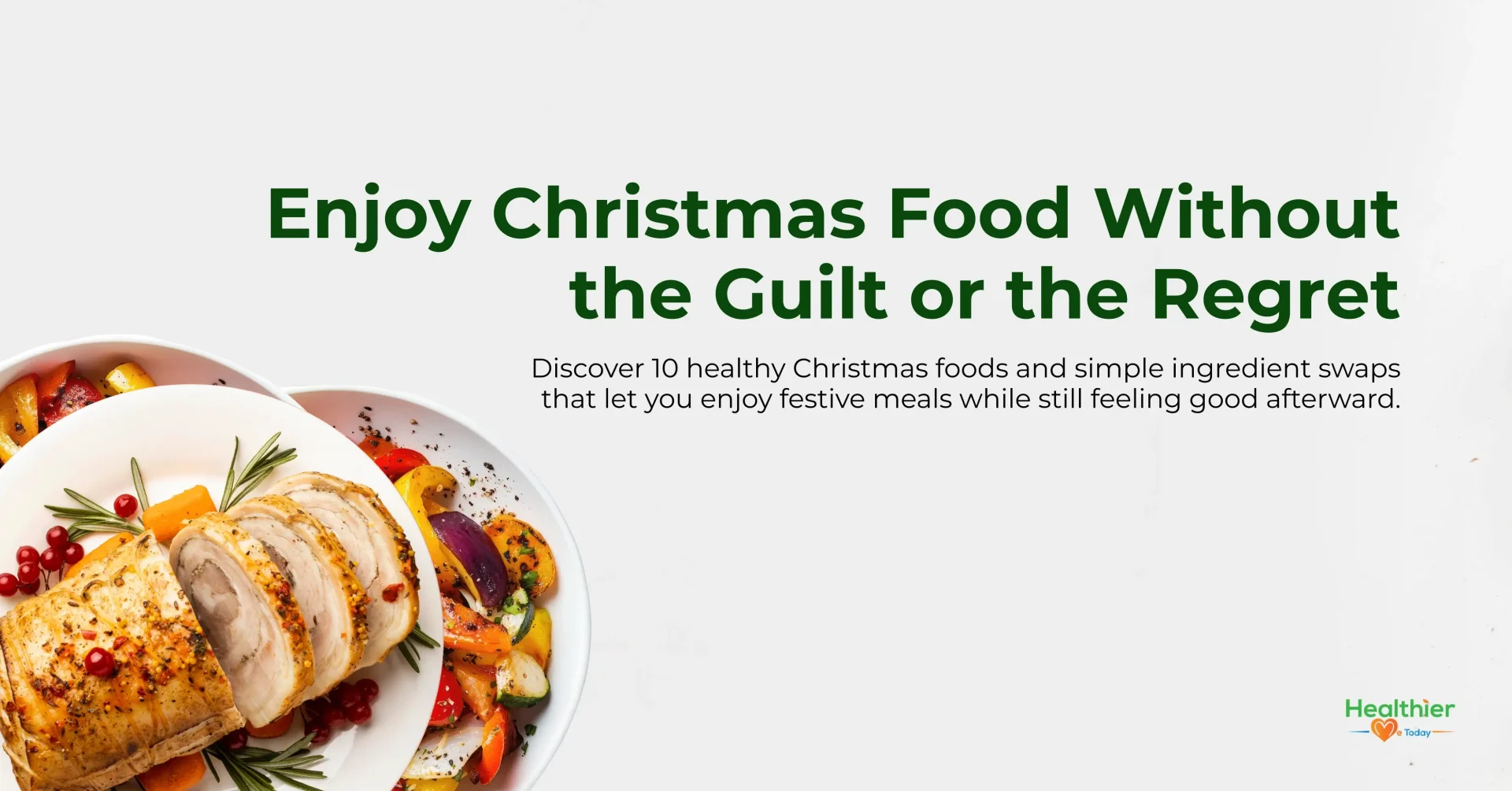
Christmas really is one of the most special times of the year. The food, the smells in the kitchen, the conversations around the table, all form part of the memories we carry with us. However, it can also be a time when we overindulge and feel uncomfortable afterward.
This guide isn’t about strict rules or cutting out everything you love. Instead, it focuses on answering one simple question, which is what is the healthiest Christmas food? You’ll discover easy ideas, small ingredient swaps, and practical options that help you enjoy festive meals while still taking care of your body.
What Is the Healthiest Christmas Food Really?
There’s no single “perfect” Christmas food. When people ask what is the healthiest Christmas food, the answer is less about one specific dish and more about balance. Filling your plate with vegetables, pairing them with lean protein, adding some fruit, and enjoying smaller portions of richer foods helps support digestion, steady energy levels, and overall comfort during a big meal.
This approach allows you to enjoy traditional favorites without feeling overly full or sluggish afterward. With that balance in mind, let’s look at specific foods that can help you build a healthy Christmas plate.
The 10 Healthiest Christmas Foods to Add to Your Plate

Making healthier choices at Christmas doesn’t mean changing your entire menu. It’s often about adding nutritious options that support digestion, steady energy, and overall comfort during big meals.
These foods are some of the healthiest additions you can make to your Christmas table:
1. Roasted Vegetables
Veggies like carrots, sweet potatoes, and brussels sprouts are packed with vitamins, minerals, and fiber that keep your body strong and support digestion. They also help you feel full and give steady energy throughout the day, without any added sugar. Roasting them with a touch of olive oil boosts nutrient absorption. They are low in calories while being rich in nutrients, making them a great choice for festive meals!
2. Lean Turkey or Chicken
Lean turkey and chicken are healthy options because they are high in quality protein and lower in fat when the skin is removed. Protein helps repair muscles and keeps you feeling satisfied. They are often easier to digest than red meat for many people and work well for larger holiday meals.
3. Salmon or Other Fatty Fish
Salmon and other fatty fish are healthy because they are high in omega-3 fatty acids, which support heart and brain health and help reduce inflammation. They provide high-quality protein that keeps you satisfied without being heavy, and they are easier to digest than red meat.
Additionally, salmon is rich in vitamin D and B vitamins, which promote energy levels and overall well-being. A baked or grilled salmon dish still feels special and festive, making it a smart and tasty option when thinking about what is the healthiest Christmas food.
4. Nuts and Seeds
Nuts and seeds are small but packed with nutrients that are good for your health. Almonds, walnuts, pecans, and pumpkin seeds provide healthy fats, protein, and fiber to help you feel full. They also contain important minerals like magnesium and zinc, which support your energy levels and immune system. You can easily add them to your meals, enjoy them as snacks, use them as salad toppings, or mix them with roasted vegetables.
For the holidays, nut-based gift assortments can also be a simple way to share something both delicious and nourishing.
5. Fresh Fruit Platters
Fresh fruit is a healthy addition to your Christmas table. Berries, grapes, oranges, and pomegranates are full of vitamins, fiber, and antioxidants. They provide fiber and antioxidants that support digestion and overall health.
They also satisfy sweet cravings with less effect on blood sugar than sugary treats. Plus, their bright colors and juicy flavors make your festive spread even more appealing.
6. Dark Chocolate
Dark chocolate can be a healthier choice because it contains less sugar than milk chocolate and is rich in antioxidants that support heart health. In small amounts, dark chocolate can curb sweet cravings without causing the same blood sugar spikes as many traditional sweets.
It also has healthy fats that help you feel fuller, making it easier to enjoy a treat without overdoing it.
When choosing dark chocolate, look for options with a higher cocoa content and minimal added sugar, such as almond-based dark chocolate treats.
7. Whole Grain Side Dishes
Whole-grain side dishes are a healthier choice because they offer more fiber, vitamins, and minerals than refined grains. Options like quinoa, brown rice, and farro digest more slowly, which helps keep blood sugar levels steady and energy lasting longer.
The added fiber also supports a healthy digestive system and helps you feel satisfied, reducing the likelihood of overeating. Choosing whole grains is a simple way to add more nutrition to festive meals without changing the flavor too much.
8. Greek Yogurt-Based Dips
Greek yogurt dips are a simple, healthier swap for the usual creamy dips [mainlinehealth.org]. They typically provide more protein and less fat than traditional creamy dips, so you stay full without overdoing it.
These go perfectly with fresh veggies or light snacks, adding flavor without piling on calories.
9. Eggs
Eggs are a simple, everyday food that offers a lot of nutritional value. They provide high-quality protein along with essential vitamins and minerals that support energy levels and help you feel satisfied.
Boiled, scrambled, or baked egg dishes fit easily into holiday meals, offering a filling option that doesn’t feel heavy while adding real nutrition to your Christmas table.
10. Stuffed Dates or Dates with Nut Butter
Dates contain natural sugar but also provide fiber and minerals. When paired with nut butter or nuts, they slow sugar absorption and keep you satisfied. They feel festive and indulgent while being more nutrient-dense than many traditional Christmas sweets.
Healthy Christmas Food Options for People With Dietary Restrictions

Having dietary restrictions doesn’t mean your Christmas meals need to feel separate or restrictive. With a few thoughtful choices, it’s possible to enjoy festive food while supporting your specific health needs.
Here is how to adjust according to your sensitivity:
- For gluten sensitivity: Choose naturally gluten-free sides like roasted vegetables, quinoa, or rice-based dishes instead of heavily processed alternatives [foodbymars.com].
- For dairy sensitivity: Plant-based milks such as almond or oat milk work well in both sweet and savory recipes without changing the flavor too much.
- For blood sugar awareness: Fruit-based desserts, dark chocolate, or small amounts of natural sweeteners can help reduce large sugar spikes.
- For digestion after big meals: Simple proteins and cooked vegetables are often easier to tolerate, and a warm peppermint tea can help ease discomfort afterward.
Healthy Christmas Food Substitutes for Traditional Desserts

Traditional Christmas desserts are often high in added sugar, but that doesn’t mean you have to skip them. Simple ingredient swaps can help you enjoy sweet treats while supporting better blood sugar balance and overall comfort. The guide below shows easy dessert swaps you can use during the holidays.
| Traditional Dessert Ingredient | Better-for-You Swap | Why It Helps |
| Refined white sugar | Organic coconut sugar or small amounts of natural sweeteners | May help reduce large blood sugar spikes compared to refined sugar |
| Heavy cream or frosting | Greek yogurt-based toppings or nut-based spreads | Lower in added sugar, and can add protein or healthy fats |
| Milk chocolate | Dark chocolate (higher cocoa content) | Contains less sugar and more antioxidants |
| Flour-heavy baked goods | Nut-based desserts or lighter baked options | Adds fiber and healthy fats, helping you feel more satisfied |
| Large dessert portions | Smaller servings paired with fruit | Satisfies sweet cravings while supporting portion awareness |
If you want even more in-depth guidance on ingredient swaps and healthier baking alternatives, this Substituting Ingredients Guide offers simple, practical ideas you can use beyond the holidays.
Conclusion: The Truth About What is the Healthiest Christmas Food
When it comes to Christmas food, “healthy” doesn’t mean perfect or restrictive. The healthiest Christmas choices are the ones that help you feel comfortable, energized, and able to enjoy the moment.
By adding more vegetables, lean proteins, whole grains, and mindful treats to your plate, you can enjoy festive meals while still supporting your health. Focusing on balance rather than strict rules makes it easier to enjoy holiday food without stress or guilt.
Use these ideas as a starting point, and adjust them in a way that feels realistic and enjoyable for your holidays!
FAQs
What is the best food to eat for Christmas?
The best foods to eat at Christmas are those that help you enjoy the day without feeling overly full or uncomfortable. A balanced plate that includes vegetables, lean protein, and a few richer favorites allows you to feel satisfied while still keeping your energy steady.
How to eat healthy during Christmas?
Eating healthy during Christmas doesn’t have to be complicated. Start by adding nourishing foods like vegetables and protein to your plate before filling up on richer dishes, and focus on balance rather than perfection.
For easy ideas, check out the Substituting Ingredients Guide.
What are some healthy Christmas snacks?
You can still enjoy snacks at Christmas without overdoing it. Fresh fruit, veggie sticks with hummus, or a small handful of nuts are all simple, satisfying options. These snacks help keep hunger in check between meals while still feeling festive and tasty.
What is the #1 unhealthiest food in the world?
Highly processed foods that are high in added sugar, refined carbohydrates, and unhealthy fats tend to offer little nutritional value. Enjoying them occasionally is fine, but eating them frequently can lead to energy crashes and overeating.
What is the one food you should eat every day?
Leafy greens are a nutritious food to eat regularly, as they provide fiber, vitamins, and minerals. During the holidays, adding greens to heavier meals can help support digestion and balance richer foods.
Which supermarkets have the best selection of healthy Christmas ingredients?
Many large grocery stores and online retailers carry a wide range of healthy Christmas ingredients, including fresh produce, lean meats, nuts, and natural sweeteners.
