
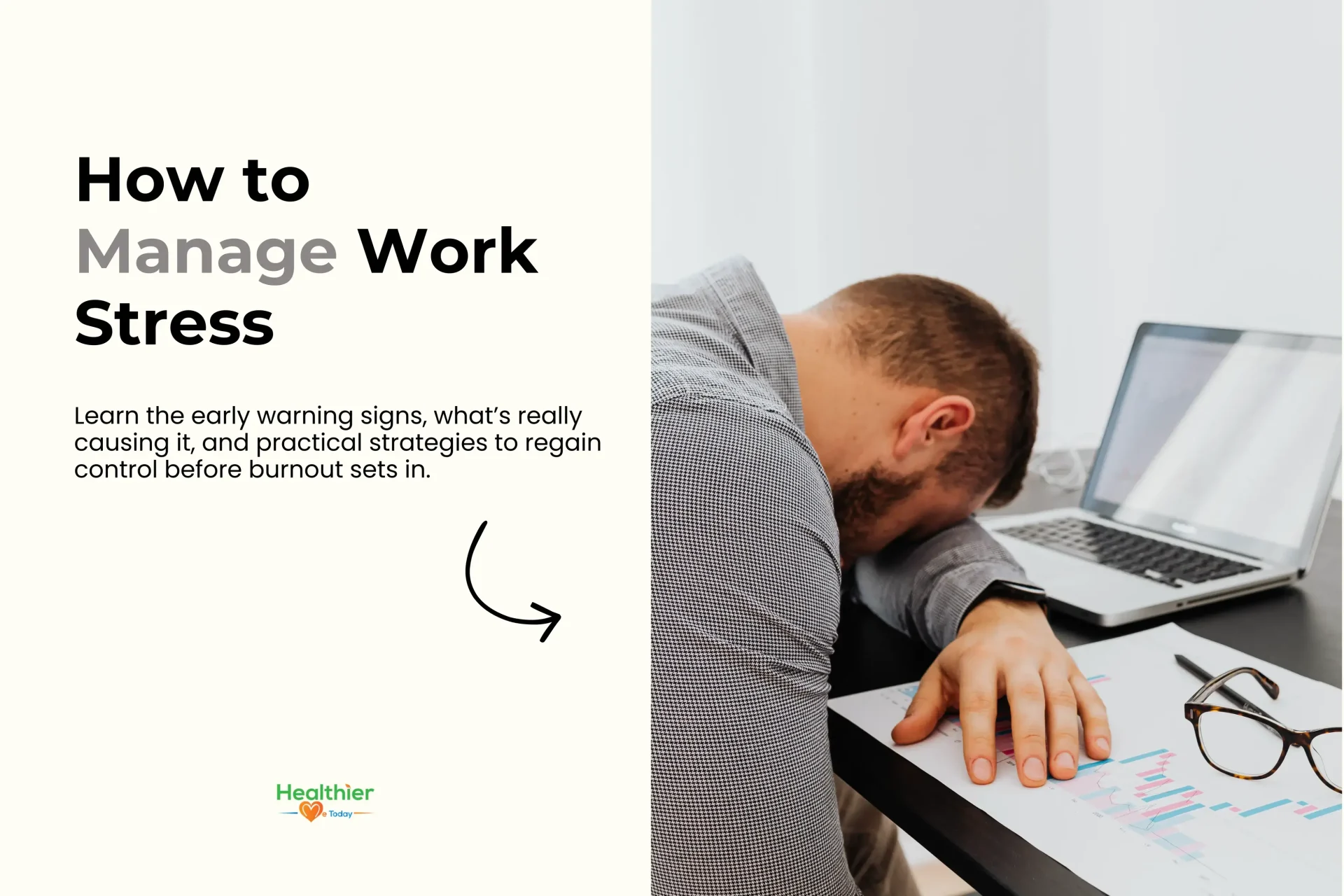
Do you feel stressed at work even after you’ve had time off? Deadlines are constantly on your mind, you feel more irritable than usual, or you can’t fully relax in the evenings. When stress starts affecting your mood, energy, and focus, it’s usually a sign that your body and mind are asking for a reset.
This guide helps you recognize the signs, understand common causes, and use effective work stress management strategies, along with long-term solutions to help you regain control.
What Is Work Stress Management?
Work stress management is simply about learning to handle the pressure of your job in a healthy way. Every job has deadlines, responsibilities, and challenging moments, and while a little stress can sometimes push you to perform better, too much of it can quickly become overwhelming.
Using effective work stress management techniques can help you notice what triggers your stress and how it affects your energy and mood. With the right strategies, you won’t just get through the day, you’ll feel calmer, more focused, and better able to handle challenges without letting stress take over your life.
Signs of Work-Related Stress

Stress at work can build up quietly, and you might not even notice it at first. It often shows up in small changes in your mood, energy, or behavior before it becomes overwhelming. Paying attention to these early warning signs can help you take action sooner and prevent stress from taking control of your work and personal life.
Here are some common signs of work-related stress to look out for:
- Persistent fatigue – Chronic stress keeps your body in “alert mode,” which drains your energy over time, even if you’re getting enough sleep.
- Difficulty concentrating – Stress affects your focus and decision-making because your brain is busy managing pressure instead of thinking clearly.
- Irritability or mood swings – When you’re overwhelmed, your patience usually drops, and small things start to feel bigger than they are.
- Headaches or muscle tension – Stress often shows up physically, especially in your neck, shoulders, and head.
- Sleep disturbances – Worrying about deadlines or work problems can make it hard to switch off at night.
- Increased absenteeism – When stress becomes too much, avoiding work can feel like the only way to cope.
When you notice these signs early, you give yourself the chance to step back and make changes before it gets worse. Even small adjustments and clearer boundaries can make a real difference in how you feel day to day.
Common Causes of Stress at Work
Work stress usually builds up due to specific factors in your daily routine or work environment. Identifying your stress triggers can help you manage them more effectively, preventing them from affecting your mood, energy, or home life.
Here are some things that can cause work-related stress:
- Heavy workloads – Managing multiple tasks or tight deadlines creates pressure, putting your body in “stress mode.” This can lead to both mental and physical exhaustion.
- Job insecurity – Uncertainty about job stability or company changes can threaten your sense of safety, creating ongoing tension that makes it difficult to relax or focus.
- Long working hours – Working extended hours without proper rest prevents your body and mind from recovering, leading to chronic work stress over time.
- Poor work-life balance – When work follows you home, your brain doesn’t switch off, causing stress to build instead of settle.
- Lack of recognition – When your efforts go unnoticed, it can feel discouraging and demotivating. That emotional strain creates frustration, which contributes to ongoing stress.
Every workplace is different, and what feels overwhelming for one person might not bother someone else.
How Work Stress Affects Your Health and Performance
When you’re under constant pressure at work, your body stays tense, which can lead to headaches, tight muscles, fatigue, high blood pressure, and a weaker immune system. Mentally, stress can make it harder to focus, remember details, stay motivated, or handle tasks that usually feel easy. Over time, this can lower your productivity and confidence. Recognizing these signs early is important because it gives you the chance to take action and learn how to reduce stress from work, protecting both your health and your performance in the long term.
Work Stress Management Techniques That Actually Help

Stress at work is normal, but it doesn’t have to take over your day [www.apa.org]. The right workplace stress relief techniques can help you stay focused, calm, and in control, even when your schedule is packed.
Immediate Stress Relief Techniques at Work
Some days, stress hits so fast that you need something that works immediately. Taking a few slow, deep breaths can help settle your mind and slow down racing thoughts. Standing up and stretching, or even taking a short walk, can help relieve tension in your body and make you feel more grounded. Pay attention to areas where you hold tension, such as your shoulders, neck, or jaw, and consciously relax them. Even pausing for a few seconds before responding to a frustrating situation can prevent stress from escalating and give you a moment to think clearly. These simple actions can make a noticeable difference in how you feel, helping you regain focus and calm.
Stress Management Techniques for Remote Workers
Working from home comes with flexibility, but without a clear routine, work can slowly spill into your personal life [pmc.ncbi.nlm.nih.gov]. You might catch yourself checking emails late at night or struggling to switch off mentally. Simple stress-management techniques for remote workers can help you stay organized and conserve your energy. Setting up a small, dedicated workspace tells your brain when it’s time to focus and when it’s time to relax. Clear start and finish times prevent overworking, and even small habits, like getting dressed for the day, can shift your mindset into productivity mode. Taking proper breaks away from the screen gives your mind and body a chance to reset, so you don’t end the day feeling drained.
Stress Management Techniques for Work and Home Balance
Maintaining a healthy balance between work and home life is essential for managing stress in the long term. When work follows you home mentally, it becomes difficult to rest and recharge truly. Creating a shutdown routine at the end of your day, tidying your desk, planning for tomorrow, or mentally closing your work tasks, helps your mind switch off. Setting firm boundaries around your availability and limiting after-hours emails protects your personal time.
Focusing on what truly matters instead of trying to do everything at once reduces unnecessary pressure.
How to Manage Work Stress Long-Term
Learning how to manage stress at work can help you stay focused, protect your energy, and handle busy periods without feeling overwhelmed.
Setting Boundaries
Setting boundaries is about knowing your limits and being honest about them. It helps you focus on work when you need to and take real breaks when your day is over. By protecting your time and energy, you can avoid feeling stressed and stay more balanced throughout your workday.
Time Management Strategies
Poor time management can make even small tasks feel overwhelming. A simple way to stay on top of things is to pick your top three priorities each day and focus on them first [franklincovey.com]. Breaking bigger projects into smaller steps makes them easier to handle, and taking short breaks between tasks gives your mind a chance to reset. These simple habits help you stay productive without feeling stressed or drained.
Delegation and Asking for Help
Doing everything yourself can lead to long-term work-related stress. You might feel responsible for keeping everything running smoothly, but taking on too much can cause burnout. Look at your tasks and see which ones you can pass on to others. Sharing the workload is a smart way to reduce stress and work better together.
Building Workplace Resilience
Even with good systems in place, work will still throw challenges your way. Building resilience helps you handle pressure without feeling drained or frustrated. It teaches you to stay calm, focus on solutions, and adapt when things don’t go as planned. You can strengthen your resilience by focusing on what you can control, learning from mistakes, and keeping simple routines that support your mental and physical health. By combining clear boundaries, smart time management, asking for help, and resilience, you create strong, sustainable habits. These are some of the best stress management tips for employees to deal with job stress and anxiety.
Tools That Can Support Stress Relief at Work

When your body feels tense or uncomfortable, it’s harder to stay focused and calm.
Using simple tools is one of the best ways to manage work stress:
- Foot massager – Long hours of sitting or standing can lead to tired, aching feet and poor circulation. A quality foot massager helps improve blood flow, relieve foot pain, reduce muscle tension, and ease stiffness, all from the comfort of your home or office.
- Seat cushion for an office chair – Sitting for long hours can put pressure on your lower back, hips, and tailbone. A supportive office seat cushion helps improve posture, reduce back pain, and relieve pressure while you work. Designed for ergonomic comfort, it provides extra support that keeps you comfortable, focused, and productive throughout the day.
- Anti-fatigue floor mat – Standing for long periods can strain your feet, knees, and lower back. An anti-fatigue floor mat provides cushioned support that reduces joint pressure, improves comfort, and helps minimize fatigue. Ideal for standing desks, kitchens, or retail spaces, it keeps you supported and focused throughout the day.
Using simple tools alongside practical stress management strategies can make your workday feel more comfortable and less overwhelming.
When to Seek Professional Help for Job Stress and Anxiety
When stress starts showing up as constant anxiety, irritability, low mood, trouble sleeping, or frequent headaches, it may be a sign that you need more than just basic coping techniques [mayoclinic.org]. You might feel emotionally exhausted, overwhelmed, or not quite like yourself.
Seeking help from a therapist or counselor isn’t a sign of weakness; it’s a healthy and proactive step toward better mental health. Professional support can provide personalized stress-management tools, help you reduce anxiety, rebuild emotional balance, and improve your overall well-being in a sustainable way.
Conclusion: Take Control of Work Stress
Managing stress at work isn’t about eliminating pressure completely, it’s about learning how to handle it in a healthier way. When you become aware of what triggers your stress and take small, practical steps to manage it, you protect your energy, your focus, and your overall well-being.
Simple habits like practicing deep breathing exercises, using ergonomic office tools, and setting clear boundaries between work and personal time can strengthen your resilience.
Frequently Asked Questions (FAQ)
How to stop stressing over work?
To stop stressing over work, focus on what you can control and let go of what you can’t. Break big tasks into smaller, manageable steps, prioritize what truly needs attention, and stop trying to do everything at once. Set clear boundaries between work and personal time, take short breaks to reset your mind, and speak up if your workload feels overwhelming.
How to handle stress effectively?
To handle stress effectively, focus on what you can control and take small, practical steps each day. Break tasks into manageable pieces, take short breaks, and make time for activities that help you relax. Asking for help when you need it and keeping healthy routines can also make a big difference in staying calm and focused.
How do you handle stress and pressure at work?
Handling stress and pressure at work starts with staying organized and focusing on one task at a time. Take short breaks to reset, set clear boundaries, and ask for help when needed. Small habits like these help you stay calm, focused, and more in control throughout the day.
How to relax when stressed?
When you’re stressed, take a few deep breaths, step away from whatever’s causing the stress, and give yourself a moment to reset. Simple actions like stretching, going for a short walk, or listening to music can help you calm down and regain focus quickly.
What are 7 warning signs of stress?
Here are 7 common warning signs that you should watch for:
- Persistent fatigue
- Difficulty concentrating
- Irritability or mood swings
- Headaches or muscle tension
- Sleep disturbances
- Increased absenteeism
- Feeling overwhelmed or unable to cope
