
Rheumatoid arthritis (RA) is an autoimmune disease that can cause joint discomfort, inflammation, and damage all throughout the body. RA typically causes joint degeneration on both sides of the body. As a result, if one of your arms or legs suffers from a joint problem, the other arm or leg is likely to suffer as well. This is one way doctors distinguish between RA and other types of arthritis, such as osteoarthritis (OA). Treatments work best when RA is detected early; therefore, it’s critical to understand the symptoms.
Continue reading to learn everything you need to know about RA, from its various forms and symptoms to home cures, diets, and other treatment options.
Types Of Rheumatoid Arthritis
There are various forms of RA. Knowing which type you have can help your healthcare provider select the appropriate treatment for you. Types include:
- Seropositive RA: This is the most frequent kind of RA. This kind of arthritis can run in families. Seropositive RA may cause more severe symptoms than seronegative RA.
- Seronegative RA: It occurs when you test negative for both rheumatoid factor (RF) and a kind of antibody known as cyclic citrullinated peptides (CCP) yet nevertheless have RA symptoms.
- Juvenile idiopathic arthritis (JIA): As the name implies, this is a kind of RA in children. The prevalence varies according to the research, with estimates ranging from 3.8 to 400 instances per 100,000 children.
Rheumatoid Arthritis Symptoms
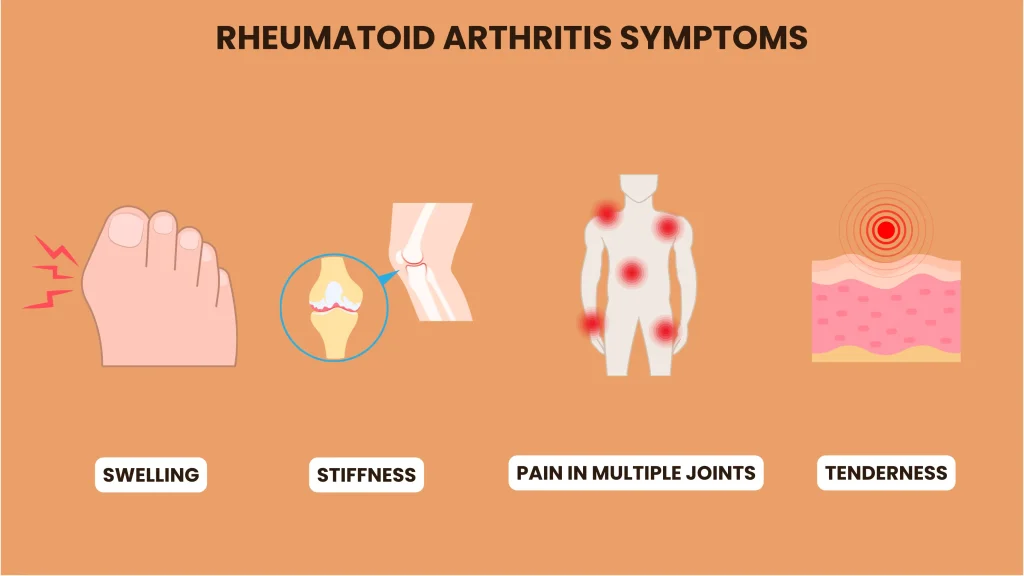
Rheumatoid arthritis is a chronic condition that causes joint inflammation and pain. These symptoms and indicators worsen during periods known as flares or exacerbations. Other times are known as remission periods, during which symptoms may entirely subside. RA symptoms most typically affect joints in the hands, wrists, and knees, but they can also affect tissues and organs throughout the body, such as the lungs, heart, and eyes. Symptoms may include:
- Stiffness
- Tenderness
- Swelling
- Pain in multiple joints
- Other non-joint-related symptoms, which can range from moderate to severe
It’s critical not to dismiss your symptoms, even if they come and go. Knowing the early warning symptoms of RA will help you and your doctor treat and manage it more effectively.
Causes And Risk Factors For Rheumatoid Arthritis
RA is an autoimmune condition in which the immune system assaults healthy body tissues, resulting in inflammation and damage to the joints and, in some cases, other organ systems. There are various known triggers for rheumatoid arthritis. If left untreated, the joint can deteriorate, lose shape and alignment, and eventually be destroyed.
Several genetic and environmental factors may raise your risk of developing rheumatoid arthritis. It can afflict anyone at any age, but the risk of having it increases with age. Females assigned at birth are more likely to develop it than boys assigned at birth. Researchers believe that reproductive and hormonal variables may contribute to the development of this disease in women. Other risk factors include heredity, smoking, obesity, and food.
Rheumatoid Arthritis Diagnosis
Diagnosing RA can take time and may necessitate repeated lab tests to corroborate clinical examination results. Your healthcare provider will use a variety of tools to diagnose RA. First, they will inquire about your symptoms and medical history. They will also undertake a physical examination of your joints, looking for signs such as oedema, reflex difficulties, or joint function. If they feel you have RA, they will likely recommend you to a rheumatologist.
Because no one test can confirm an RA diagnosis, your doctor or rheumatologist may utilize a combination of tests. These include blood draws to check for antibodies or other chemicals that are increased during inflammatory diseases. They may also send you for imaging tests, such as an ultrasound, X-ray, or MRI, to determine whether joint damage has occurred and how severe it is. Some persons with RA may also benefit from a comprehensive evaluation and monitoring of their other organ systems.
Rheumatoid Arthritis Treatment
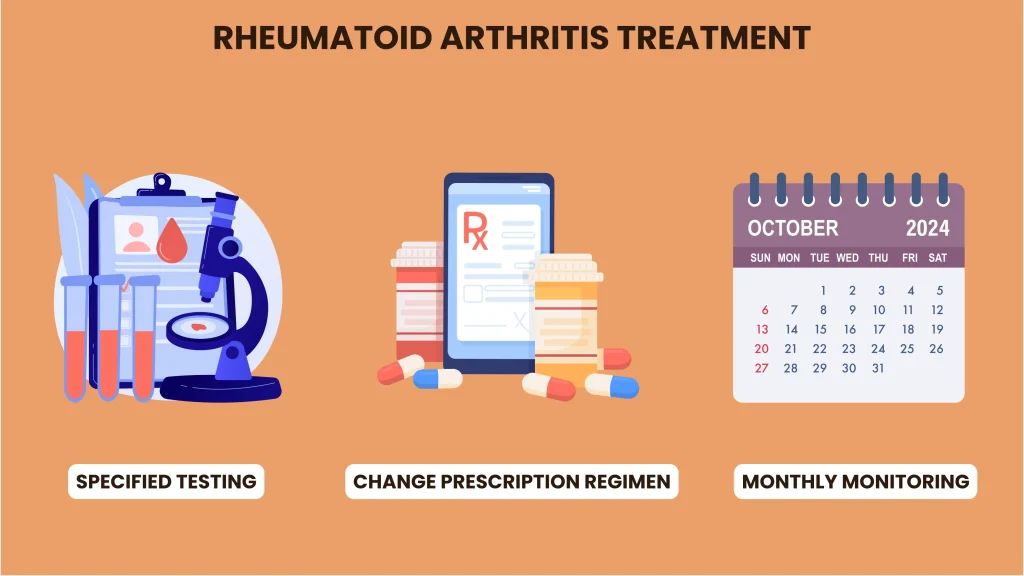
There is no cure for RA, although drugs can help alleviate symptoms by regulating the inflammatory response. Reducing inflammation can also assist in preventing more joint and organ damage. Treat to Target, a therapy strategy used by rheumatologists to effectively manage RA, has resulted in fewer symptoms and higher remission rates among RA patients. It includes:
- Setting a specified testing aim that indicates either remission or low disease condition.
- Test acute phase reactants and perform monthly monitoring to assess the progress of therapy and management plans.
- If progress is not made, change the prescription regimen right away.
Your doctor or nutritionist may recommend an anti-inflammatory diet to alleviate your symptoms. This sort of diet contains foods high in omega-3 fatty acids. Avoiding trigger foods and eating the correct foods can help you manage your RA.
Many people use these medicines to live more active lives while lowering their risk of long-term problems. Your healthcare professional will consult with you to develop the optimal treatment strategy for your specific medical needs.
Rheumatoid Arthritis Complications
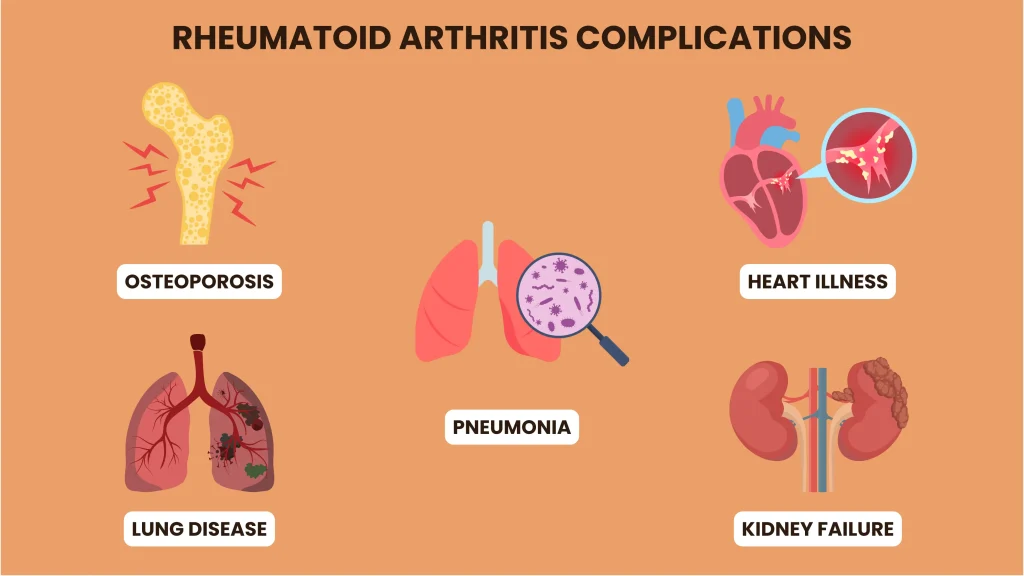
Having RA increases your risk of getting other health concerns. Some people may have problems with RA medicines. Other complications are:
- Damage to joints
- Bone density loss (osteoporosis)
- Anemia
- Carpal Tunnel Syndrome
- Heart illness
- Lung disease
- Eye disorders such as scleritis
- Other autoimmune disorders, such as Sjogren disease
- Vasculitis
- Pneumonia
- Kidney failure
- Lymphoma
- Amyloidosis
Life with RA can be difficult. It can have a negative impact on your daily life, including mobility issues, sleeplessness, exhaustion, and, in some circumstances, mood disorders. The Healthline Resource Center for RA can assist you in living with this disease.
FAQs
Is rheumatoid arthritis hereditary?
Rheumatoid arthritis is not classified as an autosomal dominant or recessive genetic disease, but there are genes that may be associated to the condition. Hormones, stress, and infection are all regarded to be potential factors.
What is the life expectancy of someone with rheumatoid arthritis?
Though RA is not lethal, it can decrease your life by three to ten years. Remission is possible, but symptoms may reappear, or other health problems may emerge. According to the Arthritis Foundation, heart disease accounts for more than half of all early fatalities among people with RA. However, disease development varies by individual, with those testing positive for RF and anti-CCPs advancing more quickly.
Does rheumatoid arthritis always hurt?
Rheumatoid arthritis symptoms might vary in intensity. These periods of heightened disease activity, or flare, are frequently followed by periods of respite or remission, in which swelling and discomfort reduce or disappear completely.
What is the distinction between rheumatoid arthritis and osteoarthritis?
Osteoarthritis (OA), like rheumatoid arthritis, can cause painful and stiff joints that make it difficult to move around. People with OA may experience joint swelling after prolonged activity, but OA is not considered an autoimmune disease. It is caused by the natural wear and tear of the joints as you age, but it can also develop as a result of trauma.
Conclusion
Rheumatoid arthritis is a chronic condition for which there is presently no cure. However, most persons with RA do not experience persistent symptoms. Instead, people experience flare-ups followed by generally symptom-free intervals known as remissions. The condition progresses differently for each individual, and symptoms can range from minor to severe. Though symptoms may go away for a while, RA-related joint problems typically worsen over time. That is why early therapy is critical to preventing major joint damage.
