

Coconut water can be a nutrient-dense option for hydration. It may improve your health, particularly your heart and kidneys. In recent years, coconut water has become a popular beverage. In addition to being naturally sweet and hydrating, coconut water contains a variety of essential nutrients, including minerals that many people do not consume enough.

Here are some incredible coconut water benefits!
Is Coconut Water Good for You?
The majority of coconut water benefits stem from its high electrolyte content, including essential minerals like potassium, calcium, and magnesium. Electrolytes are important minerals that have a natural positive or negative charge when dissolved in water.
They assist the body in controlling chemical reactions and maintaining bodily fluid equilibrium, among other things. If you’re electrolyte deficient, coconut water can be a good option. If not, coconut water is no healthier than plain water. Some people say that coconut water, due to its electrolytes, helps them with acid reflux.
Here are a few coconut water benefits:
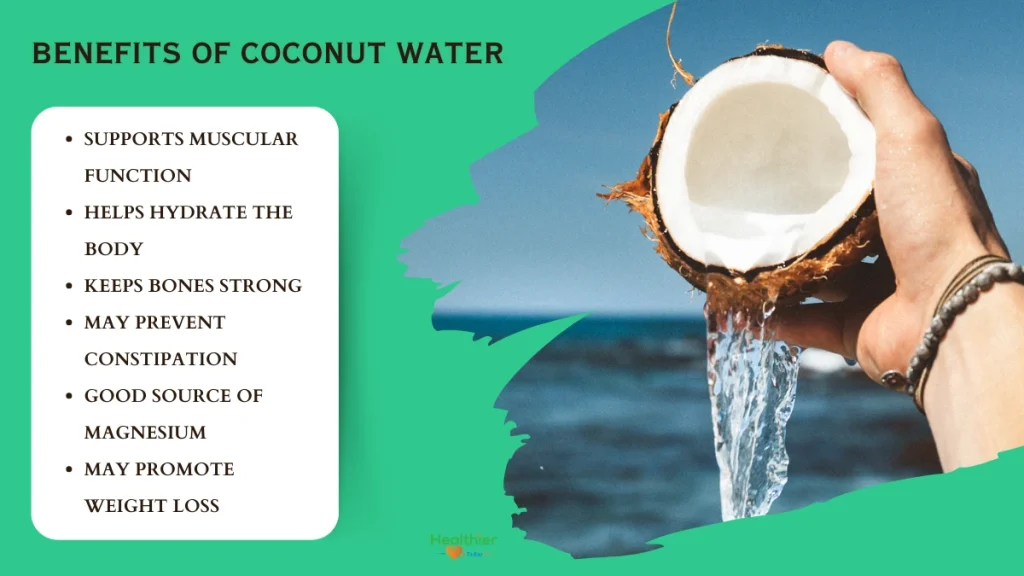
Supports Muscular Function
One of the key coconut water benefits is its high potassium content, an essential electrolyte that supports muscle function. Drinking electrolyte-containing water has been demonstrated to help prevent and reduce muscle cramps while exercising. One popular type of coconut water contains 509 milligrams of potassium in every 1-cup (240-milliliter or 8-ounce) drink. That is 15% of your daily value (DV), or the recommended daily allowance for this nutrient.
Helps Hydrate The Body
Another important coconut water benefit is hydration support. Staying hydrated helps to keep joints lubricated, regulates body temperature, delivers nutrients to cells, and improves sleep quality and mood. Experts recommend that you drink 11 cups of liquid per day if you are a woman and 16 cups if you are a man.
It doesn’t just have to be water. Coffee, tea, and juice all count. With only 60 calories per 1-cup serving, coconut water is a great way to rehydrate without adding too much sugar to your diet.
Keeps Bones Strong
One of the notable coconut water benefits is its contribution to bone health. Low calcium levels can lead to issues like decreased bone density, bone loss, and more fragile bones.
Many people fall short of their daily calcium intake, but a cup of coconut water contains 40.8 mg of calcium, which accounts for nearly 4% of your daily value. While coconut water may not be exceptionally high in calcium, it still offers valuable coconut water benefits for supporting strong bones.

May Prevent Constipation
Coconut water benefits include acting as a mild laxative due to its high potassium content. While excessive potassium can lead to diarrhea in some people, drinking coconut water regularly may help prevent constipation.
Good Source Of Magnesium
One of the valuable coconut water benefits is its magnesium content. A single cup of coconut water contains 16 milligrams of magnesium, or 4% of your daily value. Magnesium serves a variety of activities in the body, including the production of protein, blood sugar and blood pressure regulation, and muscle and neuron function.
If you do not consume enough magnesium for an extended period of time, you may have magnesium deficiency symptoms such as nausea, weakness, and exhaustion. Excess magnesium is eliminated through the urine; thus, too much magnesium is not a problem.
May Promote Weight Loss
Coconut water contains a high concentration of bioactive enzymes, one of the many coconut water benefits that can enhance the body’s metabolic rate and enable muscles to burn more calories. Drinking coconut water multiple times a day will keep the body refreshed and help you lose weight.
Improves Skin Health
Because coconut water is naturally packed with electrolytes such as sodium and potassium. It is also enriched with Vitamin A, Protein, Iron, Calcium, and, most importantly, Vitamin C. We all know how much your skin enjoys Vitamin C. As a result, you can confidently state that coconut water benefits the skin.
Coconut Water Nutrition
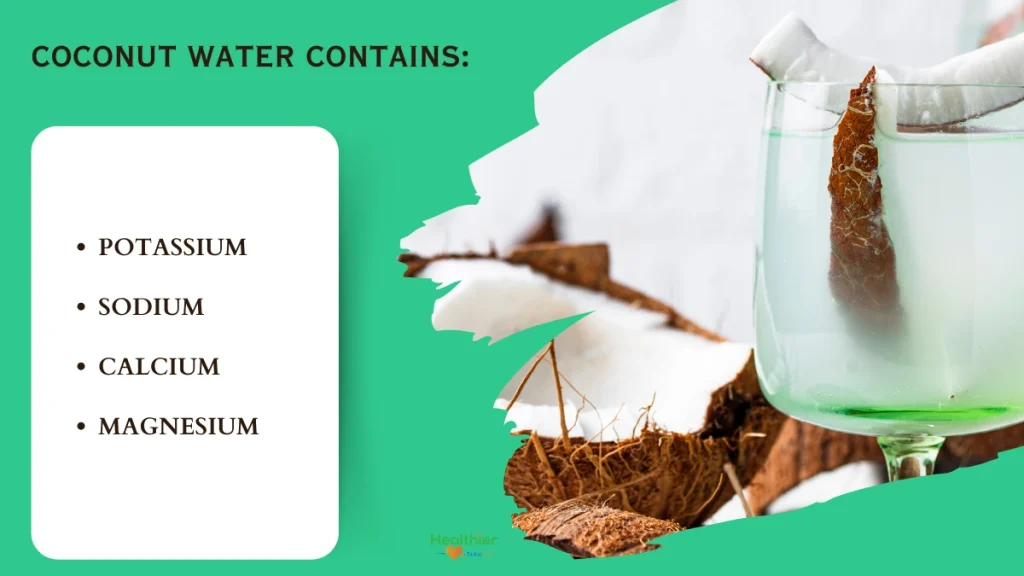
Coconut water includes electrolytes that your body needs to function properly.
Coconut water contains the following electrolytes:
- Potassium
- Sodium
- Calcium
- Magnesium
A one-cup (240 milliliter) serving of a popular brand of organic unsweetened coconut water contains:
- Calories: 60
- Protein: 0 grams
- Fat: 0 grams
- Carbohydrates: 15 grams (5% DV)
- Fiber: 0 grams
- Sugar: 8 grams
- Calcium: 40.8 milligrams (4%)
- Potassium: 509 milligrams (15%)
- Magnesium: 16.8 milligrams (4%)
- Sodium: 45.6 milligrams (2%)
- Phosphorus: 19.2 milligrams (2%)
Other brands’ coconut water may include more or less of these nutrients in the same serving size.
Coconut Water Vs. Coconut Milk
Coconut water is frequently confused with coconut milk; however, they are not the same. Coconut milk is a creamy, white milk created by shredding the inner flesh of a mature brown coconut, combining it with boiling water, and filtering. Coconut water is already liquid within a young green coconut. Unlike coconut water, coconut milk has a lot of fat and calories.
Coconut Water Risks
Drinking coconut water is considered low-risk, but if you have health concerns that require potassium, salt, or calorie restriction, it may not be the best beverage for you. While coconut water is often low in sodium, some brands have rather high levels, one supermarket brand contains 130 milligrams per 8-ounce drink. A diet high in salt can raise blood pressure. Long-term high blood pressure can damage the kidneys and cause heart disease.

Sodium may potentially interfere with blood pressure medicines. Coconut water contains a lot of short-term carbohydrates known as FODMAPS (fermentable oligosaccharides, disaccharides, monosaccharides, and polyols), which might induce diarrhea if you have IBS.
This is especially true if you consume a lot of juice. When used in moderation, coconut water has almost no negative side effects. If you consume a lot of it and have chronic kidney disease (CKD), it could be a problem.
CKD impairs the kidneys’ ability to remove potassium, which coconut water provides in plenty. Too much potassium in the kidneys can result in hyperkalemia, a potentially dangerous condition marked by an unusually high potassium level in the blood. A case report recounts a man who drank eight 11-ounce bottles of coconut water while playing tennis and developed acute hyperkalemia.
Coconut Water Benefits for Diabetics
Some kinds of coconut water are low in sugar, while others are high, although they are usually lower in sugar than other fruit juices and beverages. If you have diabetes, you’ve probably been ordered to reduce your sugar intake, so opt for a low-sugar type of coconut water.
Also, don’t drink too much of it. A man with diabetes was reported to drink a liter (approximately 33 ounces) of coconut water every day while taking diabetes medication. His potassium levels rose dramatically, but he stopped before becoming hyperkalemic.
Methods for Using Coconut Water
There are no specific standards for how much coconut water you should consume. Those that drink it on a regular basis typically consume 1-2 cups per day, but others reach for a glass/bottle after a run instead of a traditional sports drink.
Here are several ways you can harness coconut water benefits:
- Make a smoothie by blending coconut water and fruit.
- Incorporate a dash of pineapple juice into cooled coconut water.
- Make a coconut water lemonade.
- Use coconut water instead of milk or cream in your favorite curry.
Conclusion
Coconut water is a low-calorie way to rehydrate. It’s high in electrolytes and minerals, which helps boost bone health and reduce muscle cramping after exercise. Some people use it as an alternative to sports beverages after strenuous exercise, however the juice is typically deficient in sodium, a necessary electrolyte. Coconut water has no side effects unless you consume it in large quantities and have a health condition like chronic kidney disease or diabetes.
Coconut Water Benefits FAQ’s:
What are the benefits of drinking coconut water daily?
Drinking coconut water benefits you by:
> Hydrating your body
> Supporting electrolyte balance
> Providing necessary nourishment
> Promoting digestive health
> Enhancing skin hydration
> Managing weight
Is coconut water safe during pregnancy?
Coconut water is a safe hydration option for pregnant women.
Does coconut water help with weight loss?
Coconut water contains potassium and high bioactive enzymes, which improve the body’s metabolic rate and help the muscles burn more calories.
Is coconut water good for hydration?
Coconut water is an excellent way to rehydrate without adding much sugar to your diet.
What are the benefits of coconut water for the skin?
> Improves skin elasticity
> Enhances skin tone
> Soothes sunburned skin
> Reduces dark circles and puffiness
> Protects against free radical damage
> Anti-aging properties
Do coconut water benefits include natural electrolytes?
Yes, it is high in electrolytes and minerals, which help boost bone health and reduce muscle cramping after exercise.
Is coconut water better than sports drinks?
Depending on the brand, coconut water contains fewer calories, less sodium, and more potassium than the average sports drink.
