

Ever wondered how to stop staying up late? Many of us struggle to fall or stay asleep, and it’s common to wonder why we stay up late, even if we’re sleepy. However, getting little sleep and feeling tired in the morning are everyday realities for many people.
If you are a night owl wondering how to fix sleep schedule once and for all, then keep reading to discover the best tips for falling asleep earlier and getting a good night’s rest.
How to Stop Staying Up Late with Early Daylight

1. Get Some Early Daylight
According to studies, one of the best ways to shift your sleep cycle is to get light early in the day. The Centers for Disease Control and Prevention (CDC) says that getting bright early morning light can help shift the time that you start to feel tired to earlier in the evening than usual.
Weather varies every day, but being outside, even during a cloudy morning, can help; however, if you do not have access to good sunlight at this time, then you can consider an artificial light source such as a lightbox or a UV light.
2. Change Your Bed and Wake Time
A great way how to fix sleep schedule hanging the time that you go to bed and wake up can help you get a better night’s sleep. You can do this by setting your alarm to wake you up at the same time every day, not only when you need to be up at a certain time but also to keep it consistent. Try to wake up at the same time on weekends as you do during the week, and don’t stay up too late unnecessarily.
It is essential to do this in small increments, as it is not a good idea to make these changes suddenly. Do it gradually until you have reached the sleep schedule you want. This can take several days to accomplish, but it is crucial not to rush these adjustments.
3. No Caffeine in the Late Afternoon
Drinking caffeine in the late afternoon or consuming too much in a day can have a negative and disruptive effect on your bedtime. This is due to the fact that caffeine can have blocking effects on an important chemical that helps you fall asleep, adenosine. Caffeine can delay you feeling sleepy and keep you up later than it should.

Caffeine is commonly found in:
- Coffee
- Soda
- Energy drinks
- Some teas
If you want a nice hot beverage in the evening, try caffeine-free tea; some can also help promote better sleep, such as chamomile tea.
4. No Screen Time Before Bedtime
It is very tempting to lie in bed and scroll through your phone or watch TV, but when it comes to how to fix sleep schedule, these devices actually make it harder for you to fall asleep. The best is to turn off your devices at least 30 minutes before you head to bed. Because complete darkness is optimal for sleeping, it makes sense to eliminate light, especially blue light, right before bed.
5. Do Physical Exercises
Research has shown that exercising regularly can significantly help with sleep. A study [National Institutes of Health] showed that resistance exercises can improve all aspects of sleep, especially the quality of sleep. But don’t worry, you don’t need to do intense or extremely tiring exercises to achieve these benefits.
Even just taking a walk can provide these benefits; however, the timing of your workouts is also very important. Although it may make sense, it is recommended not to workout vigorously before bedtime. If you prefer exercising in the evening, make sure you finish at least an hour before you go to sleep.
6. Supplements for Better Sleep
| Product | Link |
|---|---|
| Nature Made Melatonin 10mg per serving Gummies | Buy on Amazon |
| DR. EMIL NUTRITION EZ Doze Plus Natural Sleep Aid with Melatonin, L-Theanine, GABA & 5HTP | Buy on Amazon |
| OLLY Sleep Gummy, Occasional Sleep Support, 3 mg Melatonin, L-Theanine, Chamomile, Lemon Balm, Sleep Aid, Blackberry | Buy on Amazon |
Your body naturally makes a hormone called melatonin when in darkness. This hormone helps us fall and stay asleep, but sometimes, our bodies do not produce an adequate amount of it. Which is why when looking at how to fix sleep schedule melatonin supplements are recommended.

It is important to first consult your healthcare provider before trying them, as although they are safe for the majority, it is always wise to make sure a new medication is right for you. Pregnant and breastfeeding women should not take melatonin supplements, and some people may experience allergic reactions.
7. Lower Bedroom Temperature
Your circadian rhythm not only regulates your sleep cycle but also affects body temperature. Our core temperature rises during the day and drops at night before we go to sleep. Research says that a room’s temperature is linked to sleep regulation. When our body temperature is low, we tend to feel sleepy, which is why lowering your room temperature can help you fall asleep better.
A study conducted in 2019 [National Library of Medicine] showed that sleeping in a hot room of around 96.8°F to 100°F was associated with bad quality sleep. The study participants reported that they slept less and had a more shallow sleeping experience in the hot temperature. The preferred room temperature for better sleep is 60°F to 65°F.
8. Create a Bedtime Routine
Creating a good bedtime routine has many sleep health benefits, such as being a great opportunity to wind down from the day. It also establishes psychological cues that tell our body it’s nearing sleep time. Having a routine can also be a good way to get in some self-care; consider working on a skincare regimen, reading some chapters of a novel, or having a nice cup of tea.
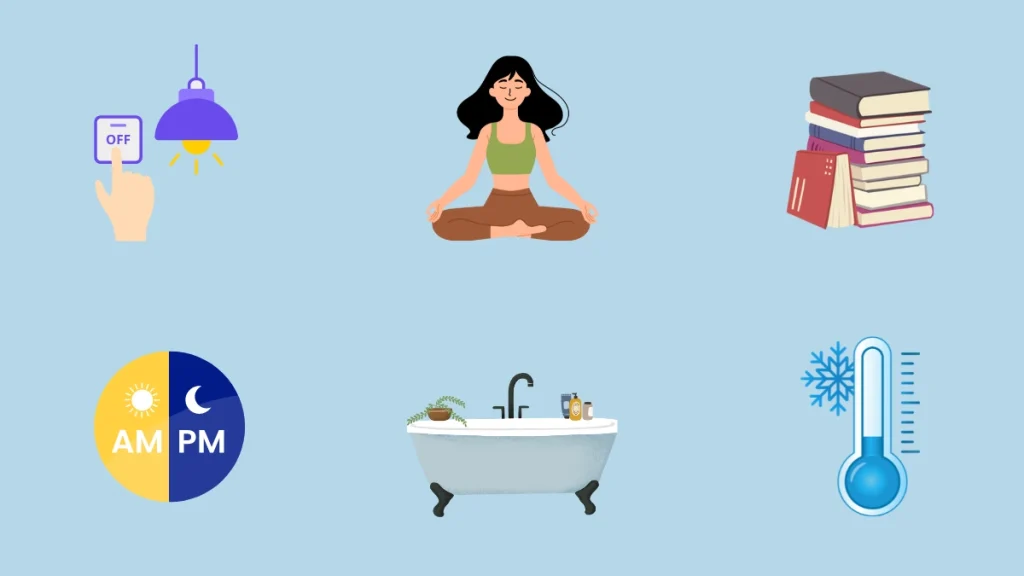
More tips for creating a soothing sleeping routine:
- Changing into your pajamas – This can help signal to your brain that it is rest time and can also help you feel in the mood to sleep.
- Dimming or turning off lights – As mentioned, sleeping in darkness can improve overall sleep quality and help your body regulate its sleep cycle.
- Try a fan – This can be beneficial for two main reasons: it creates white noise and keeps you cool at night, which is helpful for sleep regulation.
- Calming activities – Studies [Sleep Foundation] show that calming practices such as meditation or listening to calming music can help improve sleep.

Conclusion
Suppose you’re tired of the effects of staying up late. In that case, there are many different ways to help regulate your sleep cycle, such as light therapy, limiting screen time before bed, doing exercises, lowering bedroom temperature, and creating a calming bedtime routine. There are also melatonin supplements that can help improve falling asleep as well as sleep quality. However, it is important to consult a doctor beforehand.
By following these tips, you are sure to learn how to train your brain to sleep better!
FAQ’s:
Why is it so hard to fix my sleep schedule?
Many reasons can affect your sleep schedule, such as shift work, too much blue light at night, too much sunlight during the day, jet lag, stress, poor sleep environment, and exercising too close to bedtime.
How to fix sleep schedule naturally?
> Get Some Early Daylight
> Change Your Bed and Wake Time
> No Caffeine in the Late Afternoon
> No Screen Time Before Bedtime
> Do Physical Exercises
> Supplements for Better Sleep
> Lower Bedroom Temperature
> Create a Bedtime Routine
What are the long-term consequences of sleep deprivation?
Long-term effects of sleep deprivation are increased risk of chronic disease, weight gain, higher blood pressure, brain impairment, poor quality of life, depression, anxiety, and increased pain sensitivity.
How can I develop better sleep habits?
Some sleep hygiene tips include staying consistent, waking up at the same time every day, including weekends, avoiding blue light at night, not drinking caffeine before bedtime, creating a solid nighttime routine, and sticking to it every night.
Why do I stay up all night for no reason, even when I’m tired?
Here are some reasons you could be staying up late:
> Poor sleep hygiene/habits
> Irregular circadian rhythm
> Potential sleep disorder
> Struggling with mental health problems
> Inconsistent work or life schedule
> Consuming too much caffeine
