
During this time, many people are coping with holiday or winter blues. However, this should not be confused with Seasonal Affective Disorder (SAD) which it often is due to the timing. The mood changes that are associated with SAD are more intense and can affect someone more drastically than usual mood dips due to the holidays or change in amount of daylight.
December marks Seasonal Depression awareness month and it is important that people understand what causes it, the symptoms, treatment and ways in which to prevent it.
What is Seasonal Affective Disorder?
What is seasonal depression and how does it affect us? Seasonal Affective Disorder (SAD) is a kind of depression that often starts in the late fall and the early winter. This is called winter-pattern SAD or winter depression and is a large part of why mental health awareness in December is important.
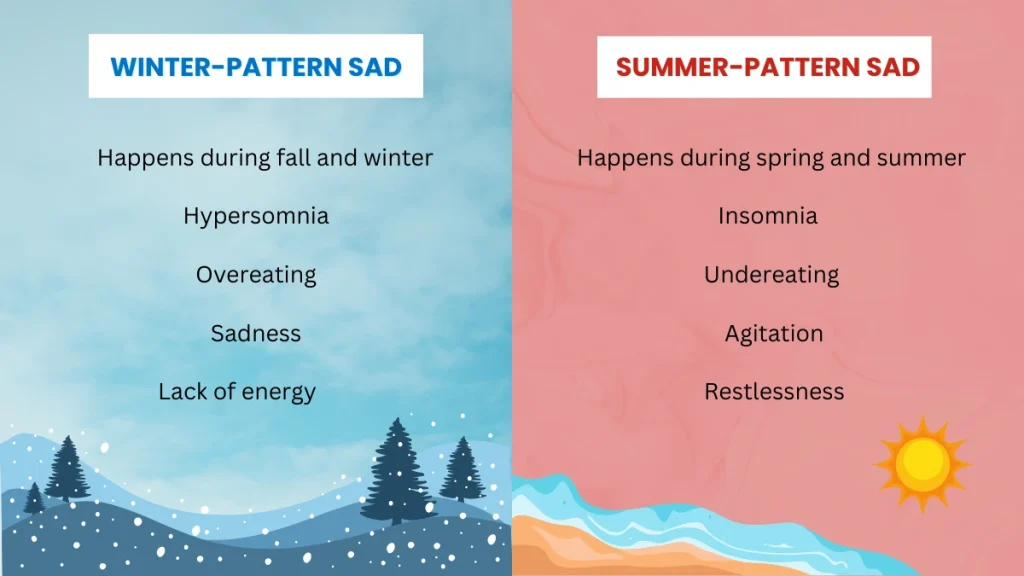
SAD can also be experienced in the summer, although it is less common, some people do experience summer-pattern sadness or summer depression. Both winter and summer-pattern SAD can change the way an individual behaves, makes decisions, thinks and looks after themselves. Dealing with Seasonal Affective Disorder can be challenging and especially if you are not aware of its symptoms and haven’t been diagnosed.
Symptoms of Seasonal Depression
An effective way to raise seasonal depression awareness is to know the symptoms. This way it can be easier to know if an individual has Seasonal Affective Disorder or just “holiday blues”.

Let’s look at general, winter-pattern, and summer-pattern SAD symptoms:
It is very common that winter-pattern SAD is confused with “holiday blues”. This is because there is a lot of stress and changes that come with holidays such as time off work and school, different schedules, different priorities and so on. During this time many people experience temporary or intermittent dips of their emotions. However, these emotions are brought on by predictable holiday related changes. SAD is caused by changes in the amount of daylight.
Causes of Seasonal Depression
Scientists have not yet determined what exactly causes Seasonal Affective Disorder and winter-pattern SAD has been more looked into than summer-pattern SAD as it is more common. However, studies [National Health Institutes of Health] show that those with, especially winter-pattern, SAD have lower levels of serotonin, a chemical in the brain that regulates our mood.
Research has revealed that reduced daylight can affect the molecules that help maintain normal serotonin levels. Which means in months that have less daylight, such as winter, serotonin is decreased which causes the array of symptoms associated with SAD. Individuals who have a vitamin D deficiency are also more likely to develop winter-pattern SAD as our bodies absorb sunlight which boosts serotonin levels.
There are also studies [Oxford Academic] that show SAD can be caused by altered levels of melatonin, another brain chemical that helps to regulate our wake sleep cycle. For those who suffer from summer-pattern SAD they have lower levels of melatonin which alongside the heat can make sleep very difficult. The opposite for winter-pattern SAD as these patients have excess melatonin which causes oversleeping and consistent tiredness.
Seasonal Affective Disorder Treatment
Learning how to cope with Seasonal Affective Disorder and getting the proper treatment can significantly help individuals to have normal holidays and manage the unpleasant symptoms. There are mainly four types of treatments for Seasonal Affective Disorder, light therapy, antidepressant medication, vitamin D, and psychotherapy.
Seasonal depression treatment involves the following:

Light Therapy
Light therapy for seasonal depression has been used since the 1980s and especially for winter-pattern SAD. This form of therapy’s goal is to expose individuals to a bright light to compensate for the decreasing sunlight in colder darker months. How light therapy works is a patient will sit in front of a bright light (10,000 lux) for around 30 to 45 minutes everyday from fall for winter-pattern SAD and from spring for summer-pattern SAD.
The light box that is used is about 20 times brighter than usual indoor light. It also filters out potentially damaging UV light which makes it an effective treatment for most people. For individuals who are on certain medications or have eye diseases that make them more sensitive to light, it is important to discuss this treatment with a healthcare professional.
Antidepressant Medication
Antidepressant medication and selective serotonin reuptake inhibitors (SSRIs) are used to treat SAD as it can help improve associated symptoms and causes. Because SAD is a type of depression it means that it is related to disturbances in serotonin levels in the brain. These medications can be taken alone or along with other kinds of therapy such as light therapy or psychotherapy.
Due to symptoms being similar, antidepressant medications can help with sleep, calming anxiety, improving appetite, better concentration and enhancing moods. However, it is important to know that it takes around 4 to 8 weeks for these medications to be in your system and it may take a few tries to settle on the one that is right for you.
Do not become discouraged if your first, second or even third time trying antidepressant medications as everyone’s body is different and there are many different kinds of these medications that can potentially be the correct fit. Individuals need to speak to their healthcare provider to learn more about antidepressant medications and their side effects.
Vitamin D
It is quite common for people who suffer from winter-pattern SAD to also have vitamin D deficiencies. Because of this, it is recommended that they look into taking vitamin D supplements. Although there are mixed reviews on how effective vitamin D supplements are for SAD ranging from it being just as helpful as light therapy to it having no effects at all it is still a good option to consider.
Adding more vitamin D to your lifestyle can be beneficial and potentially help lessen the intensity of SAD symptoms. There is still more research to be done but speaking to a doctor can help determine if these supplements are worth a try.
Psychotherapy
Also referred to as counselling or talk therapy, psychotherapy is an effective and supportive treatment. It can help to change the way patients think, process, behave and change contributing habits to their SAD. A commonly used form of psychotherapy is called cognitive behavioral therapy (CBT). It is aimed to improve someone’s feelings of anxiousness and depression by teaching them ways to change and challenge their negative depressive thoughts.
CBT has been adapted to help those who suffer from seasonal affective disorder which is called CBT-SAD. This therapy often consists of two weekly group sessions lasting 6 weeks. These groups focus on many aspects but mainly replacing the negative feelings and thoughts that come with these seasons into more positive ones.
Another method used in CBT-SAD is called behavioral activation. This includes helping and encouraging patients to schedule enjoyable outdoor or indoor activities which can help to improve the interest and joy that is often lost during these times. It is important to note that when compared both light therapy and CBT-SAD proved equally effective on patients.
How to Prevent SAD
Before SAD awareness month it’s important that those with a history of it start treatments in either the fall or spring to help better manage symptoms. Because these months are predictable it gives patients a sort of headstart to help them get ahead of their illness. There is more research needing to be done on whether or not SAD can be completely prevented but in the meantime, the best advice for preventing SAD is to make a treatment plan with a healthcare professional as they can not only help with treatment but also determine the best time to start preparing for the season.
Here are some tips to help improve SAD symptoms before they start:

- Lightbox – for winter-pattern SAD use a light box at the beginning of fall before symptoms start.
- Going outside – even on cloudy days, getting out and getting enough sunlight everyday can help individuals feel better before and during SAD episodes.
- Nutrition – during winter-pattern people crave carbohydrates but it is crucial to still eat a balanced nutritious diet. This goes for summer-pattern SAD as well, as hot weather can diminish appetite. Getting in enough vitamins and minerals especially during these times can help make patients feel much better.
- Stay social – a common symptom of depression in general is withdrawing from friends and families as well as any kind of socializing. This can make SAD worse as feeling alone can contribute to negative thoughts and behaviors. Make sure to stay in touch with loved ones and make time to go on outings or visits with them.
- Professional opinion – as mentioned, speaking to a healthcare professional can be very beneficial as they can assist with finding correct medications, more preventative measures, forms of therapies and discover the right time to start prepping for the coming seasons.
Conclusion
Although it is more common to focus on mental healthin winter months, seasonal affective disorder can also affect people in hot seasons too such as spring and summer. Learning how to manage seasonal depression can be a game changer. By following tips such as acquiring a lightbox, finding antidepressant medication, staying in touch with loved ones, eating a nutritious diet and participating in psychotherapy, individuals can help prevent and manage the symptoms related to SAD.
FAQ’s:
What is seasonal depression or seasonal affective disorder (SAD)?
SAD refers to a certain depression that is felt during specific seasons often being winter, fall and summer.
What are the symptoms of seasonal depression?
Some symptom of SAD include a consistent low mood, over or under sleeping, irritability, difficulty concentrating, changes in appetite, bodily aches and pains, suicidal idealization and more.
How is seasonal depression diagnosed and treated?
Seasonal affective disorder can be diagnosed by a doctor or mental health professional after performing mental health examinations and reviewing medical health history. Treatment for seasonal affective disorder include light therapy, antidepressants medications, vitamin D supplements and psychotherapy.
Does light therapy really work for seasonal depression?
Yes, light therapy has shown to be effective on seasonal depression. Individuals are recommended to use it in the morning and often feel improvements in just one week.
How can I prevent or manage seasonal depression naturally?
Natural remedies for seasonal depression include sunlight, exercise, socializing, establishing a sleep routine, increasing vitamin D and a nutritious diet. Light therapy is also considered a natural remedy.
Where can I get support or resources for seasonal depression?
People can find support and resources by reaching out to a mental health professional or healthcare provider as they have the tools and knowledge to help individuals find the right treatments. By communicating emotions and experiences with loved ones it can help create a support network which can assist SAD sufferers to feel better.
