
As the National Women and Girls HIV/AIDS Awareness Day closes in on the 10th, reviewing the potential signs is crucial. HIV symptoms in women and those assigned female at birth (AFAB) can vary widely. They may experience common flu-like signs, skin changes, mood swings, irregular periods, and frequent vaginal infections.
Early signs of HIV in women can be mild and often overlooked. However, even if someone does not show symptoms, they can still transmit the virus to others. This highlights the importance of knowing one’s HIV status. Symptoms can differ among individuals with female anatomy.
Here are the typical symptoms of HIV in females, stages, causes, and treatments to help women and others stay informed and ready.
What Causes HIV?
How do women get hiv? A virus is responsible for causing HIV. It can be transmitted through sexual activities, sharing needles for drug use, or contact with infected blood. It can be passed from a mother to child during pregnancy, childbirth, or breastfeeding. HIV attacks white blood cells known as CD4 T cells, which are crucial for the immune system’s ability to fight diseases. The immune system becomes weaker when the number of CD4 T cells decreases.
Many people can live with an HIV infection for years without showing any symptoms, but eventually, it can progress to AIDS. How many people have hiv in the US? Around 1.2 million individuals in the United States are living with HIV. This figure includes roughly 13% of those who do not know they have the virus. HIV in women statistics USA 2025 are currently at a 69% decrease. AIDS is identified when the CD4 T cell count drops below 200 or when a person experiences specific complications, like severe infections or certain cancers. How do you contract HIV? You can contract HIV if infected blood, semen, or vaginal fluids enter your body.
You can get infected in several ways:
- Engaging in sexual activities: If you have vaginal or anal sex with someone who has the virus, you could become infected. Oral sex is generally safer, but the virus can still enter your body through sores in your mouth or tiny tears in the rectum or vagina during intercourse.
- Sharing needles for drug use: Using needles or syringes that have been contaminated with the virus puts you at a high risk for HIV and other diseases like hepatitis.
- Receiving a blood transfusion: The virus could be passed on through blood from a donor. However, hospitals and blood banks usually test for HIV, so the risk is low in places with proper screening. The risk might be higher in countries with fewer resources due to inadequate blood testing.
- During pregnancy, childbirth, or breastfeeding: If a person with HIV is pregnant, they can transmit the virus to their baby. However, those who are HIV positive and receive treatment during pregnancy can significantly reduce the risk of passing the virus to their child.
HIV Stages in Women
Stage 1: Acute Infection
When it comes to women and HIV AIDS, infection typically occurs 2 to 4 weeks after someone contracts HIV, and it’s when a person is at their most contagious. The body reacts to the virus, often leading to symptoms that resemble the flu. Some HIV symptoms in women can be so mild that you might not even realize you’re experiencing them, while others could require a visit to a doctor or healthcare provider.
Here are some common HIV symptoms in women during the acute stage:
Swollen Glands
Swollen lymph nodes, or glands, are often one of the first indicators of HIV and can persist for several months. They are found all over the body, including the neck, back of the head, armpits, and groin. They play a crucial role in the immune system by storing immune cells and filtering out harmful pathogens. As HIV spreads, the immune system responds, leading to enlarged lymph nodes.
Sore Throat
A sore throat is a frequent symptom during the early stages of an HIV infection. It might sometimes last a few days, weeks, or even months.
Mouth Ulcers
Mouth sores can also appear during the initial phase and might even be the first sign of an infection. However, they can also develop when HIV has advanced to a later stage. These sores may appear as cream-colored patches on the tongue, palate, or lips, which can be wiped away to reveal a red surface underneath. Some individuals may experience painful red ulcers inside their cheeks and lips.
Skin Rashes
Many people with HIV experience skin issues. Rashes are a common symptom; various types can manifest on the skin. They might be a direct result of HIV or caused by another infection or condition.
Night Sweats
Some individuals may start to experience night sweats within the first month of contracting HIV. This happens as the body tries to combat the infection while sleeping. Night sweats often occur alongside other symptoms, like fever, which can also happen independently. As you know, a temperature of 100.4°F (38°C) is a fever.
Muscle Pain
For many people with HIV, one of the most annoying symptoms is muscle pain, which can start just a few weeks after getting infected. This usually happens because of a flu-like reaction.
Other HIV symptoms in women that feel like the flu include:
- Headaches
- Feeling tired
- Chills
These symptoms typically fade away after a couple of weeks.
Stage 2: Chronic Infection
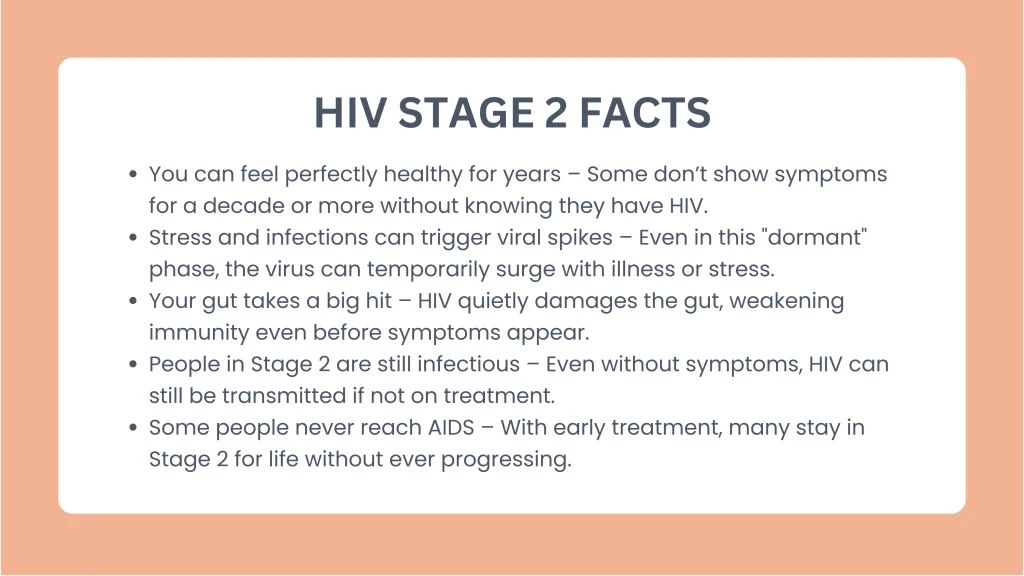
Chronic HIV infection, often referred to as the asymptomatic stage, is when the virus stays at low levels in the body. Many people don’t show symptoms during this time, even though the virus replicates. This phase can last for several years. However, some individuals might experience more intense symptoms than the acute stage, including coughing, extreme tiredness, weight loss, and diarrhea. A high fever can also occur.
Stage 3: Acquired Immunodeficiency Syndrome (Aids)
This is the most advanced stage of HIV, where the immune system is significantly compromised. At this point, fighting off certain opportunistic infections or diseases becomes increasingly challenging.
HIV facilitates the onset of these opportunistic infections, which can include:
- Pneumonia
- Tuberculosis
- Oral or vaginal candidiasis
Yeast infections (a form of candidiasis) and bacterial infections tend to be more prevalent in individuals assigned female at birth (AFAB) and can be more challenging to manage.
Those with uncontrolled HIV are at a higher risk for infections in various areas, such as:
- Skin
- Eyes
- Lungs
- Kidneys
- Digestive system
- Brain
If HIV symptoms in women are not managed correctly, the likelihood of developing certain cancers rises, including:
- Kaposi sarcoma
- Non-Hodgkin’s lymphoma
- Cervical cancer
Changes in menstruation can also occur in individuals with HIV. Their menstrual cycles may become lighter or heavier than usual, or they might stop having periods altogether. More intense premenstrual symptoms have been reported as well. For those who already have another sexually transmitted infection (STI), HIV can exacerbate symptoms. The human papillomavirus (HPV), which can lead to genital warts, tends to be more aggressive in people with HIV. This can also result in more frequent and severe outbreaks of genital herpes, making treatment more challenging.
Pelvic inflammatory disease (PID) is another concern, as it affects the uterus, fallopian tubes, and ovaries, leading to:
- Pain during sex and urination
- Irregular bleeding
- Increased vaginal discharge
In individuals with HIV, PID can be more difficult to treat, and symptoms may persist longer or recur more frequently.
If HIV progresses to AIDS, additional symptoms may include:
- Diarrhea
- Nausea and vomiting
- Weight loss
- Severe headaches
- Joint and muscle pain
- Shortness of breath
- Chronic cough
- Difficulty swallowing
- Intense night sweats and chills
In the later stages, individuals might also face:
- Short-term memory loss
- Mental confusion
- Coma
Complications of HIV
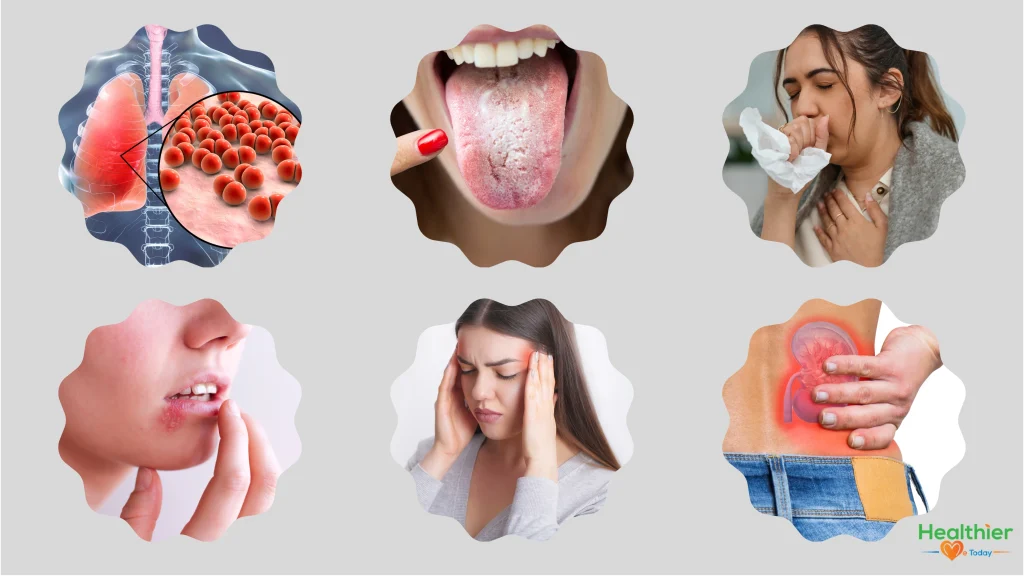
HIV infection compromises your immune system, making you significantly more susceptible to various conditions and specific types of cancer.
Some infections that are frequently associated with HIV/AIDS include:
- Pneumocystis pneumonia (PCP): PCP is a serious fungal infection that can lead to severe health issues. While it’s less common in the U.S. due to effective HIV/AIDS treatments, PCP remains the leading cause of pneumonia in individuals with HIV.
- Candidiasis: Candidiasis, often referred to as thrush, is another prevalent infection related to HIV. It results in a thick, white coating on areas like the mouth, tongue, esophagus, or vagina.
- Tuberculosis (TB): TB is a widespread opportunistic infection associated with HIV. Globally, TB is a significant cause of death among those with AIDS, although its occurrence in the U.S. has decreased due to the availability of HIV medications.
- Cytomegalovirus: Cytomegalovirus is a common herpes virus transmitted through body fluids such as saliva, blood, urine, semen, and breast milk. A healthy immune system keeps this virus dormant, but if it weakens, it can reactivate and harm the eyes, digestive system, lungs, or other organs.
- Cryptococcal meningitis: Cryptococcal meningitis is an infection caused by a fungus found in soil. It causes inflammation of the membranes surrounding the brain and spinal cord. This condition is linked to HIV.
- Toxoplasmosis: Toxoplasmosis is caused by the parasite Toxoplasma gondii, which cats mainly spread. Infected cats excrete the parasites in their feces, which can then infect other animals and humans. Toxoplasmosis can lead to heart disease, cause seizures if it spreads to the brain, and can even be life-threatening.
Cancers Common To Hiv/Aids
- Lymphoma: Lymphoma is a type of cancer originating in white blood cells. One of the earliest signs of this condition is the painless enlargement of lymph nodes, usually in areas like the neck, armpit, or groin.
- Kaposi sarcoma: Kaposi sarcoma is a tumor that forms in blood vessel walls. It typically appears as skin and mouth lesions and pink, red, or purple spots in individuals with lighter skin. Dark brown or black lesions may appear on darker skin tones. Kaposi sarcoma can impact internal organs, such as the lungs and parts of the digestive system.
Other Complications
- Wasting syndrome: If HIV/AIDS is not treated, it can lead to significant weight loss. Symptoms like diarrhea, weakness, and fever often accompany this weight loss.
- Neurological complications: HIV can lead to issues with the brain and nervous system, resulting in symptoms such as confusion, forgetfulness, depression, anxiety, and trouble walking. The neurological problems related to HIV can vary from mild changes in behavior and thinking to severe dementia, which can cause weakness and an inability to function correctly.
- Kidney disease: HIV-associated nephropathy (HIVAN) involves swelling and inflammation of the tiny filters in the kidneys. These filters remove extra fluid and waste from the blood, which is then excreted in urine. Kidney disease is more common in Black and Hispanic individuals.
- Liver disease: Liver disease is another serious complication, especially in those who also have hepatitis B or C.
Treatment of HIV
HIV/AIDS currently has no cure. Once someone is infected, their body cannot eliminate the virus. However, there are medications available that can manage HIV and help avoid complications. Anyone diagnosed with HIV should start taking antiretroviral therapy, commonly known as ART, regardless of the disease’s stage or any complications present.
ART typically consists of a combination of two or more medications from various classes, which is the most effective way to reduce the amount of HIV in the bloodstream. Many ART regimens combine multiple HIV medications into a single daily pill. Each class of drugs works differently to combat the virus.
The treatment strategy involves using medications from different classes to:
- Address potential drug resistance, known as viral genotype
- Prevent the development of new drug-resistant strains of HIV
- Suppress the virus in the blood as effectively as possible
Usually, a combination of two drugs from one class and a third from another class is employed.
The main classes of anti-HIV medications include:
- Non-nucleoside reverse transcriptase inhibitors (NNRTIs) deactivate a protein that HIV needs to replicate.
- Nucleoside or nucleotide reverse transcriptase inhibitors (NRTIs) are defective versions of the components HIV requires to reproduce.
- Protease inhibitors (PIs) render HIV protease inactive, a protein essential for HIV replication.
- Integrase inhibitors contain a protein called integrase that HIV uses to insert its genetic material into CD4 T cells.
- Entry or fusion inhibitors, which prevent HIV from entering CD4 T cells.
Conclusion: The Difference?
HIV symptoms in women are similar to those seen in men. Typically, the initial symptoms of HIV in women resemble flu-like signs. If the virus isn’t detected early or if proper treatment isn’t received, it can further compromise the immune system during the chronic phase of the infection. This progression can result in AIDS, which may lead to various opportunistic infections. These infections can manifest in the reproductive system or other body areas.
FAQ’s:
What is the highest rate of HIV in the United States?
The District of Columbia has the highest number of HIV diagnoses in the United States, with Maryland, Georgia, Florida, and Louisiana following next.
How many people in America have HIV AIDS?
Around 1.2 million people in the U.S. have HIV. However, many more are at risk of getting infected.
What are the early HIV symptoms in women?
HIV symptoms in women can manifest in various ways. Some common signs include fever, chills, and rashes. Women might also experience headaches, muscle and joint pain, and a sore throat. Other HIV early symptoms in females can include painful sores in the mouth, diarrhea, and unexpected weight loss. Swollen lymph nodes, especially in the neck, can also occur. Women may notice changes in their menstrual cycle, such as missed periods, heavier or lighter bleeding, severe PMS, and hot flashes.
How can HIV be transmitted from women to men?
HIV can spread from women to men during unprotected vaginal or anal intercourse, as well as through sharing needles. The female-to-male hiv transmission rate is between 0.005% and 0.1% per act. Additionally, a mother can pass HIV to her child during pregnancy, at birth, or while breastfeeding.
Can women get HIV from oral sex?
Women can contract HIV through oral sex, but the chances are pretty low. The risk increases if the person performing oral sex has sores in their mouth or bleeding gums.
What percentage of women in the USA have HIV?
Around 22% of individuals with HIV in the United States are women. Women from various ages, races, and ethnic backgrounds can contract HIV, but certain groups of women face a higher risk than others.
What are the chances of getting HIV from a girl?
The chance of contracting HIV from a female partner during vaginal sex is roughly 0.04% for each encounter. Certain factors, such as having other STIs or a high viral load, can raise this risk. However, if the partner receives treatment and has an undetectable viral load (U=U), the risk of transmission drops to zero. Using condoms and PrEP can lower the risk by more than 99%.
How common is HIV in heterosexual women?
In 2022, 15% of new HIV cases in the United States were found in women who said they got the virus through heterosexual contact. On a positive note, the overall number of new HIV infections from heterosexual contact has been going down.
Can lesbians pass HIV to each other?
Can lesbians get hiv and pass it on? Yes, the risk is relatively minimal. HIV can be transmitted through blood, vaginal fluids, or when sharing sex toys, mainly if there are any cuts, sores, or existing STIs. Using protection and properly cleaning sex toys can help lower the risk, along with getting tested regularly.
What percentage of HIV patients are straight?
In 2022, 22% of new HIV cases in the United States were linked to heterosexual contact. What gender is more at risk for HIV? The study comprised 15% of new cases in individuals assigned female and 7% in those assigned male at birth.
How do women contract HIV the most?
One of the main ways women get HIV is by having vaginal or anal sex with a male partner who is infected. Sharing needles and syringes can also spread the virus.
Why is AIDS more common in gay men?
What percent of gay men have AIDS? In 2022, around 739,200 gay and bisexual men in the United States were living with HIV, making up about 62% of all HIV cases in the country. The higher rates of HIV among gay men can be linked to various reasons, such as sexual behaviors, stigma, and discrimination. It’s important to note that not every gay man is at high risk for HIV, and many different factors can influence a person’s risk, no matter their sexual orientation.
