
Skin purging can be a frustrating and sometimes painful experience. However, there isn’t too much to worry about, as it is a natural reaction. After using a new skincare product, you may notice some acne or bumps appear. Your first instinct may be that the product is causing a bad reaction, but it’s the opposite! Let’s better understand what skin purging is, why it happens, and how to treat it.
The Difference Between Skin Purging and Breakouts
It is very important to know whether you are experiencing skin purging or a breakout. If you get the two mixed up, you may not get the right treatment, which will cause you unnecessary stress.
Here are a few vital differences between breakouts and skin purging:
- What are The Triggers?
- Skin Purging – This happens not long after using a new product with active ingredients that speed up cell turnover, like AHAs, retinoids, and BHAs. If you notice pimples and bumps after a few days or a week after starting a new product, then don’t worry as it is likely skin purging.
- Breakouts – These can happen at any time and age. Breakouts are often triggered by hormones, stress, poor diet, not washing your face or using a skin care product that clogs pores or irritates the skin.
- Where on the Body?
- Skin Purging – Shows up and affects areas where you usually experience pimples. If you often get pimples on certain parts of your face, like your T-zone.
- Breakouts – These can appear in new areas where you don’t usually break out, which may indicate an adverse reaction to a product rather than purging. It can appear on different parts of your face, which usually helps indicate what the cause is. If you are experiencing breakouts in places you do not often do, then this could be a warning sign of a reaction to a new product.
- What Do They Look Like?
- Skin Purging – Skin purging will not look as intense as a breakout will. Sometimes, the impurities are not very noticeable, but when they are, they’re usually smallish bumps, some with white heads. They will likely show up in your problem areas but last quicker than normal pimples and breakouts.
- Breakouts – Breakouts are often more painful, with larger and more inflamed pimples. The area around the breakout and pimples will be quite red and sensitive. These usually take longer to heal and can sometimes cause sores and scars.
- How Long Do They Last?
- Skin Purging – The cut-off period for skin purging is 4 to 6 weeks, and if you are experiencing breakouts after this timeframe then it may no longer be skin purging and the product may not be right for you.
- Breakouts – A breakout reaction to a product can last over a few weeks, so if your skin is not clearing and the pimples continue then you should consider that the new product might not be right for your skin.
What Causes Skin Purging?
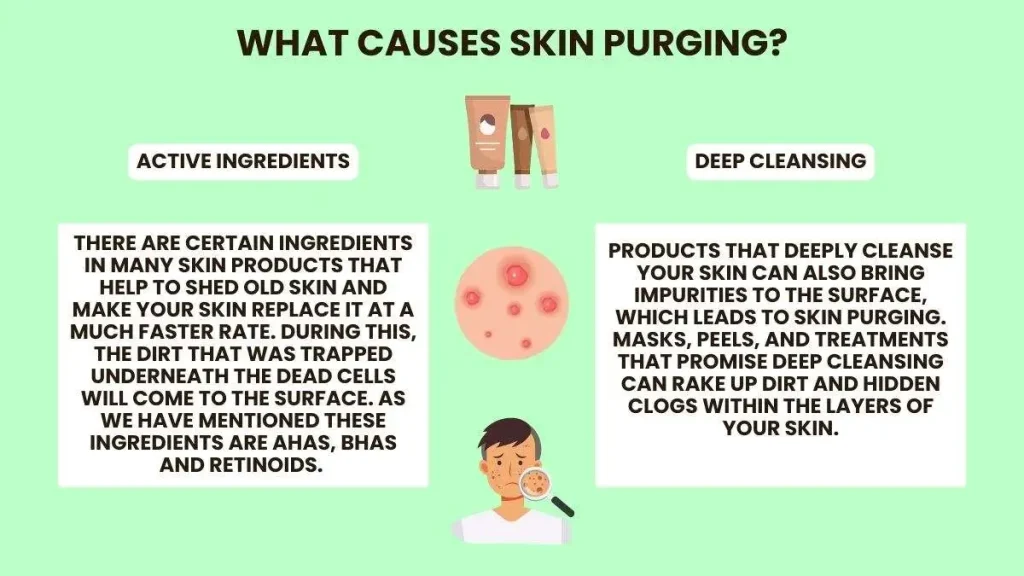
Skin purging happens when a new skincare product speeds up your skin’s natural exfoliation process. This means that all the impurities and debris hiding underneath your skin come out faster, which can cause temporary breakouts.
Here are 2 main causes of skin purging:
- Active Ingredients
There are certain ingredients in many skin products that help to shed old skin and make your skin replace it at a much faster rate. During this, the dirt that was trapped underneath the dead cells will come to the surface. As we have mentioned these ingredients are AHAs, BHAs and retinoids.
- Deep Cleansing
Products that deeply cleanse your skin can also bring impurities to the surface, which leads to skin purging. Masks, peels, and treatments that promise deep cleansing can rake up dirt and hidden clogs within the layers of your skin.
Choosing the Right Products
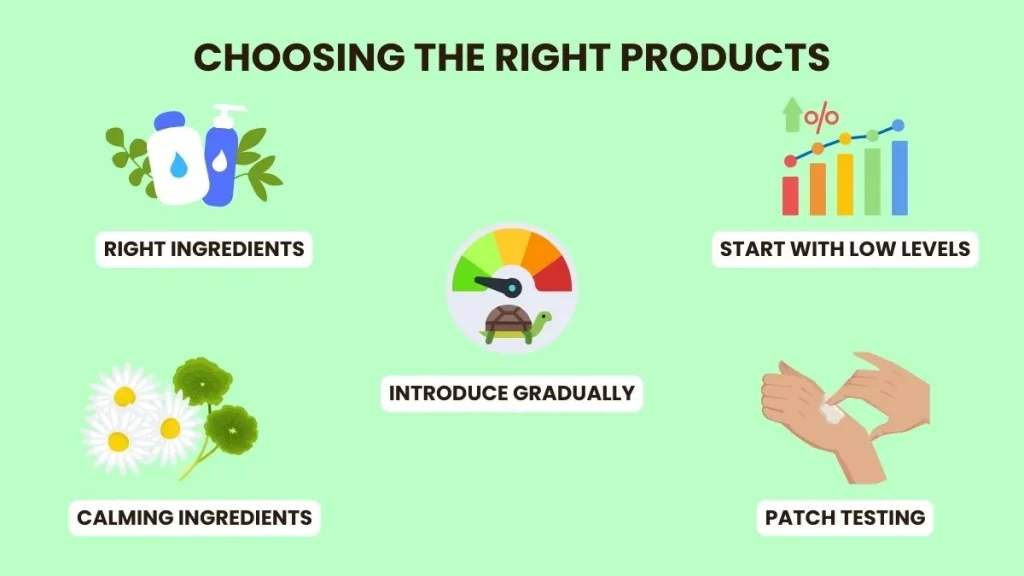
Selecting the right products can help manage and minimize skin purging.
Here’s how to do it:
- Ingredients – Opt for products with proven ingredients like retinoids, AHAs, and BHAs. These can improve skin texture and treat acne. Retinoids speed up cell turnover and improves collagen production, while AHAs and BHAs exfoliate the skin and clear clogged pores.
- Start slow – Begin with lower concentrations of these ingredients to ease your skin into the routine. Gradually increase the strength to reduce irritation.
- Introduce gradually – Add new products to your routine one at a time. This way, you can see how your skin reacts and avoid overwhelming it. Introducing products slowly helps you pinpoint which ones might be causing any adverse reactions.
- Calming ingredients – Look for products with calming ingredients like niacinamide, chamomile, and Centella Asiatica (cica) to soothe your skin. These ingredients can help with sensitivity, redness, irritation, and inflammation.
- Patch testing – Before using a new product make sure to do a patch test. Start by putting a small amount to a area and watch for any reactions over 24-48 hours. This helps you avoid a full-face reaction if your skin doesn’t agree with the product.
How to Treat Skin Purging
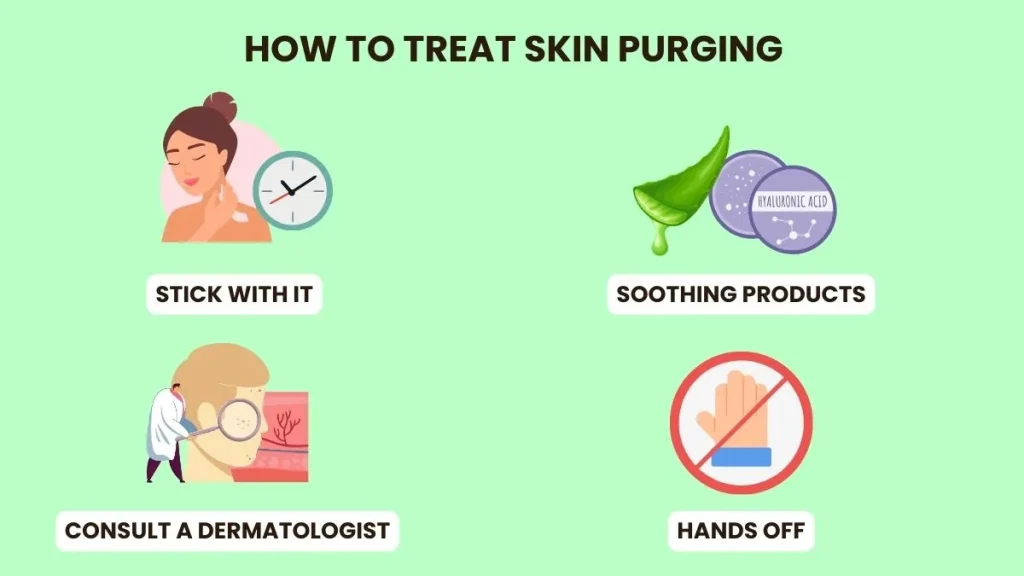
Stick with It
It might be tempting to stop using the product that’s causing the purge, but it’s important to keep going. Stopping can prevent your skin from adjusting and delay results. Remember, skin purging is a sign that the product is working to accelerate cell turnover.
Soothing Products
Use soothing and hydrating products to calm your skin. Ingredients like hyaluronic acid, ceramides, and aloe vera can help reduce irritation. These ingredients provide moisture and repair your skin barrier, which is crucial during the purging phase.
Hands Off
Avoid picking at your skin, popping pimples at your skin and touching your face too much. This can make breakouts worse and potentially cause scars. Picking at purging breakouts can introduce bacteria and cause further inflammation.
Consult a Dermatologist
If purging lasts longer than expected or gets worse, it’s a good idea to see a dermatologist. They can offer personalized advice and treatments. A professional can differentiate between purging and an adverse reaction to a product.
Building a Consistent Routine
Maintaining a consistent skincare routine is crucial, even during the purging phase.
Here are some important steps to include in your daily regimen:
- Gentle Cleansing – Use a gentle cleanser to help get rid of dirt, unwanted oil, and makeup without removing your skin’s natural moisture. Avoid harsh cleansers that can aggravate irritation.
- Hydration – Keep your skin hydrated with a good moisturizer that suits your skin type. Hydration helps maintain your skin’s barrier and reduces the risk of further irritation.
- Sun Protection – Always use sunscreen during the day. Active ingredients like retinoids and acids can make your skin more sensitive to the sun, which increases your risk of damage.
- Regular Exfoliation – While exfoliation is important, be careful not to overdo it. Stick to exfoliating 1-2 times a week to avoid over-exfoliating, which can lead to irritation and prolonged purging.
Conclusion
Skin purging can be a temporary but frustrating part of starting a new skincare routine. By understanding its causes, how long it lasts, and how to treat it, you can get through this phase more easily. Stick with your routine, use soothing products, and choose the right ingredients to support your skin through the process. Remember, if you have concerns, a dermatologist can always help. With patience and care, you’ll soon see the benefits of your new skincare regimen!
