
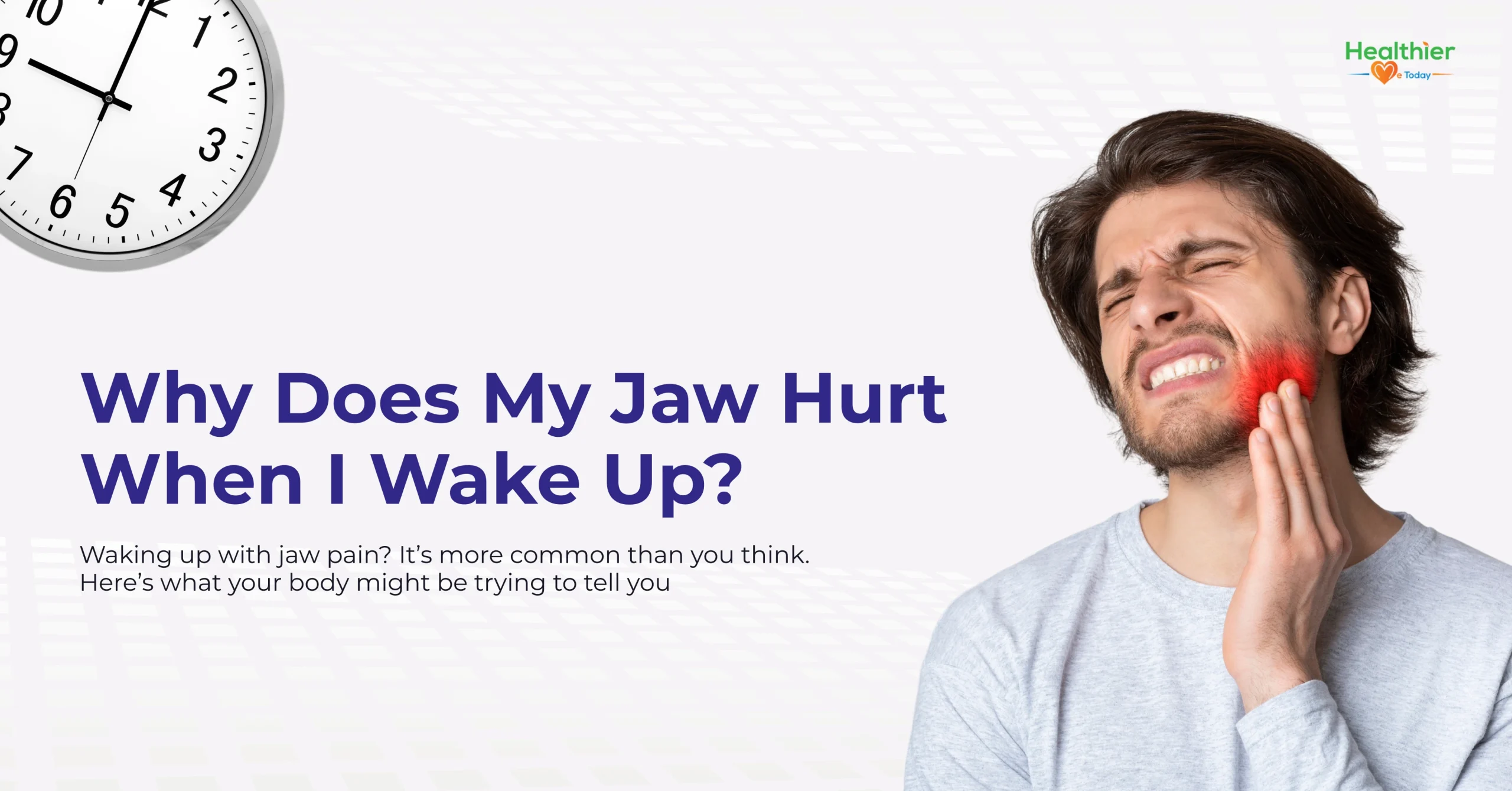
Have you ever woken up with a stiff jaw in the morning, or even a little pop when you yawn, or a tender feeling when eating your breakfast? This may leave you wondering, “Why does my jaw hurt when I wake up?”
And, you are not alone. Waking up with jaw pain is common. Studies show that up to 30% of adults have some kind of jaw discomfort in the morning. Although this can be concerning, there are several treatable causes. Jaw pain may be related to stress, sleep position, or even the placement of your teeth in the mouth.
In some cases, it may indicate an underlying condition, such as temporomandibular joint (TMJ) disorder, which affects approximately 10% of adults.
Let’s break down the eight most common causes of waking up with pain in jaw, what experts say, and how you can find relief.
Causes of Morning Jaw Pain
Understanding the primary triggers of jaw pain upon waking can help you find lasting relief and prevent future discomfort.

-
Teeth Grinding or Clenching (Bruxism)
Morning jaw pain often happens because the teeth are clenched or ground together during sleep, placing pressure on the jaw muscles without realizing it. This nighttime habit is called bruxism. Bruxism can slowly wear down the enamel on your teeth over time. This makes teeth more sensitive and can sometimes cause cracks or chips.
Common signs of bruxism include:
- A sore or tight jaw when you wake up
- Headaches in the morning
- Teeth hurting after waking up
- Pain or pressure in the ear that is not caused by an infection.
If you’ve ever wondered, “Why does my jaw hurt when I wake up?”, woke up and immediately searched “I woke up and my bite is off,” or noticed my jaw hurts when I wake up, it’s likely that your jaw muscles have been clenching during the night, a clear sign of bruxism that shouldn’t be ignored.
-
Temporomandibular Joint Disorder (TMJ or TMD)
The temporomandibular joint (TMJ) links your lower jaw to your skull. When this joint gets irritated, inflamed, or out of alignment, it can cause pain when you wake up. Many people also wonder, “Why does my jaw pop when I wake up?” This clicking or popping sound is likely the cause of TMJ tension or misalignment.
Research shows that TMJ disorders can develop from teeth grinding, poor posture, or injury.
Research shows that people with TMJ often experience:
- Pain or tenderness near the jaw, face, or neck.
- Clicking, popping, or grinding noises when opening the mouth.
- Limited jaw movement or stiffness in the morning.
If the pain persists or your jaw locks open or closed, experts recommend consulting a dentist or a TMJ specialist for an evaluation.
-
Poor Sleep Position or Jaw Misalignment While Sleeping
Sometimes, the problem isn’t your jaw but how you sleep. If you press your face into the pillow or sleep on your stomach, your jaw can stay in an uncomfortable position for hours.
Specialists indicate that this tension can put stress on muscles and joints, which may result in jaw stiffness in the morning. If your head or neck is not properly aligned, it might even cause your jaw to move slightly out of alignment during the night.
If you’ve ever experienced jaw out of alignment after sleeping, or felt jaw pain from sleeping, your jaw may have shifted slightly out of position during the night, a sign that your sleep posture could be leaving it out of alignment.
-
Misaligned Bite (Malocclusion)
If your top and bottom teeth don’t line up properly when you bite, your jaw muscles may need to work harder to stay balanced, even while you sleep. This is known as malocclusion. It can be something you’re born with due to genetics or how your jaw develops, or it can appear later in life from things like losing a tooth, a jaw injury, or habits such as thumb-sucking during childhood.
Research indicates that individuals with a misaligned bite or uneven teeth frequently experience jaw discomfort, stiffness, or headaches. Over time, this uneven pressure can irritate the jaw joint, sometimes leading to waking up with jaw pain.
-
Sinus Inflammation
When the sinuses are swollen or inflamed, fluid and pressure can build up in the sinus cavities located near the roots of your upper teeth and jawbone. This pressure can spread to the cheeks and jaw area, especially after sleeping, making your jaw feel sore in the morning. If you’ve noticed jaw pain when wake up, sinus pressure might be the reason.
-
Dental Problems or Oral Infections
Sometimes the source of your jaw pain isn’t the jaw itself; it could be your teeth or gums. Issues such as cavities, abscesses, gum disease, or impacted wisdom teeth can cause pain that radiates to the jaw.
Experts explain that infections or mouth inflammation can cause referred pain, meaning you feel discomfort in nearby areas such as your jaw, ear, or neck.
If you notice your jaw sore after waking up, it might be due to underlying dental issues or infections that cause pain in jaw when waking up.
-
Stress and Anxiety
Feelings and emotional states can directly affect the body’s physical condition, and your jaw is one of the first areas to show it. When stressed, you may unconsciously tighten your jaw or grind your teeth.
Stress and anxiety might be the hidden reasons behind your discomfort. These emotional triggers can cause muscle tension that leads to clenching, explaining why does my mouth hurt when I wake up.
-
Sleep Disorders (Like Sleep Apnea)
Another possible cause is an underlying sleep disorder, especially sleep apnea. People with sleep apnea often clench their jaw or grind their teeth as their body struggles to keep the airway open during sleep.
This repeated clenching during the night can cause tension and soreness that lingers into the morning. If you’ve ever thought, “wake up with jaw pain” or “jaw hurting in the morning,” it might be a sign of a sleep disorder.
Simple Ways to Relieve Morning Jaw Pain
You don’t have to live with jaw pain after waking up.
Here are simple, expert-backed ways to find relief:

- Relax tight muscles by applying a warm compress to your jaw.
- Gently massage the jaw area with your fingertips in small circles.
- Stretch your jaw by opening and closing slowly, or moving side to side.
- Avoid chewing gum or biting hard foods for a few days to give your jaw a break.
- Use a night guard if you grind your teeth.
- Staying hydrated throughout the day.
- Practice relaxation before bed, like meditation or light yoga.
Experts say combining these small habits can significantly reduce jaw tension and help your joints recover overnight. If you consistently follow these tips, you may notice a significant decrease in jaw sore after sleeping.
When to see a doctor or dentist
Occasional jaw soreness might not be severe, but persistent pain deserves professional attention.
You should see a healthcare provider if:
- The pain lasts more than a week or keeps coming back.
- Your jaw pops, clicks, or locks open or shut.
- You have trouble opening your mouth entirely.
- You also experience headaches, ear pain, or tooth sensitivity
- You suspect teeth grinding or TMJ disorder
If you have jaw problems, a dentist, TMJ specialist, or ENT doctor can check your jaw and recommend treatment. They might suggest using a mouthguard, doing physical therapy, taking anti-inflammatory medicine, or trying ways to manage stress.
Conclusion: Taking Steps Toward Relief
Waking up jaw pain can be uncomfortable and worrying, but in most cases, it’s treatable. Whether it’s grinding your teeth, sleeping in an awkward position, or stress, understanding the cause is the first step toward relief.

Experts say small changes, such as adjusting your sleep posture or using a night guard, can make a big difference.
With proper care and attention, you can wake up pain-free, ready to start your day with a relaxed jaw and a clear mind, without saying “I woke up with my jaw hurting”.
