Constipation affects around one in three children and is common among toddlers, kids, and teens. The good news is that a simple change in diet can make a significant difference.
Fiber helps improve digestion, softens stools, and supports a healthy gut. Adding more fiber rich foods for kids to daily meals can help improve digestion and overall health.
This article highlights the top 15 high fiber foods for kids, explains why fiber is essential for growing children, and provides tips to help meet the daily fiber intake for kids.
Why Fiber Matters for Children
Fiber is a kind of carbohydrate that the body cannot digest. Fiber moves through the digestive system, helping the food pass easily and supporting gut health.

There are two main types of fiber:
- Soluble fiber, which dissolves in water, helps regulate blood sugar and cholesterol levels. Food sources like oats, nuts, seeds, beans, apples, and carrots
- Insoluble fiber, which doesn’t dissolve in water, supports bowel health and is found in whole grains and vegetables.
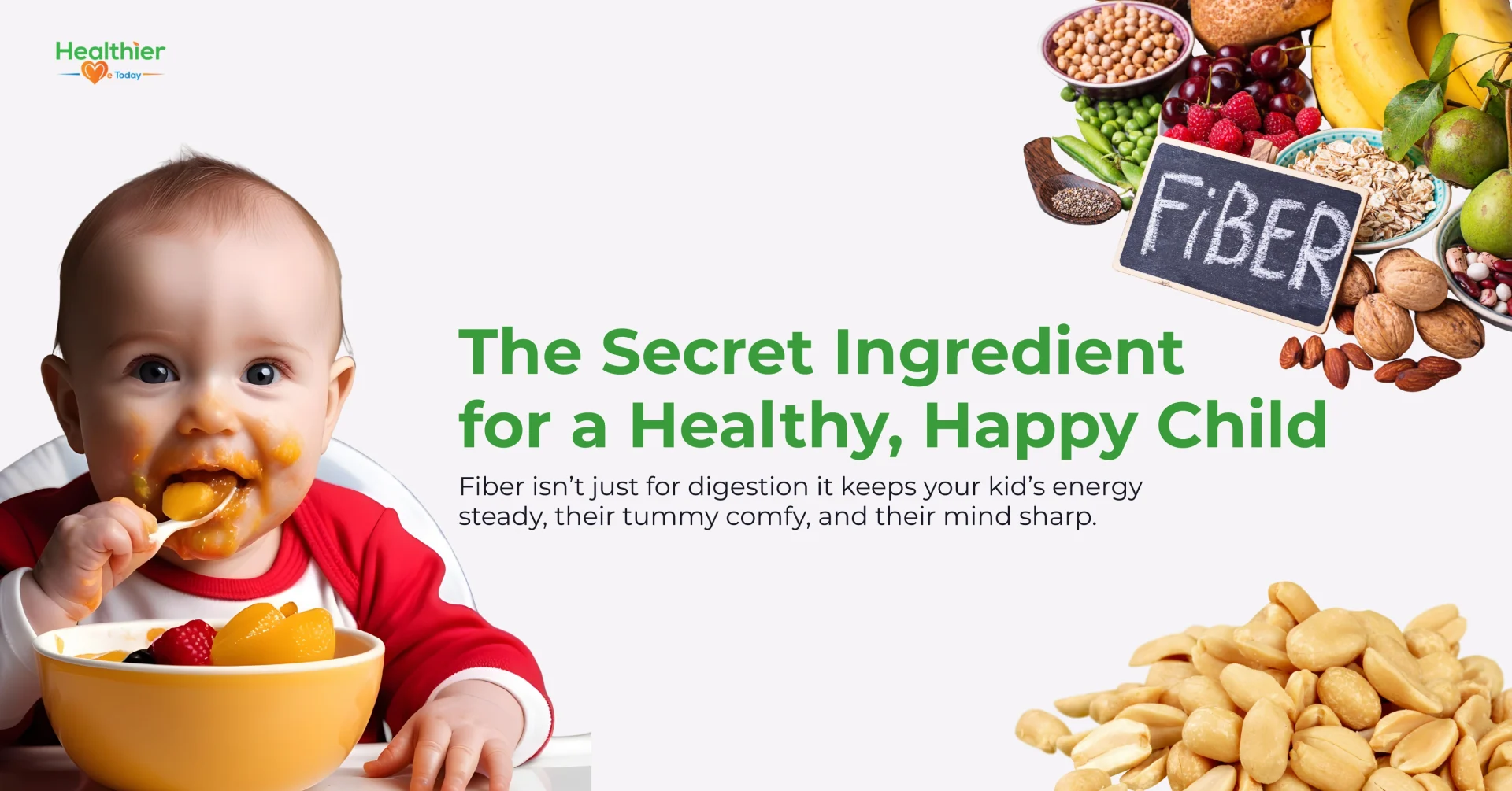
But fiber isn’t just for digestion, it helps your kid stay focused and provides steady energy throughout the day. It also strengthens the immune system, allowing kids to stay healthy and resilient.
Foods high in fiber for kids improve the following:
- Support immune health – A strong gut contributes to a stronger immune system. With a sufficient intake of fiber and a balanced gut microbiome, children are better equipped to fight infections and maintain their overall health.
- Maintain steady energy – high fiber foods for kids release energy slowly, to avoid sudden spikes and drops in blood sugar. This helps kids stay alert and focused in class and energetic throughout the day.
- Support healthy gut bacteria – fiber acts as food for good bacteria in the gut. These healthy bacteria help protect the immune system, improve mood, and maintain balance in the digestive tract.
- Helps absorb more nutrients from food – when digestion runs smoothly, the body can absorb vitamins and minerals more efficiently, supporting healthy growth, strong bones, and brain development.
How Much Fiber Do Kids Really Need?
Health experts recommend that for every 1000 calories a kid eats, they need 14 grams of fiber. Daily fiber intake for kids usually falls between 19 and 25 grams, depending on age.

Here’s a list of the top 15 fiber rich foods for kids that are not only nutritious but also kid-friendly:
- Apples – One medium apple offers around 4 grams of fiber, especially in the skin. They’re easy to pack for lunchboxes or enjoy as a quick snack.
- Pears – Pears offer around 5-6 grams of fiber. Pears are juicy, sweet, and packed with soluble fiber, which helps keep tummies happy and digestion smooth. They’re also very kid-friendly and easy to eat on the go.
- Berries – Half a cup of raspberries offers around 4 grams of fiber. Strawberries, blueberries, and raspberries are tiny yet mighty sources of fiber, offering a natural sweetness that complements their delicate flavor.
- Bananas – A banana offers around 3 grams of fiber. Bananas are convenient, full of prebiotic fiber, gentle on young tummies, and a good source of potassium.
- Avocado – Half an avocado offers around 5 grams of fiber. An avocado is a fantastic source of healthy fats and is packed with soluble fiber to support digestion. They work well on toast, in smoothies, or on their own.
- Oats – Oatmeal offers around 4 grams of fiber per cup (cooked). Oats are fiber champions that keep kids full longer. They can be made into warm porridge or added to muffins or smoothies.
- Whole-grain bread – 1 slice provides 2-3 grams of fiber. Whole-grain bread retains all the fiber from the grain, unlike white bread. Use it for sandwiches or toast to boost fiber intake.
- Popcorn – Three cups of air-popped popcorn offer around 4 grams of fiber. Popcorn is a fun, crunchy, fiber-rich snack when you avoid butter and salt, making it a perfect choice for movie nights or after-school munching.
- Carrots – 1 medium carrot offers 2 grams of fiber. Carrots are full of insoluble fiber, which helps keep digestion running smoothly. It can be enjoyed as a snack, either raw or cooked, as part of a meal.
- Sweet Potatoes – 1 medium sweet potato offers 4 grams of fiber. Sweet potatoes are not only high in fiber but also rich in minerals and vitamins. Oven-baked wedges are always a win with kids.
- Broccoli – 1 cup of broccoli offers 5 grams of fiber. Broccoli is like a fiber ninja, with small florets packed full of health benefits. Supporting digestion and providing essential vitamins for growing children.
- Lentils & Beans – ½ cup cooked lentils offers 8 grams of fiber, and ½ cup cooked beans offers 6-7 grams of fiber. Lentils and beans, which are rich sources of both soluble and insoluble fibers, along with protein, are excellent sources of nutrition. They can be added to soups, stews, or fried rice.
- Nuts & seeds – 1 tbsp of chia seeds offers 5 grams of fiber, and 1oz of almonds offers 3.5 grams of fiber. These are fiber bombs and a nice snack. Remember to keep nut portions small and choose unsalted varieties to limit your sodium intake.
- Peas – 1 cup of peas (chopped) offers 8 grams of fiber. Peas may be small, but they are rich in fiber. Peas can be steamed, boiled, or added to fried rice or pasta dishes.
- Cucumber – 1 cup of sliced cucumber offers 1 gram of fiber. Cucumbers are fresh and hydrating, making them perfect for raw snacks, salads, or sandwiches. Cucumbers may not be packed with fiber, but they’re an easy snack to give to kids, and they’re about 95% water, which helps fiber do its job.
Do not give nuts, raisins, popcorn, or seeds to a child under 3 years of age. This can be a choking risk [myhealth.alberta.ca].
Fun & Simple High-Fiber Snack Ideas for Kids
Getting kids to eat more fiber doesn’t have to be a chore or a struggle. Just add fiber in ways they will actually enjoy, like oatmeal topped with chopped fruit or tossing carrots or cucumbers into lunchboxes.

Like for example:
- Carrot sticks with hummus or peanut butter.
- Air-popped popcorn instead of a packet of chips.
- Whole-grain products instead of refined starchy foods like white bread or white rice.
- Adding melted cheese over broccoli still provides your child with valuable fiber and nutrients.
- Freeze a banana, mash it, and make a creamy “banana ice cream”.
These fun swaps and creative ideas are just a few ways to make the best fiber foods for kids more enjoyable and easy to include in their daily meals.
Importance of Hydration
Don’t forget about water! Fiber works best when kids drink enough water throughout the day. Encourage your kid to sip on water with every meal, instead of sugary drinks. Failing to consume fluids can lead to harder stools in your child, regardless of whether they are receiving sufficient fiber [healthhub.sg].
Signs your child may need more water:
- Dark yellow urine
- Dry lips or mouth
- Unusual tiredness or sluggishness
- Going to the bathroom less often
If your child is experiencing any concerning symptoms, please contact a healthcare professional right away.
Conclusion: Transform Your Kid’s Gut
A healthy gut makes everything work better, from digestion and focus to your child’s overall mood. Adding fiber-rich foods to their plate helps keep things moving smoothly while supporting energy and growth.
The most critical factors are variety, color, and consistency. Small, daily choices can create lifelong healthy habits. Begin by replacing one snack or side dish with a fiber-rich option, and you may notice improvements in your child’s digestion and energy levels.