
Bringing a new life into the world is an unforgettable moment that marks the start of an amazing road to parenthood. However, recovery is a marathon, not a sprint. Just as professional athletes prioritize healing after a major event, new mothers must acknowledge the importance of the postpartum healing stage.
Understanding Postpartum Recovery
The concept of “slow progress is faster” is more than a phrase; it is a fundamental fact about postpartum healing. The body goes through tons of changes throughout pregnancy and birth. So, it makes sense that it takes time to heal and regain strength. Instead of hurrying to reclaim your pre-baby figure, concentrating on slow, sustainable improvement will lead to much better long-term results.
Contrary to popular assumption, postpartum healing extends beyond the first few weeks following childbirth. It’s a year-long process of physical, emotional, and psychological recovery. This phase affects not only your body but also your thoughts and soul. Understanding and accepting the value of this yearlong journey is critical to your general well-being.
Tips for Healing Your Postpartum Self
Famous mothers flaunt their slender postpartum bodies merely months after giving birth. So, why can’t you get your pre-baby figure back as quickly? While it is natural to be uncomfortable with your postpartum figure, especially compared to what you see in magazines, it is also extremely important to keep it in mind.
It’s unrealistic to compare yourself to celebrities who hire personal trainers and chefs. Your body changes over time, and it takes a little while to return to your pre-pregnancy shape and size.
Here are a few healing methods to nurture and embrace the new you:
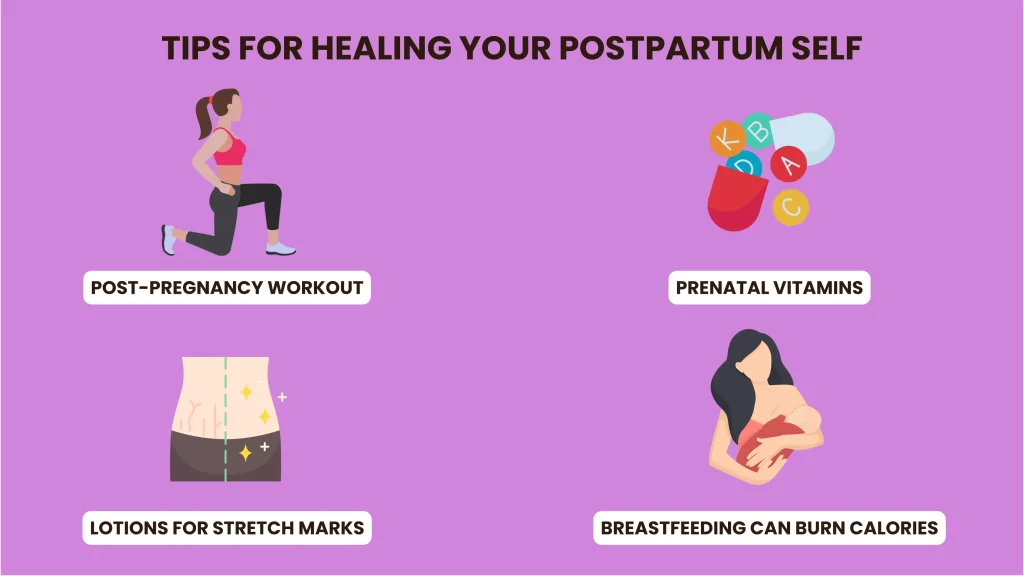
Breastfeeding Can Burn Calories
Breastfeeding your baby has various advantages, including protecting newborns from illness, giving perfectly balanced nourishment, and lowering your risk of breast and ovarian cancers. However, making breast milk demands energy. Nursing women should have an extra snack, like fruit or a cup of yogurt, to increase their daily calorie intake by 300. Even with all of this extra food, breastfeeding will help you lose baby weight, provided you maintain a healthy diet and avoid overindulging.
Post-pregnancy Workout
Along with gentle to moderate cardio, a postpartum workout should include strengthening your upper body muscles (which weakened during pregnancy). Core exercise is beneficial for all new mothers. During pregnancy, the abdominal muscles become so strained that they cannot be trained. Some women develop abdominis diastasis, which is a separation of the abdominal wall muscles. Exercises developed to address this condition can help to reunite the muscles.
Prenatal Vitamins
Don’t put away your prenatal vitamins just yet. Continue taking them, particularly if you are breastfeeding. You must replenish the nutrients you may have lost during pregnancy and support your body when it produces breast milk. Your doctor may also recommend that you take an iron supplement and vitamin C (to aid iron absorption).
Lotions for Stretch Marks
Slathering on lotions and oils to avoid stretch marks during pregnancy is always the best option. However, you may still acquire deep purple or pink lines. If you’re concerned about permanent scarring, there’s good news: retinoid lotions produced from vitamin A can help to reduce new stretch marks that are less than a couple of months old. However, you should act fast. Once the marks have faded to white, the retinoid cream will no longer be effective.
Eating for Postpartum Healing
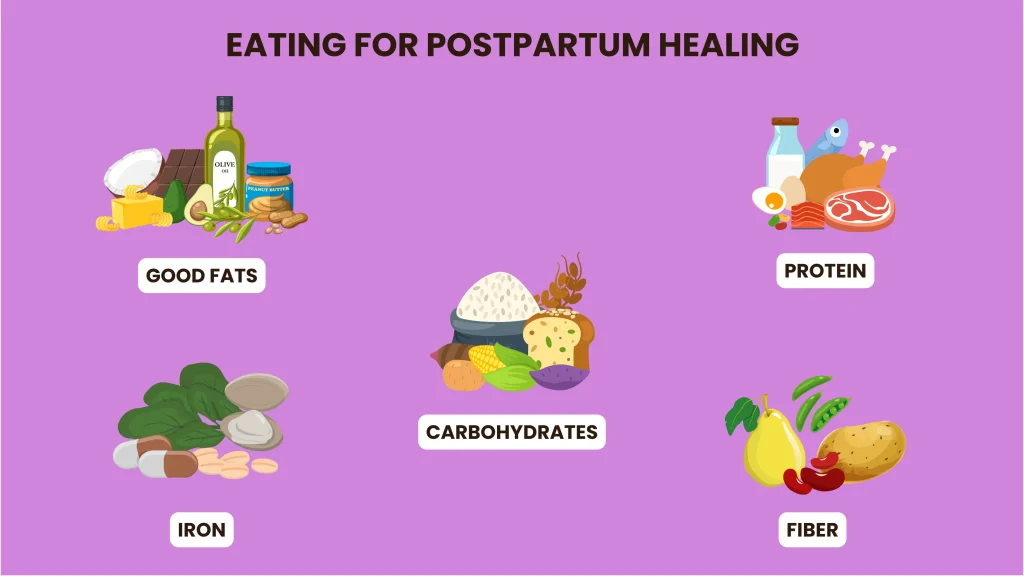
Foods that help in tissue regeneration and hormone balancing can be helpful during postpartum recovery.
Carbohydrates
Carbohydrates aid in healing while supplying energy. Here are some great options to up your intake of carbohydrates:
- Whole Wheat bread
- Whole wheat pasta
- Crackers
- Fresh fruit
- Dried fruit
- Yogurt
- Kefir
- Fresh vegetables
Protein
Protein contributes to the rebuilding and repair of tissues and muscles. But what are they? Take a look down below!
List of proteins you should be eating:
- Poultry
- Lean beef
- Fatty fish
- Eggs
- Cheese
- Nuts and seeds
Good Fats
Healthy fats help to absorb critical nutrients. Want some of the goods too?
Here are 5 options:
- Olive oil
- Avocados
- Walnuts
- Flax
- Chia seeds
Iron
Iron reduces fatigue and is essential for immune system function. (After birth, most mothers need to focus on iron). Below are some great sources of iron!
- Lean red meat
- Beans
- Lentils
- Oatmeal
- Fortified cereals
Fiber
Fiber helps to prevent and treat constipation, keeps you feeling fuller for longer, and regulates blood sugar levels. Now, there are lots to choose from, like:
- Beans
- Lentils
- Pears
- Avocadoes
- Apples
- Chia seeds
- Raspberries
- Potato with skin
- Almonds
- Peas
Hormone Balancing
Hormone balancing foods can help regulate your progesterone and estrogen levels. (After birth, progesterone levels plummet, and estrogen takes over).
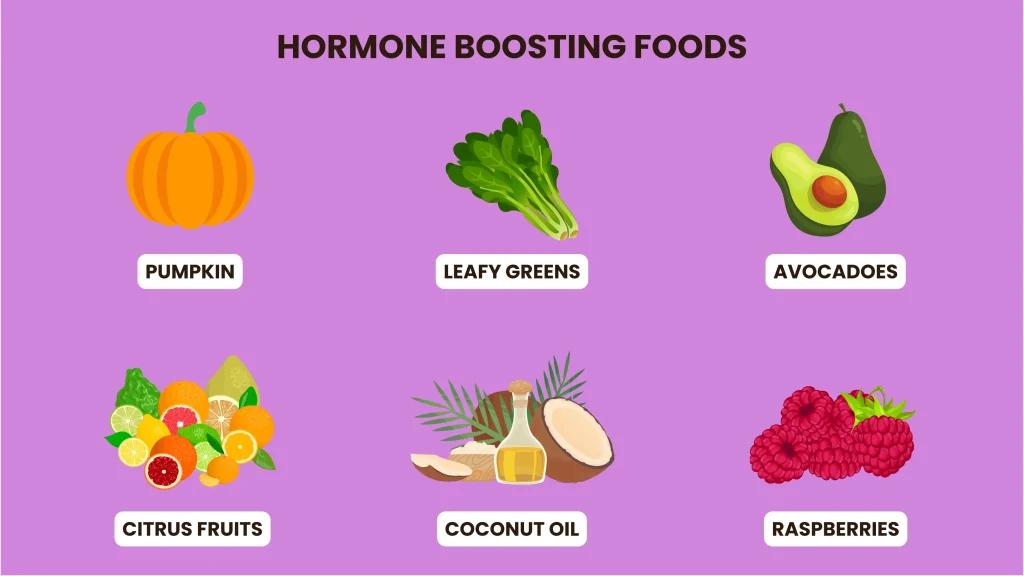
Progesterone Boost
Progesterone-boosting foods will help combat low postpartum progesterone levels. Fight it with these foods:
- Walnuts
- Almonds
- Pumpkin seeds
- Black beans
- Pumpkin
- Broccoli
- Leafy greens
- Brussels sprouts
- Cabbage
- Avocados
- Bananas
- Citrus fruits
- Seafood
- Dark chocolate
- Coconut oil
Estrogen Levels
Estrogen-balancing foods can help balance postpartum estrogen levels. Consume fiber-rich meals because excess fiber in your diet binds to estrogen, clearing it from the body. They are:
- Beans
- Lentils
- Pears
- Avocadoes
- Apples
- Chia seeds
- Raspberries
Hydration
Drinking water can help avoid headaches, constipation, and urinary tract infections. Furthermore, it has a significant impact on breastmilk production. Caffeine is considered safe. The American Academy of Pediatrics says 300 mg per day is safe for nursing mothers. The difficulty lies in the fact that each cup of coffee is unique. Starbucks beverages are typically higher in caffeine than store brands.
Ask for and Accept Help
Realizing you are responsible for another person can be frightening. New mothers experience anxiety for a variety of reasons, ranging from worry of harming the infant to a lack of breast milk production. Disrupted sleep and being overtired can exacerbate these sensations. The best thing you can do is accept help from your partner, family, and friends, even if they aren’t doing things precisely like you, and then rest and recharge while someone else looks after your infant.
Making Peace with the New You
Recognizing bodily changes as part of this incredible moment in your life is a vital step toward respecting the new you. It’s also common to experience emotional ups and downs when adjusting to parenthood. The responsibilities of keeping a little person alive, including frequent feedings, nighttime wake-ups, and dealing with loaded diapers, can be overwhelming. It is normal to feel exhausted, let down, frustrated, or unhappy in the days after childbirth as your hormone levels vary. Life after having a new baby will not be the same. Parenthood is a steep learning curve, but your new life will be exciting and full of lovely memories.
Conclusion
Taking time to heal, resting, and setting achievable goals are all essential components of any healthy postpartum journey. Light cardio, weight training, and getting your steps in will help you gradually rebuild your strength and put you on the right track to regaining your physique after having a kid. Making sure you have the correct nourishment is also important. Supporting your journey with the correct diet will help your body recover from pregnancy and leave you feeling refreshed to focus on the joys of being with your kid.
