
A pulmonary embolism (PE) occurs when one of your lungs’ arteries becomes blocked. Arteries are blood vessels that transport blood away from the heart and into the organs, muscles, and other tissues. The most common cause of the blockage is a blood clot that has migrated from a vein in the legs. PE can be life-threatening, but it is generally treatable.
The goal is to recognize and treat a pulmonary embolism as soon as the symptoms emerge. This article discusses it all!
What Is A Pulmonary Embolism?
A pulmonary embolism (PE) occurs when a blood clot forms in one of your lung’s blood arteries. This occurs when a clot from another part of your body (often your leg or arm) travels via your veins to your lungs. A PE reduces blood flow to the lungs, lowers oxygen levels, and raises blood pressure in your pulmonary arteries.
This situation is a medical emergency. Without prompt treatment, it can cause heart or lung damage, as well as death. Approximately 33% of persons with pulmonary embolisms die before receiving a diagnosis and treatment.
A pulmonary embolism can:
- Harm your lungs
- Put strain on your heart, leading to heart failure
- Depending on the size of the clot, it can be potentially fatal
How Common Is A Pulmonary Embolism?
Pulmonary embolism is among the most frequent heart and blood vessel illnesses in the world. It is ranked third after heart attacks and strokes. In the United States, over 900,000 people get PE each year.
Stages of Pulmonary Embolism
Pulmonary embolisms are divided into three types:
- Acute – It causes symptoms to arise suddenly.
- Subacute – This type of PE develops gradually over time, usually between 2 and 12 weeks. The signs are subtler, making them more difficult to detect. Subacute PE poses a larger risk of death than acute PE.
- Chronic – This type generates increasingly severe symptoms, including heart failure. This is when a little blockage remains in your body after an acute PE.
The Symptoms Of A Pulmonary Embolism
The initial symptoms are usually shortness of breath and chest aches that worsen when you push yourself or take a deep breath. If you have these symptoms, seek medical assistance immediately.
Quick treatment significantly minimizes the risk of mortality. The symptoms of a pulmonary embolism vary depending on the severity of the clot. Although most persons with a pulmonary embolism develop symptoms, some may not.
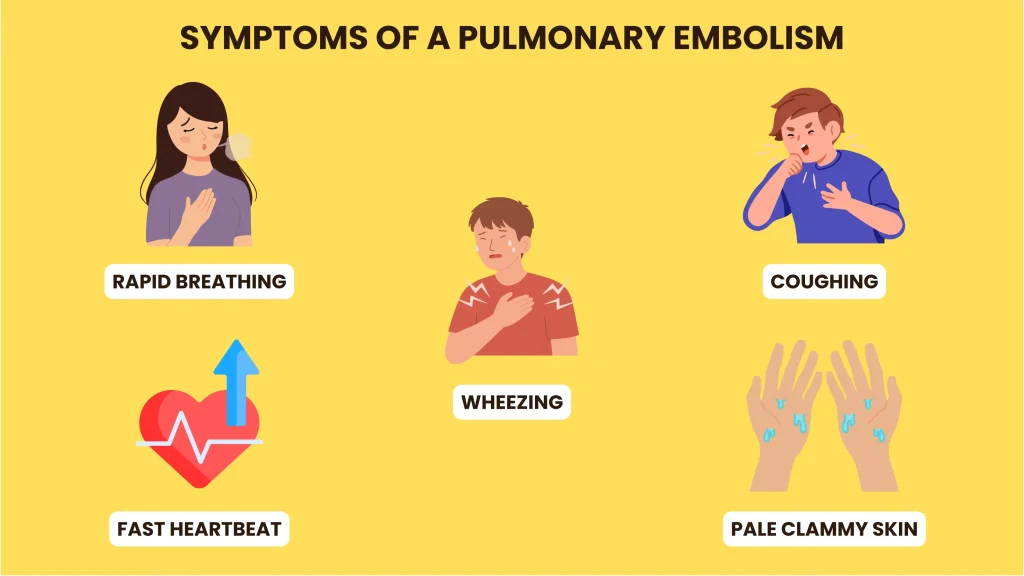
Symptoms may include:
- Sudden shortness of breath, whether you have been active or at rest
- Rapid breathing
- Wheezing
- Sharp pain in the chest, arm, back, shoulder, neck, or jaw that cannot be explained
- Cough with or without bloody mucus
- Skin that is pale, clammy, or blue
- Fast heartbeat
- Sweating excessively
- In certain cases, feeling worried, lightheaded, faint, or passing out
How Long Can PE Go Unnoticed?
Some patients experience modest symptoms that arise over a few days or even weeks. Over time, the symptoms worsen and draw your attention. However, some patients experience symptoms minutes (or even seconds) after a pulmonary embolism occurs.
What Causes A Pulmonary Embolism?
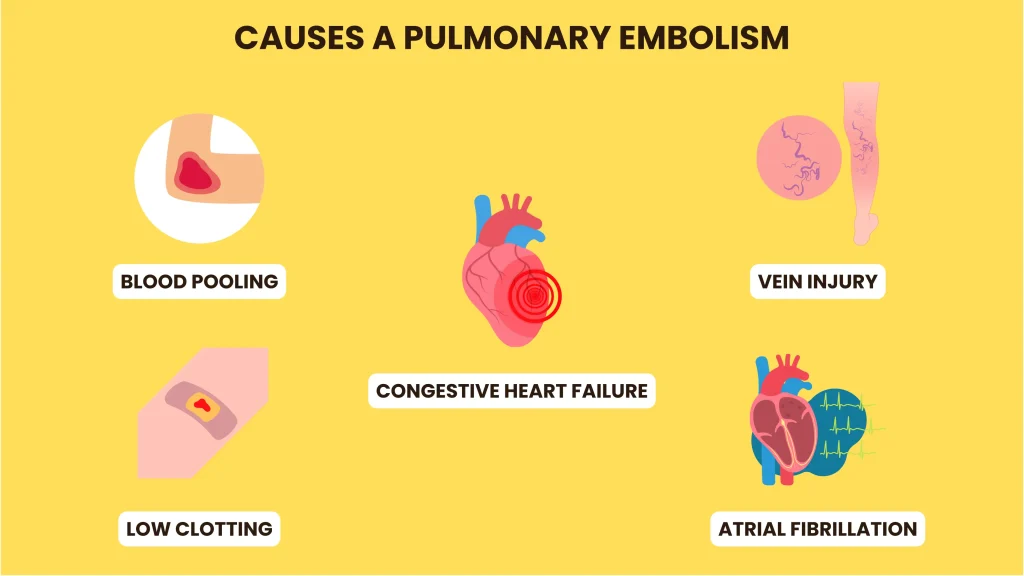
Pulmonary embolism causes include:
- Blood gathers or ” pools” in a certain area of the body. It typically pools after extended periods of inactivity, such as surgery, bed rest, or a long trip or aircraft ride.
- A vein injury could happen as a result of a fracture or surgery.
- Other medical illnesses include congestive heart failure, atrial fibrillation, heart attack, or stroke.
- An increase or reduction in blood clotting factors. Abnormal or low clotting factors can also develop from blood clotting problems.
Risk Factors
People at risk of developing this condition are those who:
- Have a blood clot in their leg known as deep vein thrombosis (DVT)
- While traveling by automobile, rail, or plane, you may be inactive for extended periods of time.
- Have recently experienced vein damage or injury, such as from surgery, a fracture, or varicose veins.
- Using hormonal contraception
- Have a blood clotting issue
- Has a family history of blood clots
- Currently smokes
- Have diabetes
- Have cancer
- Older than 60
- Had heart failure, a heart attack, or a stroke
- Have an overweight (BMI greater than 25) or obese (BMI larger than 30)
- Pregnant or have given birth within the past six weeks
- Received a central venous catheter through their arm or leg
How to Treat PE
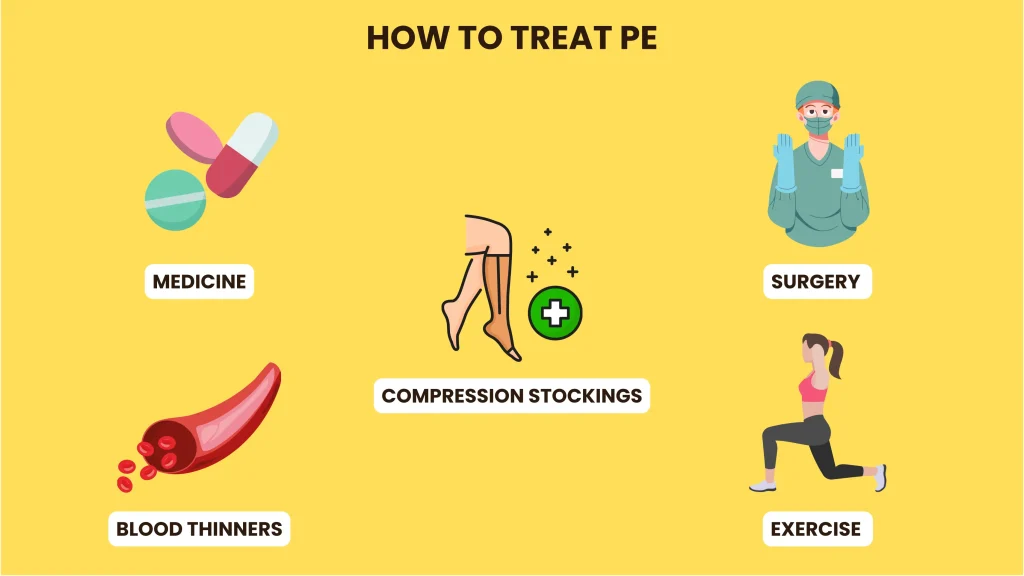
Treatment might include medicine, surgery, or other procedures:
- Medicine – Your treatment approach may include several different types of medicines. Blood thinners (anticoagulants) help to protect existing blood clots from growing larger and can prevent new ones from developing. Heparin and warfarin are commonly used to treat PE. Anticoagulant medications may be administered intravenously or subcutaneously.
- Surgery – A surgeon may remove the blood clot from your lung by inserting a tiny tube into blood arteries. This is normally only seen in life-threatening situations.
- Vein filtering treatment – You may have a filter implanted in your body’s major vein, which transports blood from your legs to the right side of the heart. The filter captures blood clots before they reach your lungs. This may be a possibility if you are unable to take blood thinners for whatever reason or if such medications are not effective in preventing clots.
- Continuing care – To avoid another clot, you will need to see your doctor on a frequent basis and adhere to your prescription regimen.
- Blood thinners – These medications, often known as anticoagulants, prevent blood clots. Your doctor might prescribe them while you are in the hospital for surgery. They may also suggest that you continue taking them for some time after you return home.
- Compression stockings – These are long socks that compress your legs. The increased pressure facilitates blood flow through your veins and leg muscles. Your doctor may suggest that you wear them for a bit following surgery.
- Get some exercise – Get out of bed and walk when you’re recovering from a long hospital stay or an illness that has kept you in bed. It will maintain the blood moving in your legs, preventing it from pooling.
Conclusion
A pulmonary embolism (PE) is a blockage in the arteries that supply blood to the lungs. It can happen when a blood clot forms in your leg (deep vein thrombosis) and travels throughout the body. Shortness of breath, chest pain, and passing out are all possible symptoms. If not treated promptly, this condition can be fatal. Doctors may prescribe blood thinners and anti-clotting drugs to treat it. In some situations, you may require surgery to remove the clot, or a filter may be implanted in your body’s main vein to prevent clots from migrating up your legs.
