

Walk or Run: Weighing the Benefits and Burning the Calories
Walking and running both provide excellent cardiovascular workouts. Neither is inherently “better” than the other. Your exercise and health goals determine the ideal choice for you. Running is the preferable option if you want to burn more calories quickly. However, walking can provide several health benefits, including maintaining a healthy weight. Learn more about the benefits, hazards, and different types of walking and running that can help you achieve your health goals.
Benefits Of Cardio Exercise
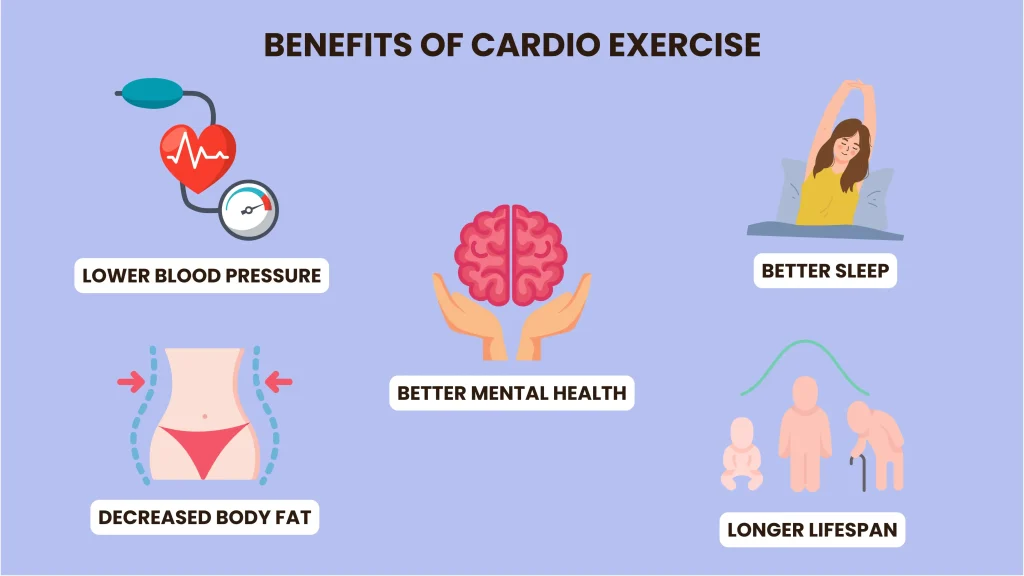
Cardiovascular exercise is a movement that increases your heart rate and causes you to breathe more deeply than usual.
There are numerous benefits of cardio, including:
- Longer lifespan
- Lower blood pressure
- Reduced risk of cardiovascular disease
- Better sleep
- Better mental health
- Decreased body fat
- Enhanced immune system function
Because of the numerous benefits, the Centers for Disease Control and Prevention recommends 150 minutes of exercise per week, such as walking. Alternatively, commit to 75 minutes of strenuous action, such as running or walking.
Benefits of Running
Running allows you to complete your prescribed exercise in around half the time, making it an excellent choice for those with limited time. Running may also be a smart alternative if you want to finish a race or improve your speed and agility on the sports field.
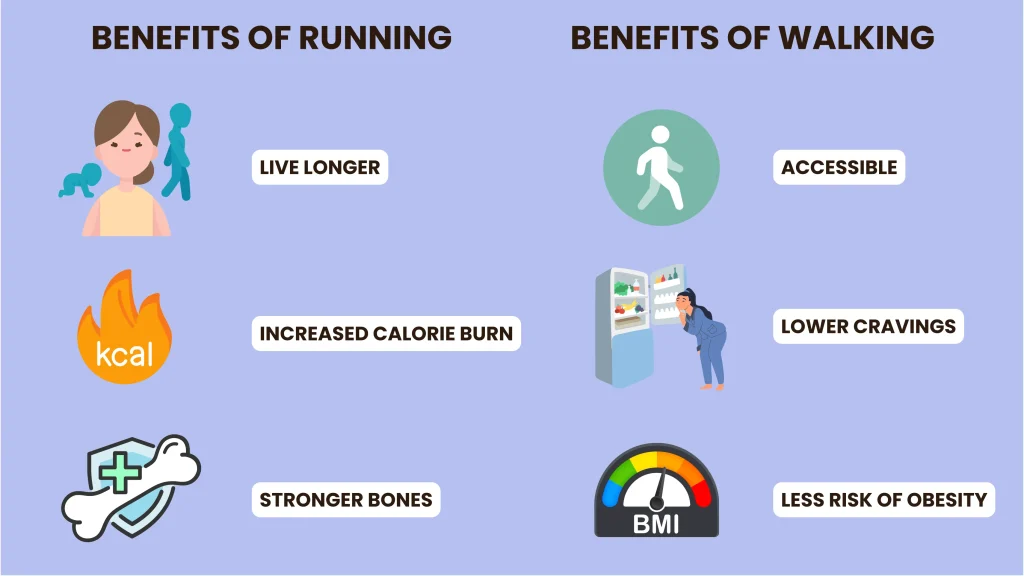
Running provides all of the benefits of cardiovascular exercise mentioned above, as well as the following:
- Live longer: According to one study, runners live an average of three years longer than nonrunners.
- Increased calorie burn: Running burns about twice as many calories per minute as walking.
- Stronger bones: While both running and walking increase bone density, evidence reveals that runners have stronger bones than those who stroll for exercise.
Benefits of Walking
Walking has the benefits of cardiovascular activities stated above, as well as these:
- Accessible: Most people can walk without any specialized training or equipment. Walking is often simple to begin, especially for those with lower fitness levels or mobility issues.
- It can lower cravings: Research has shown that people are less likely to crave chocolate after a 15-minute stroll.
- Helps Arthritis: Walking has been shown to reduce arthritis-related joint discomfort.
- It can lower the genetic risk of obesity: According to one study, those who walked on a regular basis reduced the impact of obesity-causing genes by half.
Speed And Power Walking vs. Running
Speed walking is defined as walking at a brisk pace of 3 mph or faster. Walking at a fast pace will raise your heart rate. Speed walking burns more calories per minute than walking at a normal pace. Power walking is often classified between 3 and 5 mph, while some power walkers achieve speeds of 7 to 10 mph.
Power walking burns about the same number of calories as running. Such as, one hour of power walking at 4.5 mph would be equivalent to one hour of running at the same speed. Pace training is an excellent workout method. Increase your speed for two minutes at a time, then slow down. Speed walking may not burn calories as quickly as running. To burn the same number of calories as running, you’d have to speed walk for longer. However, it can be an excellent workout to raise your heart rate, improve your mood, and increase your aerobic fitness level.
Walking With A Weighted Vest
Walking with a weighted vest may help you burn more calories. Wear a vest that weighs no more than 5 to 10% of your body weight. If you’re searching for an alternative way to reduce weight or tone your muscles, consider interval walking. Increase your speed for a specified amount of time before slowing down. Alternatively, try walking with lightweight dumbbells in each hand.
Incline Walking vs. Running
Incline walking means going upward. It can burn roughly the same number of calories as running. Walking uphill burns more calories than on flat ground. Find a hilly area or walk on an incline on the treadmill. To practice incline walking, gradually raise the angle by 5%, 10%, or 15%. If you’re new to incline walking, start slowly and work your way up to 15% inclination.
Is Walking Or Running Better?
Neither is necessarily better than the other. Which option is best for you will be determined by your goals and preferred activities. Walking and running are both beneficial to one’s physical and mental well-being. They allow you to exercise without the need for specific equipment, provide you time in nature (which has additional health advantages), and provide social chances if you walk with a friend or participate in races with a group. If you enjoy high-intensity exercise, running may be a good fit for you.
Running causes you to burn more calories per minute, potentially leading to faster weight loss. According to one study, while both running and walking promote weight loss, persons who ran lost more weight than those who walked. Walking is an excellent choice for those who are just getting started with their exercise program.
Most folks can walk, which is an excellent method to begin exercising. Because it is low-impact and less intensive than running, it is an excellent place to begin. Although running burns more calories per minute, walking too burns a lot of calories and can help with weight loss and control over time.
Potential Risks Of Running
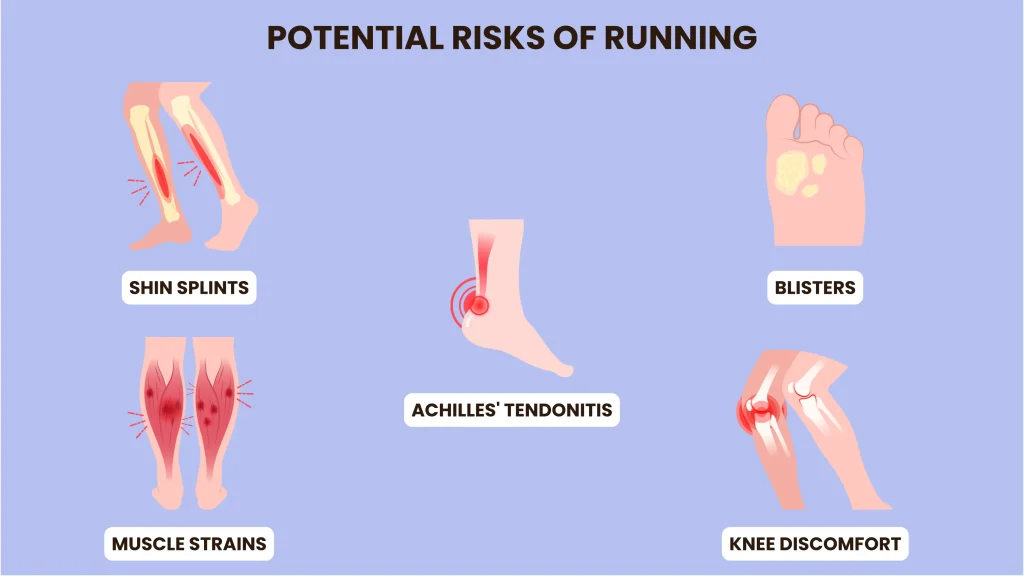
Running is a high-impact, strenuous exercise. Hence, it has a greater risk than walking, including:
- Achilles’ tendonitis
- Shin splints
- Blisters
- Muscle strains
- Knee discomfort
To avoid injury while jogging, start slowly and gradually increase your distance and speed. Increase the Intensity of Walking. If you’re already walking and want to enhance the intensity of your workouts, you have more options than just running.
These changes can help you boost up your workout without running:
- Walk an incline: Walking on a hill or an incline will significantly increase your calorie expenditure and exertion. Walking at a 10% slope will burn twice as many calories as walking on a flat surface.
- Wear a weighted vest or backpack: Carrying greater weight when walking burns more calories and requires more effort. Try rucking, a popular low-impact workout involving walking with a weighted rucksack.
- Increase your speed: Power walking provides a more intense workout than a stroll.
Conclusion
Walking and running are both effective types of cardiovascular exercise. The CDC advises at least 150 minutes of moderate-intensity physical activity per week for optimal health. Walking is a good alternative if you’re new to fitness and want to become in shape. If you want to reduce weight or burn calories faster, consider running. Always consult your doctor before starting a new fitness routine.
