
Have you ever felt overwhelmed by your own thoughts? Cognitive behavioral therapy (CBT) might be the key to unlocking a clearer, more balanced perspective. In CBT, you’ll partner with a mental health counselor (psychotherapist or therapist) in a series of sessions. Together, you’ll pinpoint and challenge negative or inaccurate thinking patterns, helping you view difficult situations more clearly and respond more effectively. Want to know more? This article explores how CBT works, who it can benefit, the core principles of CBT, and what to expect from this transformative therapy. Let’s start!
Understanding Cognitive Behavioral Therapy
Cognitive behavioral therapy offers a powerful approach to managing issues such as anxiety, eating disorders, and substance abuse. Here’s a closer look at what CBT entails and its guiding principles.
What is it?
Cognitive behavioral therapy is a type of psychological treatment that addresses mental health challenges, relationship issues, and problems related to alcohol and drugs. In some cases, it proves to be more effective than medication or other therapeutic approaches. Isn’t that amazing?
CBT teaches coping skills by examining how thoughts, beliefs, and attitudes impact feelings and actions. Imagine a world where that inner critic no longer holds sway… But what are the fundamental principles driving CBT?
Principles
CBT is one of the most popular, widely researched, and effective forms of talk therapy. The core principle is that our thoughts, emotions, and behaviors are linked! Our thoughts and perceptions cause us to act a certain way. This therapy aims to teach people how to identify and recognize negative thought patterns. If you acknowledge them, you have the power to change them! It can lead to positive and lasting changes in how we think, feel, and behave.
Techniques and Exercises
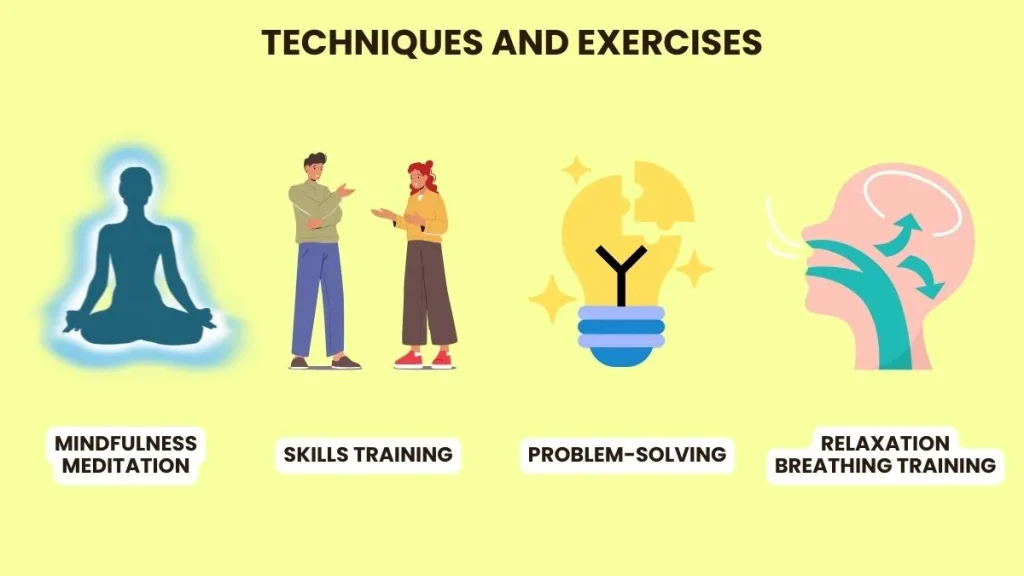
Cognitive strategies are effective tools for enhancing both learning and personal growth. They include repetition, organizing new language, summarising meaning, guessing meaning from context, and using imagery for memorization. Let’s take a better look at the techniques and exercises!
- Activity Scheduling: This technique is used for issues like depression. This technique helps people engage in behaviors they ordinarily would avoid due to depression, anxiety, or other obstacles.
- Graded Exposure: Exposure is designed to reduce anxiety and fear through repeated contact with what is feared, like public speaking or fear of heights.
- Successive Approximation: Successive approximation is a cognitive behavioral therapy exercise that helps people tackle complicated or overwhelming goals.
- Mindfulness Meditation: It’s a cognitive behavioral therapy exercise that helps people disengage from harmful ruminating or obsessing and learn to connect to the present moment.
- Skills Training: This exercise aims to remedy skills deficits. It involves modelling, direct instruction, and role-plays.
- Problem-Solving: Exercises that solve problems help find solutions, which reduces stress and improves mental health.
- Relaxation Breathing Training: It’s designed to help people reduce anxiety symptoms, such as shortness of breath, rapid heart rate, dizziness, etc.
Applications for Different Conditions
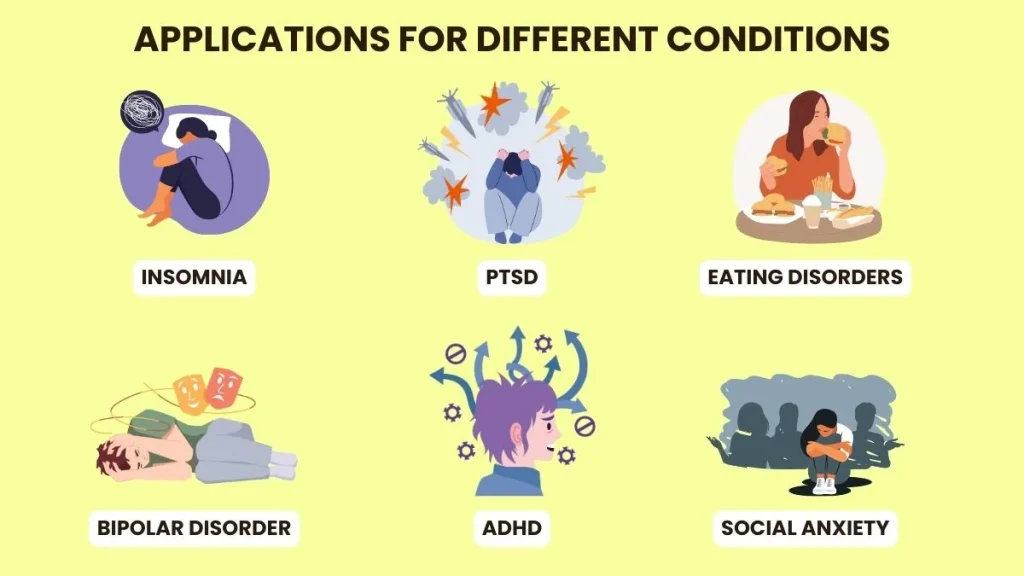
Did you know that CBT can be used for Insomnia, PTSD, eating disorders, bipolar disorder, ADHD and social anxiety? Take a look at how it’s applied and how it can offer relief!
Insomnia
Insomnia is a common sleep disorder that can make falling or staying asleep difficult. Cognitive behavioral therapy (CBT) can effectively treat long-term sleep problems like insomnia, as it helps you identify the thoughts and behaviors that contribute to your sleep problems. Unlike sleeping pills, CBT addresses the root causes of your insomnia.
This treatment will include keeping a detailed diary of your sleep for about two weeks. This will allow your doctor to treat the issue.
PTSD
Post-traumatic stress disorder (PTSD) is the aftermath of a traumatic event. Now cognitive behavioral therapy can be a very powerful tool to treat and manage PTSD by addressing thoughts and memories related to trauma.
This therapy guides patients to do the following:
- Process traumatic experiences
- Challenge unhelpful beliefs
- Develop coping strategies
CBT is known to help people like you regain control over your life!
Eating Disorders
Are you struggling with eating? CBT has shown great results for eating disorders like bulimia and anorexia. Want to know how? This therapy changes negative thoughts about food, weight, and body image. It also encourages healthy eating habits, helps with stress-coping techniques, and builds confidence. This, in turn, changes your relationship with food and your body!
Bipolar Disorder
According to the Association for Behavioral and Cognitive Therapies (ABCT), bipolar disorder affects more than 2% of adults worldwide, which is more than 150 million people. It’s characterized by severe shifts in energy, mood, and ways of thinking that can make daily functioning difficult. CBT for bipolar disorder is based on the idea that changes in mood and thinking during depressive and manic episodes can influence behavior.
Here is how CBT can help patients with bipolar disorder:
- Manage mood swings
- Develop strategies to control emotions
- Help with coping skills
- Promote better thinking patterns
ADHD
Most psychologists and psychiatrists recommend cognitive therapy for adults with attention deficit hyperactivity disorder (ADHD). CBT aims to lessen the inattention and impulsivity caused by ADHD by changing the way a person thinks and reacts. These sessions are typically done in groups and may need 6-14 sessions to work its magic.
Social Anxiety
There is this myth going around that social anxiety is nothing but a little shyness. But it’s more than that! It’s a mental condition that needs professional treatment as it involves extreme and persistent feelings of worry, nervousness, and dread. These feelings appear in social situations or at the mere thought of social situations. Isn’t that awful?
You can do something about social anxiety! The most effective treatment approach depends on your unique symptoms and therapy needs. But cognitive behavioral therapy (CBT) is very helpful when it comes to excessive fears and the anxiety you feel because of social anxiety.
Benefits of CBT
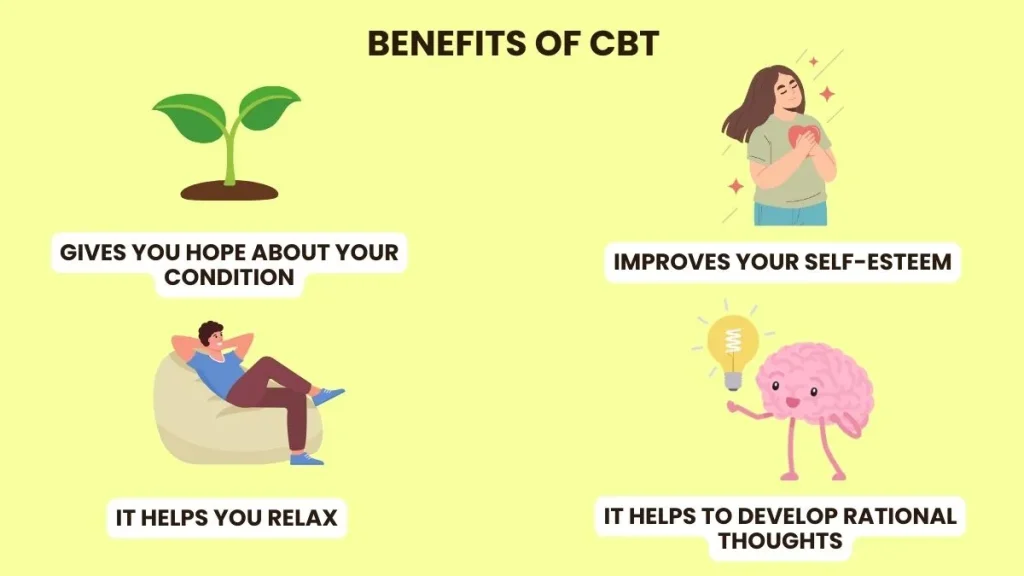
Cognitive behavior therapy has many benefits over other forms of treatment when it comes to treating mental health conditions.
Here is a breakdown:
-
It gives you hope about your condition.
-
Improves your self-esteem.
-
It helps you relax.
-
It helps to develop rational thoughts.
Conclusion
Cognitive behavioral therapy is more than a treatment. It’s a tool that can reshape your life! It can change the way you think, eliminate negative patterns, and improve your mental health.
Activity scheduling, exposure, meditation, skills training, problem-solving and breathing exercises can help you both manage conditions and grow personally. If you have wanted to take control of your life, CBT might be the answer you have been looking for. Here is to your journey towards a balanced perspective and improved mental well-being!
