
Imagine lying in bed for a few hours and discovering a painful sore that could take weeks or even months to heal. This is extremely common! Luckily, there are treatment options and ways to prevent pressure ulcers. Let’s learn more about it and work our way down to how to treat them.
What are Pressure Ulcers?
It’s a decubitus ulcer that causes the skin to tear due to prolonged or consistent pressure on a specific body part. But it has other names, too. They include pressure ulcers, pressure sores and bedsores. This condition decreases the blood supply, which can lead to tissue damage and death.
Now, it typically forms on the skin that covers bony regions. Decubitus ulcers are most commonly found in the following areas:
- Hips
- Back
- Ankles
- Buttocks
This condition is widespread among the elderly and persons with limited mobility. Infections that go untreated can spread to the blood, heart, and bones, posing a life-threatening risk. However, it’s crucial to understand that bedsores can be cured. An individual’s outlook is determined by a variety of factors, including underlying medical issues and the stage of the ulcer. This is discussed later in the article. Let’s take a look at it’s symptoms!
Symptoms of Pressure Ulcers
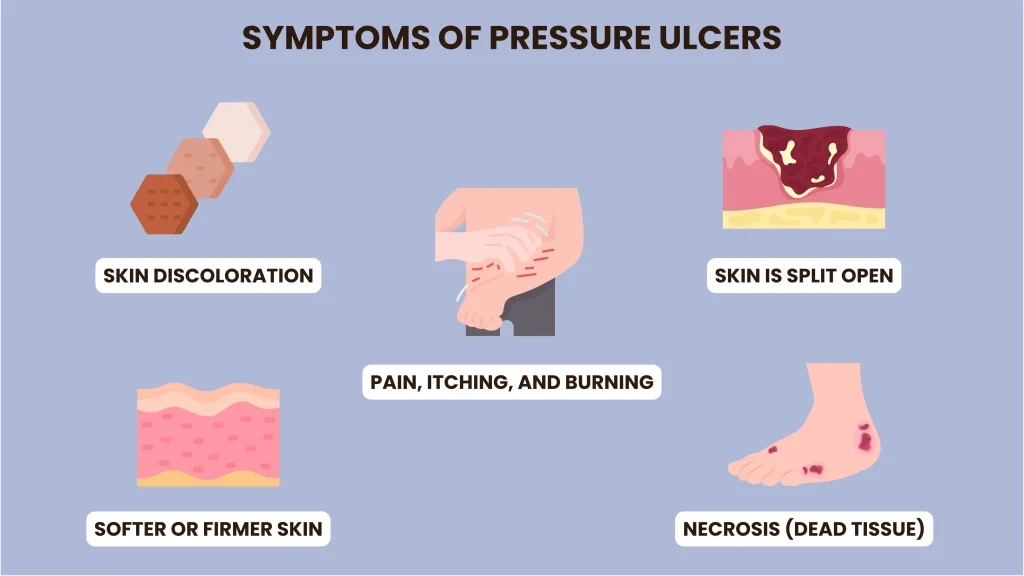
Depending on the stage, you could have one of the following:
- Skin discoloration
- Pain, itching, and burning in the affected area
- Skin is split open
- Skin that is softer or firmer than the surrounding skin
- Necrosis is dead tissue that appears black
The sore may potentially be infected. The symptoms of infection include:
- Redness or discolouration around the sore
- Pus or green-coloured discharge
- An unpleasant odor
- Fever
Causes of Pressure Ulcers

Prolonged pressure is the primary cause of a decubitus ulcer. Lying on a specific portion of your body for an extended amount of time causes skin breakdown. These forms of lesions are especially prevalent around the hips, heels, and tailbone.
Other factors that enhance the likelihood of developing a bedsore include:
- Poor circulation
- High levels of moisture
- Skin irritants, such as pee and excrement
- Friction, such as when a person is confined to bed and sheets are tugged from under them
Risk factors
You may be more likely to get decubitus ulcers if you:
- Are confined to bed after surgery or illness
- Cannot move or change positions on your own, whether resting in bed or seated in a wheelchair
- Are over 70 years old, as older persons are more prone to have frail skin and mobility issues
- Smoke
- Have obesity
- Inadequate nutritional intake may have an impact on skin health
- Have urinary or bowel incontinence
Have chronic conditions that can impede blood circulation or impair your mobility, such as:
- Diabetes
- Atherosclerosis, or artery hardening
- Heart failure
- Kidney failure
- Parkinson’s disease
- Multiple sclerosis
Stages of Pressure Ulcers
Stage 1 Pressure Ulcers: Early Symptoms and Discoloration Explained
The skin is not split, but it is discolored. If you have a light complexion, the area may appear to be red. If you have a dark complexion, the discoloration may range from blue to purple. For example, if you have a light complexion, pressing on a sore may cause it to turn red rather than lighten. The sore will remain red for at least 30 minutes.
It may also be:
- Feels warm to the touch
- Swollen
- Becomes painful
- Itches
- Burning sensation
Stage 2 Pressure Ulcers: Symptoms, Blisters, and Treatment Options
A break in the skin exposes a minor sore or cut, which may ooze pus. The sore may also resemble a blister filled with fluid. It affects both the first (epidermis) and second (dermis) layers of skin. The ulcer stings and the skin around it may be discolored.
Stage 3 Pressure Ulcers: Deep Skin Damage, Crater-Like Sores, and Treatment
The ulcer is considerably deeper in the skin and affects the fat layer. You should be unable to see bones or tendons. The sore resembles a crater and may have a nasty smell.
Stage 4 Pressure Ulcers: Severe Tissue Damage, Bone Exposure, and Infection Risks
This ulcer is extremely deep and affects multiple tissue layers, possibly involving the bone. There is an abundance of dead tissue and pus. At this stage, infection is likely.
You may see:
- Muscle
- Bones
- Tendons
- Joints
Unstageable
Sometimes, it is impossible to determine the depth of a sore or the degree of tissue damage that has occurred. This makes it difficult to properly evaluate and stage an ulcer. This could be owing to the presence of a hard plaque called an eschar within the sore.
The sore may look as follows:
- Tan
- Brown
- Black
Your doctor may need to remove the slough to establish the true extent of the ulcer. Additional imaging or surgical assessment of the area may be necessary.
How to Treat Pressure Ulcers

The stage and condition of your ulcer will determine treatment options. Repositioning periodically and keeping the region clean, dry, and free of irritants are critical for promoting recovery.
Treatment can include:
- Antibiotic cream
- Oral antibiotics
- Intravenous antibiotics
- Local wound care, with particular cleaning and dressing instructions
- Using specific bandages to remove dead tissue
- Medication to alleviate or decrease any discomfort
- Debridement eliminates dead or infected tissue
- Repositioning regularly
- Reduce friction and moisture in the location
- Using special off-loading cushions to relieve pressure on the painful
- Surgery
Stages 3 and 4 ulcers are more likely to necessitate surgical debridement and negative pressure wound management. Chronic deep ulcers can be difficult to treat.
Conclusion to Pressure Ulcer Treatments
Your healing process is determined by the stage of your ulcer. Early treatment minimizes the probability of life-threatening consequences, such as infection. Later stages typically necessitate more intensive therapies and lengthier recovery durations. To lessen the risk of recurrence, your healthcare expert may recommend that you change your diet and exercise routine.
