
Sexual contact can spread a wide range of infectious organisms, including small viruses, germs, and parasites, as well as visible insects like lice. Some illnesses can be transmitted through sexual contact but are usually spread in other ways, which is why they are not always classified as Sexually Transmitted Diseases (STDs). However, STDs and Sexually Transmitted Infections (STIs) are quite common. In the United States, around 25 million new cases of STDs arise each year, with over half of the new cases occurring in young adults aged 15 to 24.
What are the types, and what are the symptoms? This article discusses everything you need to know. Let’s start
What are Sexually Transmitted Diseases?
Sexually transmitted infections (STIs) are what cause sexually transmitted diseases (STDs). They are distributed primarily through sexual contact. STIs are caused by bacteria, viruses, or parasites. A sexually transmitted infection can spread from person to person by blood, sperm, vaginal, and other bodily fluids. Sexually transmitted infections can spread through methods other than sexual contact. For example, STIs can be transmitted to infants during pregnancy or childbirth. STIs can also be transmitted through blood transfusions or sharing needles.
Types of STDs (Sexually Transmitted Diseases):
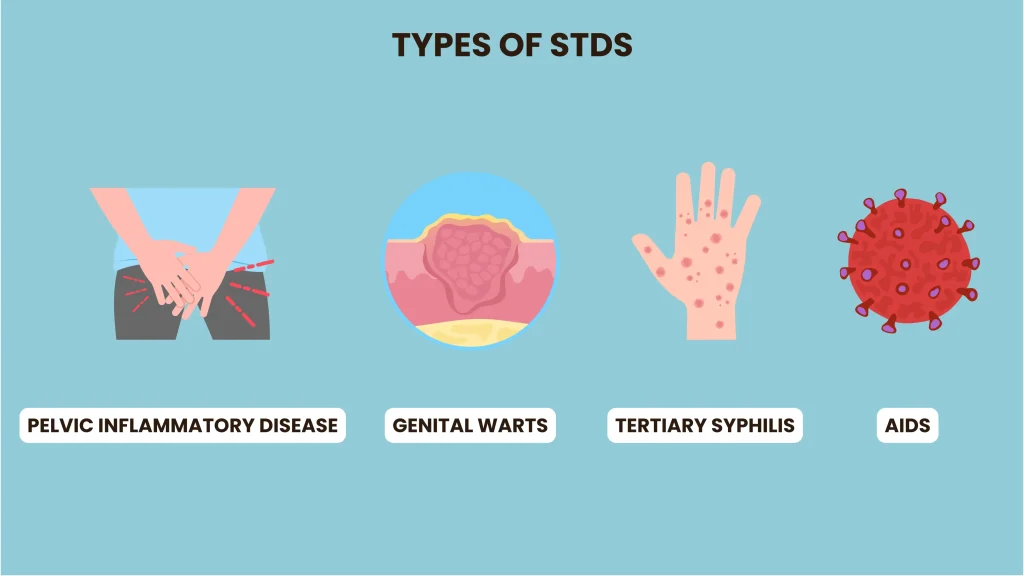
While the list of STIs is somewhat long, there are fewer STDs. They range from pelvic inflammatory disease (PID), which is caused by STIs such as chlamydia and gonorrhea, to certain types of cancer caused by human papillomavirus (HPV).
Pelvic Inflammatory Disease
Common Sexually Transmitted Diseases (STDs) like gonorrhea, chlamydia, and trichomoniasis can cause Pelvic Inflammatory Disease (PID) if left untreated. However, not every incidence of PID is caused by an STD; other bacterial infections can also be responsible. A reported lifetime diagnosis of PID affects over 2.5 million women in the United States.
Even though infections of the female reproductive system, including those caused by STDs, are diseases, some people never show any symptoms. If PID is identified early enough, antibiotics can successfully treat it. However, they will not address any potential fallopian tube scarring caused by the infection.
Tertiary Syphilis
STIs are the initial stages of syphilis, a very rare infection. One or more small, round sores on the mouth, anus, or genitalia are the initial signs of the illness. Syphilis will progress to the latent stage, which has no symptoms if treatment is not received. But from this site, about 25% of cases of tertiary syphilis will arise; this condition develops 10–30 years after the initial infection.
Penicillin injections can cure tertiary syphilis and remove germs from the body, but they cannot reverse the damage that has already been done. Of course, additional drugs and therapies can be required if the illness causes problems with vital organs like the heart.
Genital Warts
Some low-risk HPV strains can produce genital warts. These skin-colored or white blemishes appear on the genitals or anus, and over 350,000 people get them annually. They are treatable but not curable because the virus that causes them may persist. (In certain circumstances, HPV resolves on its own.) Genital warts might go away on their own, but they can also resurface. If you want them eliminated, you have several alternatives, including freezing or burning them, as well as administering a chemical cream or liquid.
AIDS
HIV, a severe Sexually Transmitted Disease (STD), can weaken the immune system, increasing the risk of other infections or cancers. With modern medications, many HIV patients can live long, healthy lives. However, if left untreated, HIV can progress to AIDS, severely compromising the immune system and making the body vulnerable to serious illnesses. There is currently no cure for AIDS, and due to the variety of diseases that can develop from a weakened immune system, life expectancy without therapy is roughly three years.
Symptoms of Sexually Transmitted Diseases
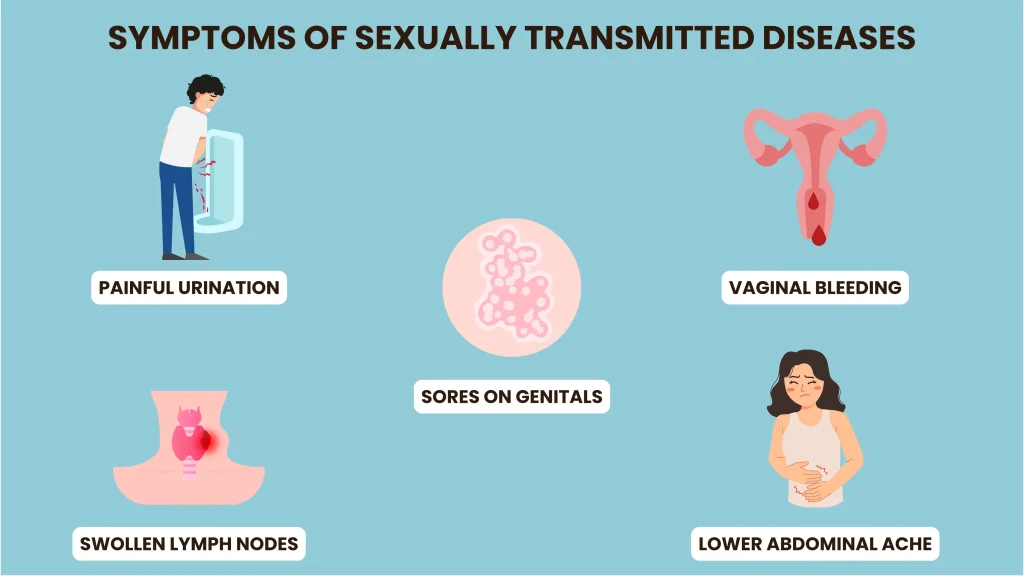
STDs can cause a lot of symptoms, including none. That is why sexually transmitted diseases may go undetected until a person develops symptoms or a partner is diagnosed.
STI symptoms might include:
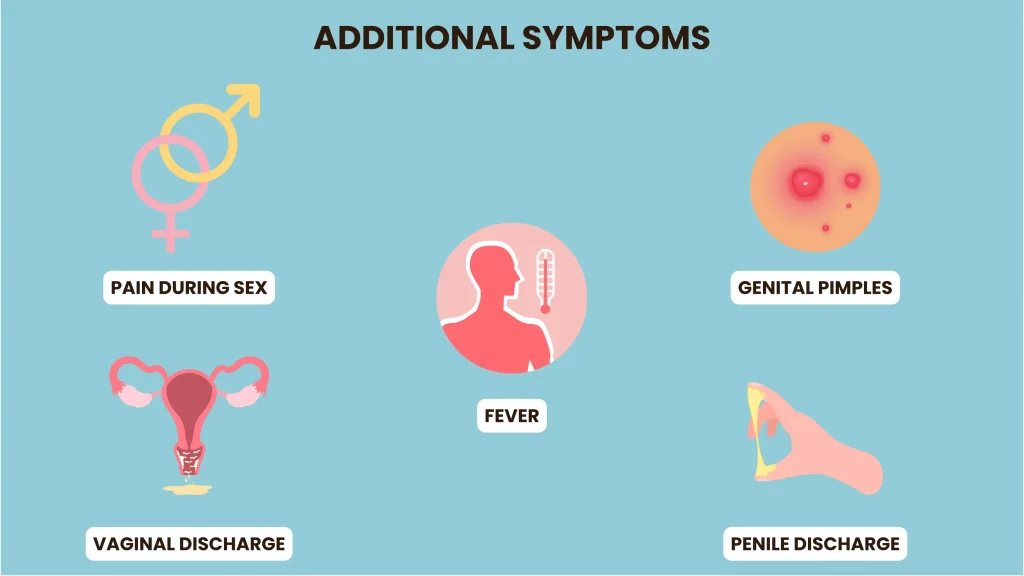
- Sores or pimples in the genitals, oral cavity, or rectal area.
- Urination can be painful or scorching.
- Discharge from the penis.
- Unusual or pungent vaginal discharge.
- Unusual vaginal bleeding.
- Pain during sex.
- Sore, swollen lymph nodes, mainly in the groin, but occasionally more widespread.
- Lower abdominal ache.
- Fever.
Sexually transmitted infection symptoms can occur several days after exposure. However, depending on what’s causing the STI, it could take years before you see any symptoms.
Conclusion
Many sexually transmitted diseases are treatable, but not all are curable. Some are life-threatening, while others have less significant consequences. However, they are all caused by a sexually transmitted infection. So, the best way to avoid them is to have frequent screenings and practice safer sex. If you test positive for any STI, get treatment as soon as possible.
