
Just the thought of kidney stones can make anyone wince. The sharp, stabbing pain of kidney stones is no joke. These hard, small clumps of minerals can cause discomfort like no other, but understanding how they form how to prevent it and treat them is important. This article breaks down the symptoms, causes, effective treatments, and even dietary advice so that you can tackle these kidney stones also know as renal calculi or urolithiasis head-on and reclaim your health.
Understanding Kidney Stones
Kidney stones are clumps of minerals and salts in the kidneys. Excess body weight, diet, medical conditions, and specific supplements and medications are among the most common causes of renal calculi.
Definition and Formation of Kidney Stones
A kidney stone is a solid mass made from tiny crystals. One or more stones can be in the kidney or ureter simultaneously. Kidney stones occur when urine becomes too strong, and the mass in the urine crystallizes to form stones. Symptoms arise when the stones move down the ureter, causing intense pain. But what are the different types?
Here is a breakdown:
- Calcium Oxalate Stones: The most typical kidney stone is calcium oxalate stone, which is caused by abnormalities in the urinary system’s function.
- Struvite Stones: Typically form due to an infection in the urinary system.
- Uric Acid Stones: These stones are more common in people who lose too much fluid, such as those with chronic diarrhea.
- Cystine Stones: Rare and usually due to a hereditary disorder.
Kidney Stone Symptoms
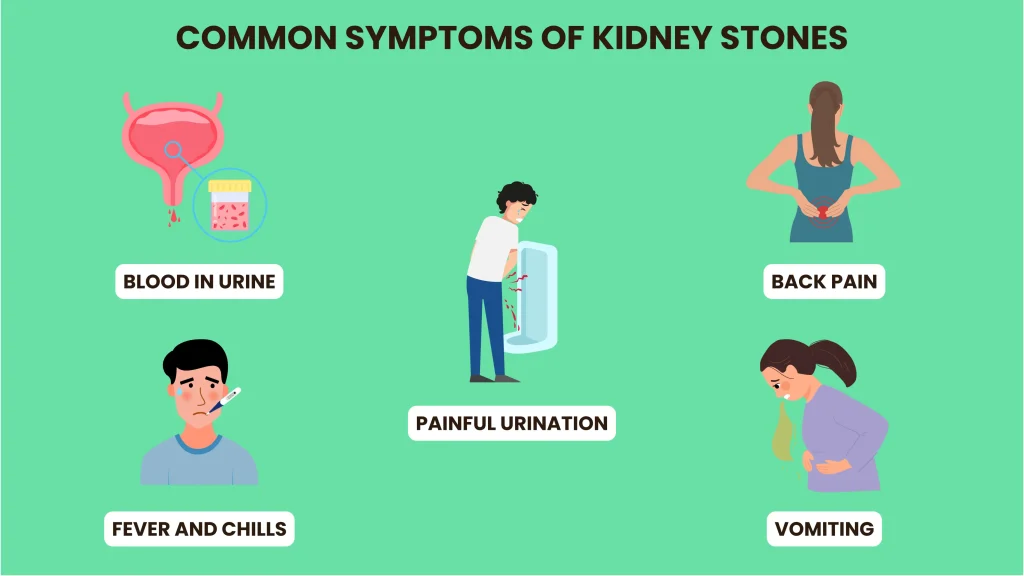
This section delves into the most common symptoms of kidney stones and how to tell the difference between them and a UTI.
Common Symptoms of Kidney Stones
- Severe pain in your back or side that will not go away
- Blood in your urine
- Fever and chills
- Vomiting
- Urine that smells bad or looks cloudy
- A burning feeling when you urinate
If you experience the following symptoms, consult your healthcare provider immediately!
How to Differentiate UTI vs. Kidney Stones
UTI pain in women commonly starts in the lower abdomen around the pubic bone. Kidney stone pain tends to be more in the back or side of your lower torso. UTIs tend to cause a burning sensation when urinating. A kidney stone’s pain is sharp and stabbing.
Foods That Cause Kidney Stones
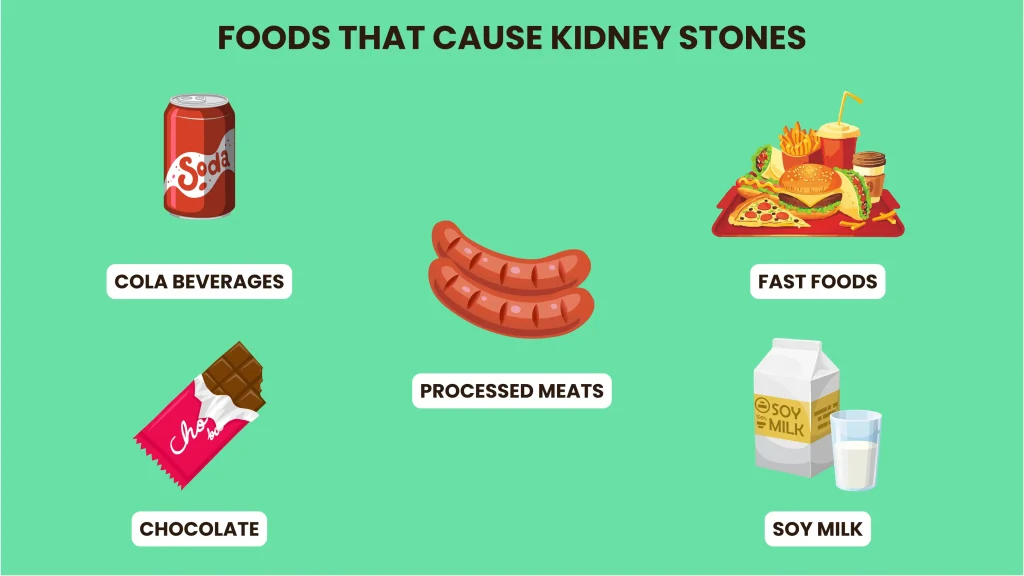
Some foods are best kept at a distance or, in this case, to avoid. Let’s take a look at the most common foods that you should avoid and the effects of coffee.
Common Foods to Avoid
Cola beverages, fast foods, processed meats, black tea, chocolate, spinach, soy milk, almonds, cashews, and soybeans are among foods high in sodium. They should be avoided because excess sodium increases calcium levels in the urine which makes existing ones worse.
Does Coffee Cause Kidney Stones?
Actually, no. Studies suggest that the more coffee, tea, or alcohol you drink, the lower your chances of kidney stones. For every additional 200 ml drink a participant consumed, the risk of kidney stone development declined by 13%.
Foods to Prevent Kidney Stones
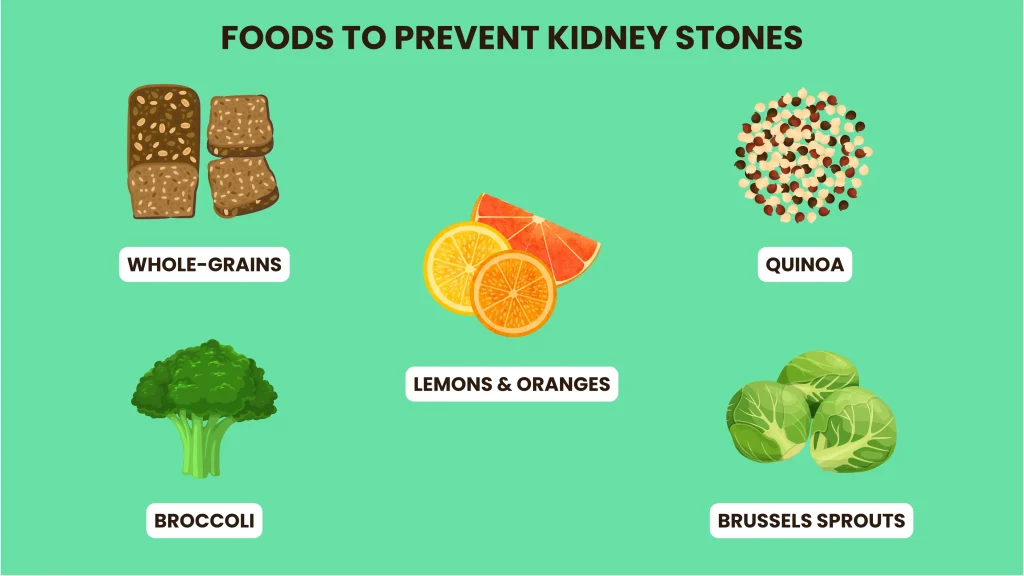
Vegetables rich in potassium, such as Brussels sprouts, broccoli, and kale, decrease calcium loss and prevent kidney stones from forming. When you have renal calculi, look for unsalted or low-salt products. Eat only 2 or 3 servings a day of foods with calcium, such as milk, cheese, yoghurt, oysters, and tofu. Eat lemons or oranges or drink fresh lemonade. Citrate in these foods prevents stones from forming.
7 Day Kidney Stone Diet Chart
A well-planned diet can help maintain hydration, reduce the concentration of stone-forming substances and promote kidney health. The kidney stone diet chart provides a balanced selection of foods that support kidney function and can also reduce the risk of stone development.
Day 1
- Breakfast: Oatmeal with low-fat milk, a handful of berries and herbal tea
- Snack: Apple slices with almond butter
- Lunch: Quinoa salad with mixed greens, cucumber, tomatoes and grilled chicken breast
- Snack: Low-fat yoghurt with honey
- Dinner: Baked salmon, steamed broccoli and brown rice
Day 2
- Breakfast: Smoothie with kale, banana, low-fat yoghurt, and almond milk
- Snack: Carrot sticks with hummus
- Lunch: Lentil soup and whole-grain bread
- Snack: Sliced pears
- Dinner: Turkey stir-fry with bell peppers and onions along with Quinoa
Day 3
- Breakfast: Scrambled eggs with spinach, whole-wheat toast and orange juice
- Snack: Cottage cheese with pineapple
- Lunch: Grilled chicken wrap with lettuce and avocado
- Snack: Mixed nuts (unsalted)
- Dinner: Baked cod, steamed green beans and sweet potato
Day 4
- Breakfast: Greek yoghurt with granola and fresh strawberries
- Snack: Sliced cucumber with tzatziki
- Lunch: Chickpea salad with cherry tomatoes, cucumber and feta cheese
- Snack: Grapes
- Dinner: Beef and vegetable stew and whole-grain bread
Day 5
- Breakfast: Smoothie with spinach, mango, low-fat yoghurt, and coconut water
- Snack: Handful of almonds
- Lunch: Tuna salad with mixed greens, cherry tomatoes and vinaigrette land
- Snack: Banana
- Dinner: Chicken and vegetable kebab with couscous
Day 6
- Breakfast: Whole-grain cereal with low-fat milk and sliced banana
- Snack: Hard-boiled egg
- Lunch: Veggie wrap with hummus, lettuce, and bell peppers
- Snack: Orange slices
- Dinner: Shrimp stir-fry with broccoli and carrots with brown rice
Day 7
- Breakfast: Avocado toast on whole-grain bread and scrambled eggs
- Snack: Fresh berries
- Lunch: Minestrone and whole-grain rolls
- Snack: Sliced apple with peanut butter
- Dinner: Grilled tofu with mixed vegetables and quinoa
Medical vs. Home Treatment: When to Use Each Approach
When to Use Home Remedies
Home treatments work best for small kidney stones (less than 5 mm). If your symptoms are mild, you may try these remedies, but it’s important to stay hydrated, avoid high-sodium foods, and use lemon or apple cider vinegar to help break down the stones.
When to Seek Medical Treatment
If your kidney stones are larger or if you’re experiencing intense pain, fever, or vomiting, it’s time to seek medical care. Medical treatments like shockwave lithotripsy, which breaks stones into smaller pieces using sound waves, or ureteroscopy, which involves removing stones through a scope, are more appropriate for larger stones or if complications arise.
Hydration and Lifestyle Tips
Staying hydrated is crucial to preventing and managing kidney stones. Stay hydrated by drinking 8-12 cups of water daily, especially when active. Avoid too much tea, coffee, soda, and alcohol, as they can dehydrate you when trying to pass a stone. Eating a low-sodium diet and limiting protein intake can also reduce your risk of developing new stones.
Stages of Passing a Kidney Stone
Passing a kidney stone can be a painful process, but it’s manageable for many. Here’s what happens:
- Kidney stone formation: The stone forms in the kidney.
- Movement to the ureter: The stone travels into the ureter, causing pain and discomfort.
- Bladder pressure: You may feel a constant urge to urinate as the stone moves toward your bladder.
- Passing the stone: Eventually, the stone leaves your body through urination.
Medical Treatment for Kidney Stones
In some cases, medical intervention is necessary to remove kidney stones. Common treatments include:
- Shockwave lithotripsy: High-frequency sound waves break larger stones into smaller pieces.
- Ureteroscopy: A scope is used to find and remove the stone.
- Percutaneous nephrolithotomy: A more invasive procedure to remove very large stones.
- Nephrolithotripsy: Similar to shockwave lithotripsy, it is used for stones located deep in the kidney.
Can Kidney Stones Cause Constipation?
Kidney stones don’t directly cause constipation, but the pain and discomfort, along with medications, can lead to constipation.
Kidney Stones vs. Gallstones
A kidney stone is a solid mass of tiny crystals from the minerals calcium, oxalate and uric acid. Gallstones are hard, pebble-like cholesterol or pigment deposits inside the gallbladder.
Conclusion
Kidney stones can be distressing and uncomfortable. It’s essential to recognise kidney stone symptoms, such as severe pain in the side, back, or lower abdomen and blood in the urine, and seek medical attention promptly. By understanding symptoms, causes, and treatments for kidney stones, individuals can work with their healthcare providers to develop an effective plan for managing this condition.
If you or someone you know is struggling with renal calculi or urolithiasis, don’t wait to seek help. Find relief today!
