

Want to get rid of some stored negative emotions? Somatic therapy might be what you are looking for! This type of therapy incorporates several exercises and even evolves into dance, meditation, talk therapy, breath work and more. Think of somatic therapy as healing the mind through physical activities. Ready to learn more about this mind-healing practice? Let’s start!
What is Somatic Therapy?
Somatic therapy, also called somatic experiencing therapy, focuses on the connection between mind and body. This therapy is primarily aimed to help with mental conditions like PTSD and other emotional health problems. This is referred to as a body-centric way of treatment, and this approach aims to release trauma and pent-up emotional stress and tension from the body, which ultimately helps the mind.
What Does Somatic Therapy Help With?

Somatic therapy can be used to replace other conventional forms, such as normal talk therapy. It is used for both mental and physical trauma, often through a set of techniques and exercises.
Here are mental health issues that his therapy can help:
- Anxiety
- PTSD
- Grief
- Addiction
- Depression
- Stress
- Sexual dysfunction
- Digestive problems and disorders
- Chronic pain
When it comes to somatic therapy, it is important to be a place where you can mentally and physically engage and give yourself the time and energy needed. Also, take note that some exercises include physical touch. Make sure that you are comfortable with that.
The Different Types of Somatic Therapy
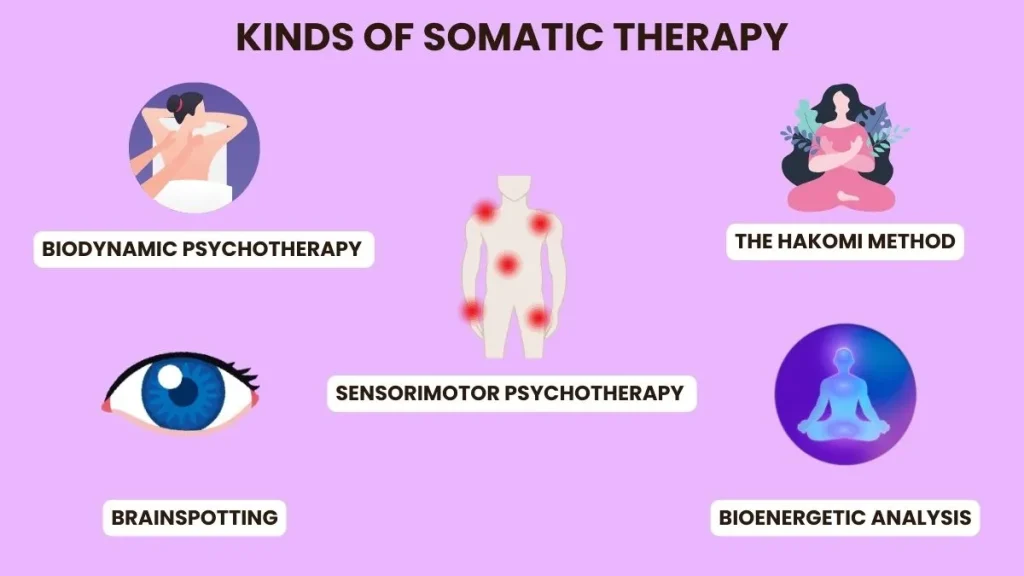
The main type of somatic therapy, which, as we mentioned, can be referred to as somatic experiencing therapy. This therapy is different from talk therapy as instead of just talking about your problems, part of somatic therapy is discussing these issues back and forth and getting deeper into them. There are also different types of techniques that involve talking and discussing issues while doing other activities. During these sessions, professionals will try to have you focus on the physical sensations you are feeling. After this, the exercises can start to help connect and release trauma through mind and body.
Here are the different subgroups of therapies that include somatic therapy aspects:
- Bioenergetic analysis – This is body psychotherapy that works in relation to understanding bodily and analytic energy.
- Sensorimotor psychotherapy – This type of therapy is very comprehensive and uses the body as a source of important information and target parts needing intervention.
- The Hakomi method – This form of psychotherapy uses spiritual, scientific, and psychological sources. Its four main focal points are nonviolence, compassion, gentleness, and mindfulness.
- Brainspotting – Brainspotting helps mend emotional reactions by focusing on the position of the eyes as well as other types of mind and bodywork.
- Biodynamic psychotherapy – This is a mix of holistic and medical therapy and can involve physical massages from a practitioner.
List of Somatic Therapy Techniques
Somatic therapy operates under the idea that trauma and experiences are not only stored within the mind but the body, too. These therapies discuss problems and physical sensations. This is a very inclusive and comprehensive kind of therapy, and it involves a few different methods and techniques.
Here are several techniques seen in somatic therapy:
- Calling on emotional resources
- Developing more body and sensational awareness.
- Grounding
- Acting out physical feelings and other physical movements.
- Strengthening and reinforcing boundaries.
- Encouraging more detailed descriptions of emotions and feelings.
- Emotional release
- Learning self-calming techniques.
- Switching between stressful and less stressful focal points to help release emotional and physical tension.
- Revisiting previous situations with the help of new physical tools.
How Effective is Somatic Therapy for Chronic Pain?

Somatic therapy can help many different issues, both emotional and physical. This form of therapy is very effective with patients who suffer from chronic pain. Chronic pain can sometimes be eased and soothed by letting go of triggers and built-up tension. It may come as a surprise that certain forms of psychotherapy can actually be effective in helping relieve physical pain and discomfort. But this is true, and somatic therapy has even been proven as an effective treatment for conditions such as cervical myofascial pain.
Here is how somatic therapy can help with chronic pain:
Increases Bodily Awareness
This is called interoception, and it’s when you can deeply feel the inner workings of your body. Helping to understand and sense parts of the body’s sensations can build tolerance towards pain. It teaches you to pay attention and appreciate how your body works together and operates. Also, understanding exactly where these points of tension or pain are can significantly help when doing exercises or stretches, as concentrating and focusing on these areas can release and soothe discomfort.
Locating and Releasing Pain Points
This consists of sensory exploration, natural movements, and breathing techniques that work together to help you resolve pain and regulate pain. Whether you know or don’t know where your chronic pain originated from, your body just knows that there is a consistent painful sensation. Because of this, you may experience poor bodily control, digestion, respiration, and blood pressure. Somatic therapy works closely with the nervous system to help slowly but surely release pent-up survival energy, which can make you tense.
Helps Recognize and Intervene in Patterns of Pain
The main reason why chronic pain occurs is because it hinders the ability to control the parasympathetic relaxation response. Because we fear there may be more pain, we often become more tense from anxiety. This creates a cycle, and it’s common for chronic pain to generate more pain as the fear overrides our fight or flight response. Recognizing patterns and understanding how you are unintentionally contributing to your pain can be helpful in calming your nervous system.
How to Begin Your Somatic Therapy Journey
Starting your journey is a step in the right direction! But what is important?
Here is what you should consider:
Finding a Therapist
- Decide if you would prefer in-person appointments or virtual ones.
- Most importantly, find a good somatic therapy provider in your area.
- Consider physical touch-focused treatments if you are considering in-person sessions.
Availability
- Somatic therapy is available in many major cities.
- If you are looking for online sessions, make sure to check the reviews and ratings.
- You can find somatic therapists by looking in directories and at listings.
Qualifications
- Ensure that the therapist has all the needed qualifications to perform somatic therapy.
- The majority of somatic therapists are also licensed psychologists and marriage and family therapists.
- Look for certifications and credentials to back up their expertise in somatic therapy.
Comfortability Level
- Having a good therapeutic relationship is important, so make sure you choose someone you are comfortable with.
- Ask different therapists about their techniques, methods, somatic therapy knowledge, and experience.
- Don’t be shy, and make sure that you speak up and that their services and methods correlate with your preferences.
Conclusion
Those suffering from mental health problems and chronic pain can find relief in somatic therapy. This unique way of addressing trauma by incorporating both emotional and physical activities can benefit your healing process. The journey may be tough and emotional, but extremely helpful.
