
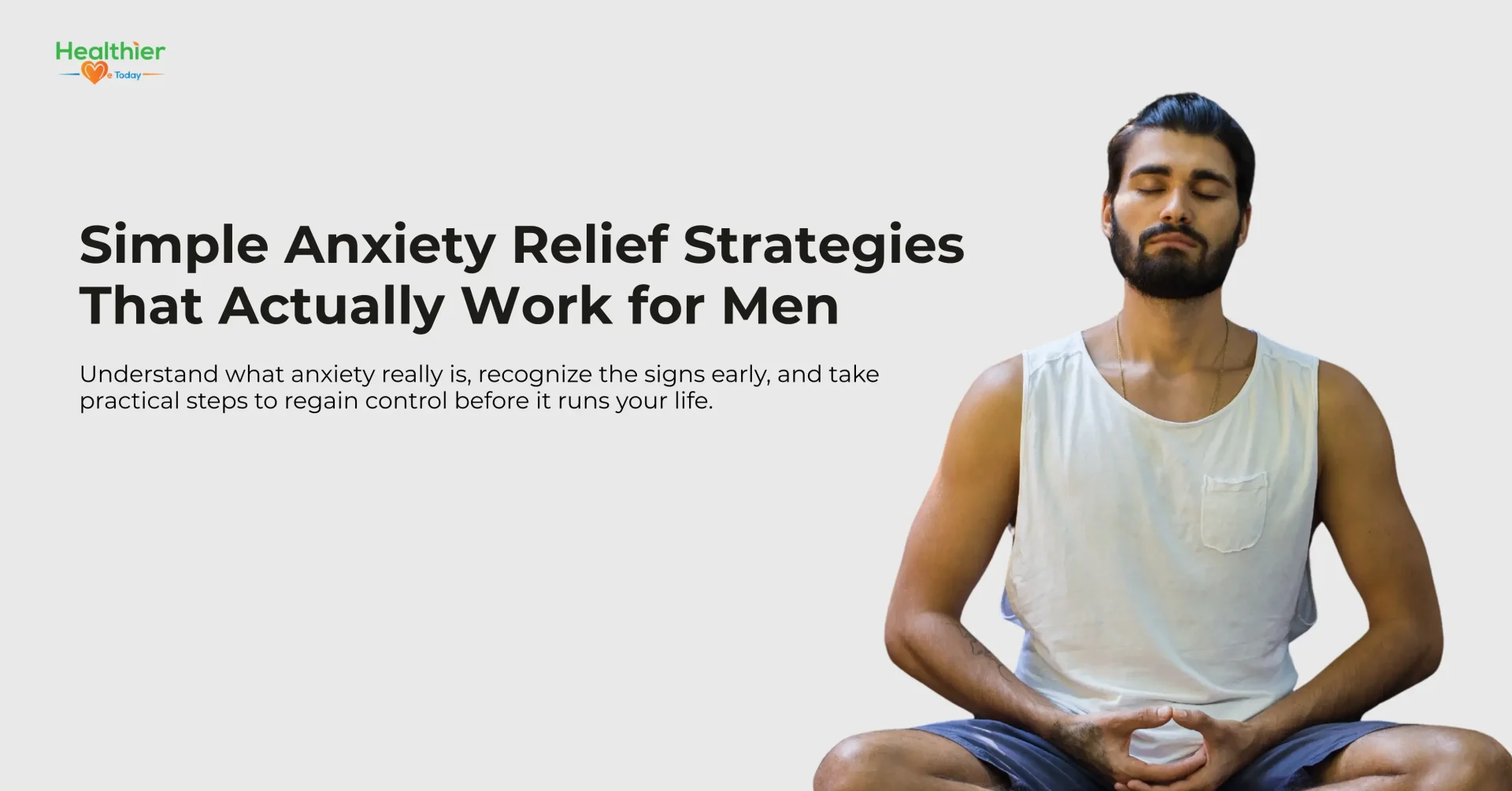
Anxiety has a way of creeping into daily life when you least expect it, turning even simple tasks into heavy mental challenges. Many men experience it as constant overthinking, lingering tension, or the pressure to keep pushing through without slowing down.
This guide helps men understand what is anxiety, how to recognize the signs, and what practical steps can be taken to manage stress and find real relief.
What Is Anxiety?
Anxiety is your body’s natural alarm system. It’s a way of telling you that something needs your attention, even if the threat isn’t real or immediate. You might notice it as racing thoughts, restlessness, tension, or a feeling of always being on edge.
When you think about it, anxiety explained simply, is just a mix of emotions, physical sensations, and mental chatter that’s meant to protect you. Most of the time, it helps you respond to challenges, but sometimes it can go into overdrive, making everyday life feel much more complicated than it needs to be.
While everyone experiences anxiety at times, it only becomes a concern when it starts interfering with your daily life. Understanding this is the first step to taking back control.
What Anxiety Feels Like for Men

Anxiety can show up in different ways, but for many men, it often feels like a constant tension you can’t shake, racing thoughts, and a sense of being “stuck” in your own mind. You may find yourself overthinking even simple situations.
It’s also common to feel frustrated, irritated, or even embarrassed, especially since society often expects men to “tough it out” rather than show vulnerability. Experiencing these feelings isn’t a weakness. It’s your mind and body signaling that it’s time to pay attention and take care of your mental health.
Anxiety Symptoms in Men

Knowing the signs of anxiety disorder is crucial. Symptoms can be mental, emotional, or physical, and they can appear in subtle ways. Men often experience anxiety differently from women, with some signs being less obvious.
Mental Symptoms of Anxiety
Anxiety often begins in the mind, influencing your thoughts, feelings, and the decisions you make each day.
Mental symptoms of anxiety can include:
- Worrying a lot about work, family, or personal life.
- Racing thoughts and overthinking situations can lead to anxiety.
- Having trouble focusing or concentrating.
- Feeling restless, irritable, or “on edge.”
- Having trouble sleeping or waking up tired.
Recognizing these mental patterns is the first step to managing anxiety before it starts affecting your body and daily life. Embrace the power to transform those thoughts into positive outcomes.
Physical Symptoms of Anxiety
Anxiety doesn’t just affect your mind. It can also show up in your body. Men often experience a range of physical sensations when anxiety is present, and noticing these early can make a big difference.
Physical symptoms of anxiety in men include:
- Increased heart rate or palpitations.
- Muscle tension, headaches, or jaw clenching.
- Shortness of breath or tightness in the chest.
- Digestive issues like nausea or frequent bathroom trips.
- Sweating, trembling, or dizziness.
Being aware of these physical signs can help you take action sooner, manage your anxiety more effectively, and prevent it from interfering with your daily life.
Anxiety vs Stress – What’s the Difference?
Stress and anxiety can feel very similar, but they affect you in different ways. Stress usually shows up as a reaction to something specific in your life, like a tight deadline, a money issue, or a big change. Once the situation is over, the stress often eases.
Anxiety, on the other hand, can linger long after the event is gone. You might feel tense, restless, or on edge even when there isn’t an obvious problem. It can create a constant background of worry, overthinking, or imagining worst-case scenarios, making it hard to relax truly relax.
Another difference is in your body’s response. Stress triggers short-term reactions, such as a racing heartbeat or sweaty palms, which usually fade once the situation passes. Anxiety, however, tends to have a longer-lasting impact. You might notice how anxiety affects the body through ongoing muscle tension, headaches, fatigue, digestive issues, or trouble sleeping. These physical effects can linger and quietly interfere with your daily life, long after the stressful moment has passed.
High-Functioning Anxiety in Daily Life
High-functioning anxiety in daily life can be hard to spot because you may seem calm, capable, and put-together to everyone around you [whiterivermanor.com]. Many men cope by overachieving at work, keeping a tightly controlled schedule, or staying constantly busy to quiet the anxious thoughts running through their mind. One of the first signs is realizing that slowing down feels uncomfortable, even during moments meant for rest.
Even when no one notices, this type of anxiety can quietly affect your sleep, focus, and relationships, clearly showing how anxiety affects everyday life. You might lie awake despite feeling exhausted, feel tense for no clear reason, or struggle to fully switch off mentally. Over time, that steady, low-level pressure can wear you down, even when you appear fully in control on the outside.
Because high-functioning anxiety often looks like discipline or productivity, many men write it off as normal stress. Paying attention to how your body and mind respond when you try to rest is a useful starting point. Small changes, like building in short breaks, loosening rigid routines, or addressing stress earlier instead of pushing through it, can help reduce the mental load before it starts to affect your health.
What Triggers Anxiety in Adult Men?
Understanding how anxiety and overthinking begin can help you recognize the moments when your mind starts racing.
Common triggers include:
- Stress from work or uncertainty about your career.
- Facing problems in your relationships or dealing with family duties.
- Financial concerns and bills.
- Major life changes, like moving or becoming a parent.
- Health worries or chronic illness.
Anxiety Coping Strategies That Actually Help

There are numerous ways to cope with anxiety.
Here are some approaches that work:
- Mindfulness and meditation help you calm your racing thoughts and lower your stress.
- Exercise helps reduce stress and supports mental health. Regular movement is important for your well-being.
- Breathing techniques, such as deep breathing, help calm your nervous system when you feel anxious.
- Writing down your anxious thoughts can help you better understand your feelings [positivepsychology.com].
- Having daily routines can help reduce uncertainty and anxiety.
These anxiety coping strategies give you practical ways to regain control, step by step.
Tools That Can Support Anxiety Relief
Managing anxiety isn’t just about mindset and coping strategies; using the right tools can make the process easier and more effective.
Here are some helpful options you might consider:
- Managing Depression and Anxiety with CBT in 7 Weeks Workbook – Learn structured exercises to challenge negative thoughts.
- Stress & Mental Health Genetic Test – Understand your biological predisposition to anxiety.
- Oral Spray for Symptoms of Anxiety – Quick relief during intense anxiety moments.
These tools can complement your daily coping strategies, giving you extra support and helping you feel more in control of your anxiety journey.
Self-Help Books and Workbooks for Anxiety
Self-help books and workbooks can provide practical guidance and real strategies that actually help manage anxiety over time. They teach coping skills, show you how to recognize triggers, and help you build healthier daily habits.
Some of the top-rated options available online include:
- The Anxiety and Phobia Workbook by Edmund J. Bourne – Focuses on understanding anxiety and phobias while offering step-by-step techniques to manage symptoms.
- Feeling Good: The New Mood Therapy by Dr. David D. Burns – This book helps you understand why some thoughts seem to pull you into anxiety or low moods, and gently guides you to see how your thinking patterns affect your emotions.
- Managing Depression and Anxiety with CBT in 7 Weeks Workbook – A structured guide with exercises designed to challenge negative thoughts and support long-term anxiety relief.
While no book or workbook is a quick fix, using these resources consistently can give you real insight and tools to manage anxiety in daily life, complementing other coping strategies or professional support.
Wearable Devices That Track Stress and Anxiety
Technology can be a valuable tool for understanding your anxiety patterns and taking action early. Wearable devices give you real-time feedback on how your body responds to stress, helping you notice patterns and make small adjustments before anxiety escalates.
Some popular options include:
- Smartwatches that monitor heart rate changes.
- Fitness trackers that check how well you sleep and how stressed you are.
- Apps that help you with mindfulness exercises and relaxation techniques.
While these devices won’t eliminate anxiety on their own, they can provide real insight into your body’s responses and support your overall coping strategies. Using them alongside workbooks, therapy, or other techniques can make managing anxiety more practical and effective in daily life.
Do Men Need Therapy for Anxiety?
It’s common to wonder if changing your daily habits is enough to manage anxiety. While habits like regular exercise, mindful routines, and structured daily schedules can help, therapy provides focused support that addresses the root causes of anxious thoughts.
Cognitive-behavioral therapy (CBT), for example, helps you understand why anxiety shows up, notice patterns of overthinking, and use practical strategies that actually work in everyday life [ncbi.nlm.nih.gov]. Combining therapy with lifestyle changes can make managing anxiety more effective, helping you break cycles of tension, high-functioning anxiety, and constant mental stress.
When to Seek Extra Support for Anxiety
Sometimes, anxiety needs extra attention.
Consider reaching out for professional help if you notice:
- Anxiety interfering with work or relationships
- Panic attacks or intense physical symptoms
- Persistent sleep disturbances
- Feeling unable to manage worry or overthinking on your own
Support can come from therapists, virtual support groups, or anxiety management programs.
Conclusion: Take Control of Your Anxiety
Managing anxiety as a man doesn’t mean you have to “tough it out” or push through alone. Pay attention to your mind and body. Notice what makes you feel anxious and find practical ways to cope that work for you.
Remember, taking control of your anxiety isn’t about perfection; it’s about making consistent choices that support your well-being and give you back a sense of balance in everyday life.
FAQs
What are common anxiety symptoms in men?
Common anxiety symptoms in men include racing thoughts, overthinking, irritability, restlessness, tension, difficulty sleeping, and physical symptoms like headaches or rapid heartbeat.
Can anxiety cause physical symptoms in men?
Yes, anxiety can cause physical symptoms such as chest tightness, sweating, trembling, stomach issues, and muscle tension.
Are there specific anxiety relief techniques that work better for men?
Some techniques work well for men, but everyone is unique. Exercise, deep breathing, mindfulness, routines, and cognitive-behavioral strategies can help calm your mind and reduce tension. The key is to find what feels natural for you and combine approaches that fit your lifestyle for effective anxiety management.
Do men need therapy for anxiety, or are lifestyle changes enough?
While lifestyle changes help, therapy, especially Cognitive Behavioral Therapy, provides targeted tools to manage anxiety long-term and prevent high-functioning anxiety from becoming overwhelming.
Where can I find virtual support groups for anxiety?
Virtual support groups can be found through online therapy platforms, mental health organizations, and social media communities focused on men’s mental health.
